SpaceX is in discussions with EchoStar (NASDAQ: ECHO) over a potential deal for Boost Mobile, either buying the wireless carrier outright or securing access to its network, according to a Reuters report via Investing.com. The talks emerged on 2 November 2026.
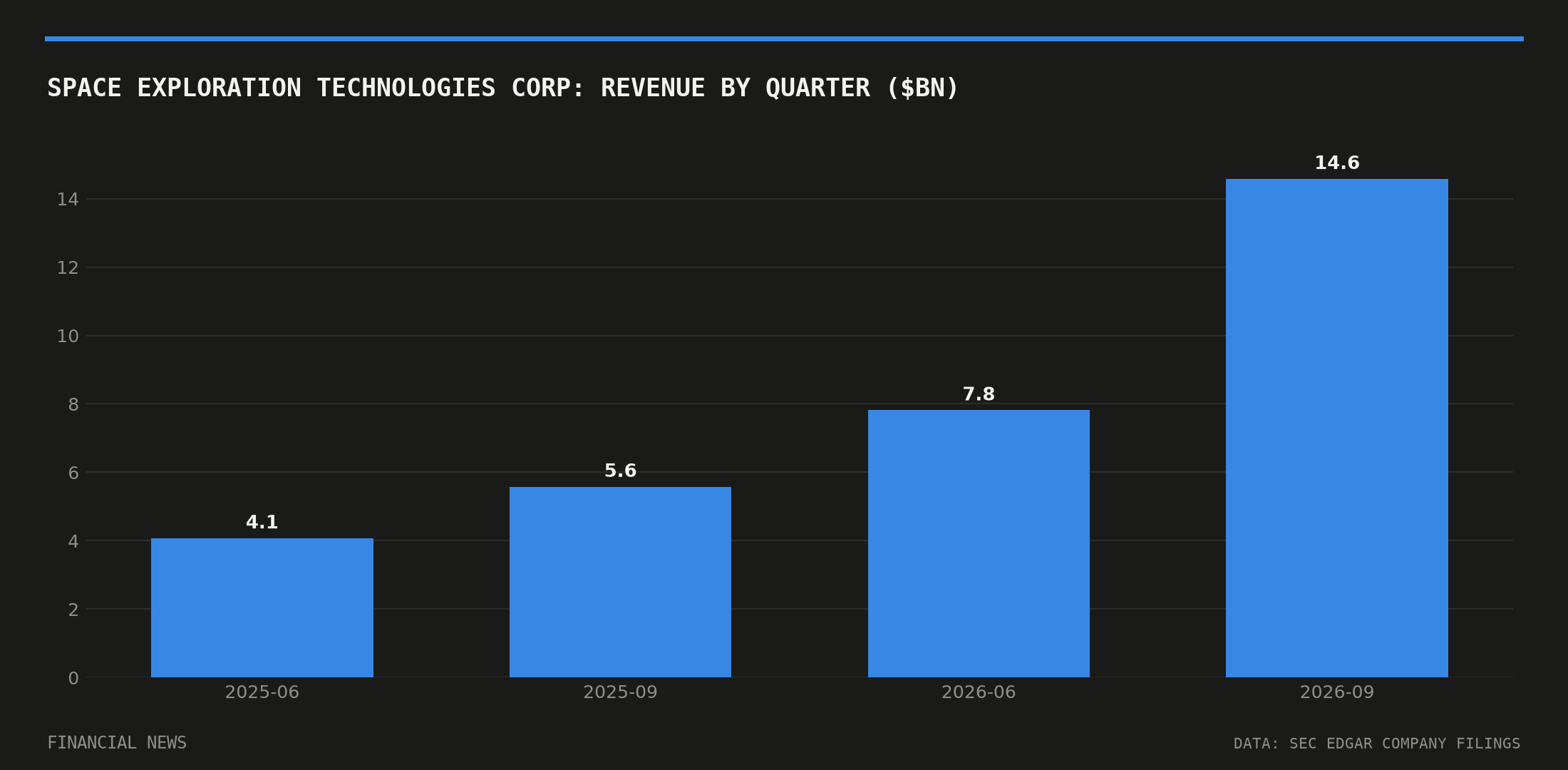
The approach follows SpaceX’s SEC-filed swing to a $4.404bn net income on $14.575bn of revenue for the quarter ended 30 September 2026, up from a $541m net loss a quarter earlier, according to its 10-Q filed with the SEC.
Why EchoStar, and why now
Boost Mobile currently leases its network infrastructure from AT&T and T-Mobile US. SpaceX wants either to own that arrangement or to tap into it directly as it builds a hybrid satellite-terrestrial mobile offering under the Starlink Mobile brand, the Reuters report said.
Before turning to EchoStar, SpaceX asked Verizon, AT&T and T-Mobile for network access; all three carriers rejected the proposal, according to Time News, citing the original Washington Post account. Elon Musk met EchoStar chairman Charlie Ergen last month to discuss a potential arrangement, Reuters reported.
The talks follow a separate, already-reported deal in which SpaceX agreed to buy wireless spectrum licences from EchoStar valued at roughly $17bn, intended to support direct-to-device connectivity ahead of any Boost Mobile transaction.
The $1 trillion target behind the move
Musk has pulled forward SpaceX’s internal revenue ambition of $1 trillion a year to as early as 2030, from a prior 2031 target, according to Yahoo Finance. Boost Mobile would give the company a retail foothold in US wireless to sit alongside Starlink and its launch business.
The numbers in the filings support the scale of that ambition. Quarterly revenue has climbed sharply across the SEC’s recent reporting periods: $4.071bn in the quarter ended June 2025, $5.576bn by September 2025, $7.814bn by June 2026 and $14.575bn by September 2026, per EDGAR filings. MarketBeat’s write-up of the Q3 earnings call put the year-on-year growth at 161%, driven by Starlink and AI infrastructure demand.
Profitability has been choppier. SpaceX posted a $1.008bn net loss in the quarter ended June 2025 and a $1.054bn net loss in the quarter ended September 2025, before narrowing to a $541m loss in the quarter ended June 2026 and then swinging to the $4.404bn profit reported for the quarter ended September 2026. That progression, visible across four consecutive 10-Qs, is the financial backdrop against which the Boost Mobile approach is being read.
Deal hurdles and market positioning
Any transaction faces legal friction. Boost Mobile’s existing network-leasing agreements with AT&T and T-Mobile may not be transferable to a new owner, TipRanks reported. Boost carries roughly 7 million subscribers, and SpaceX is separately said to be negotiating leases on about 80,000 cell tower sites at an estimated cost of $6bn, according to wccftech.
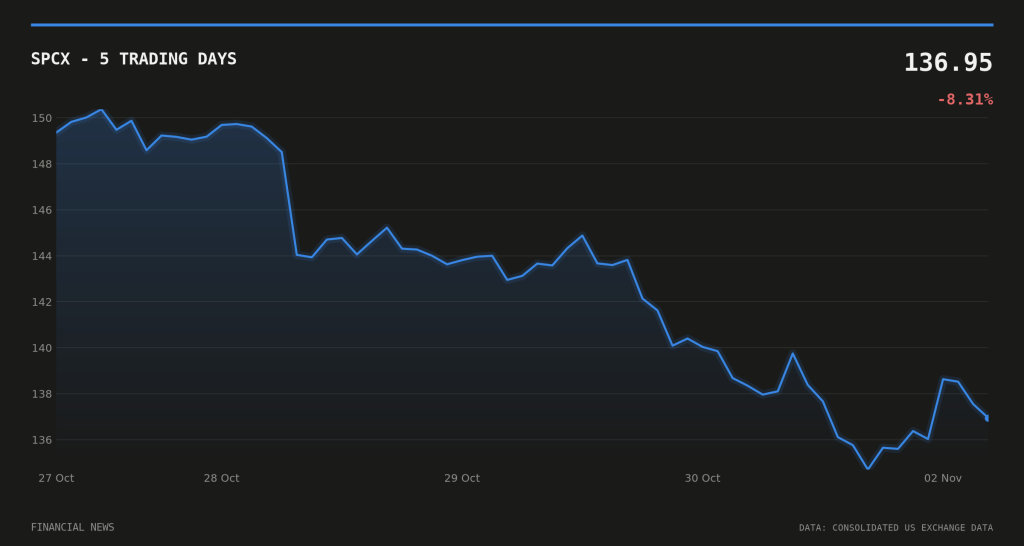
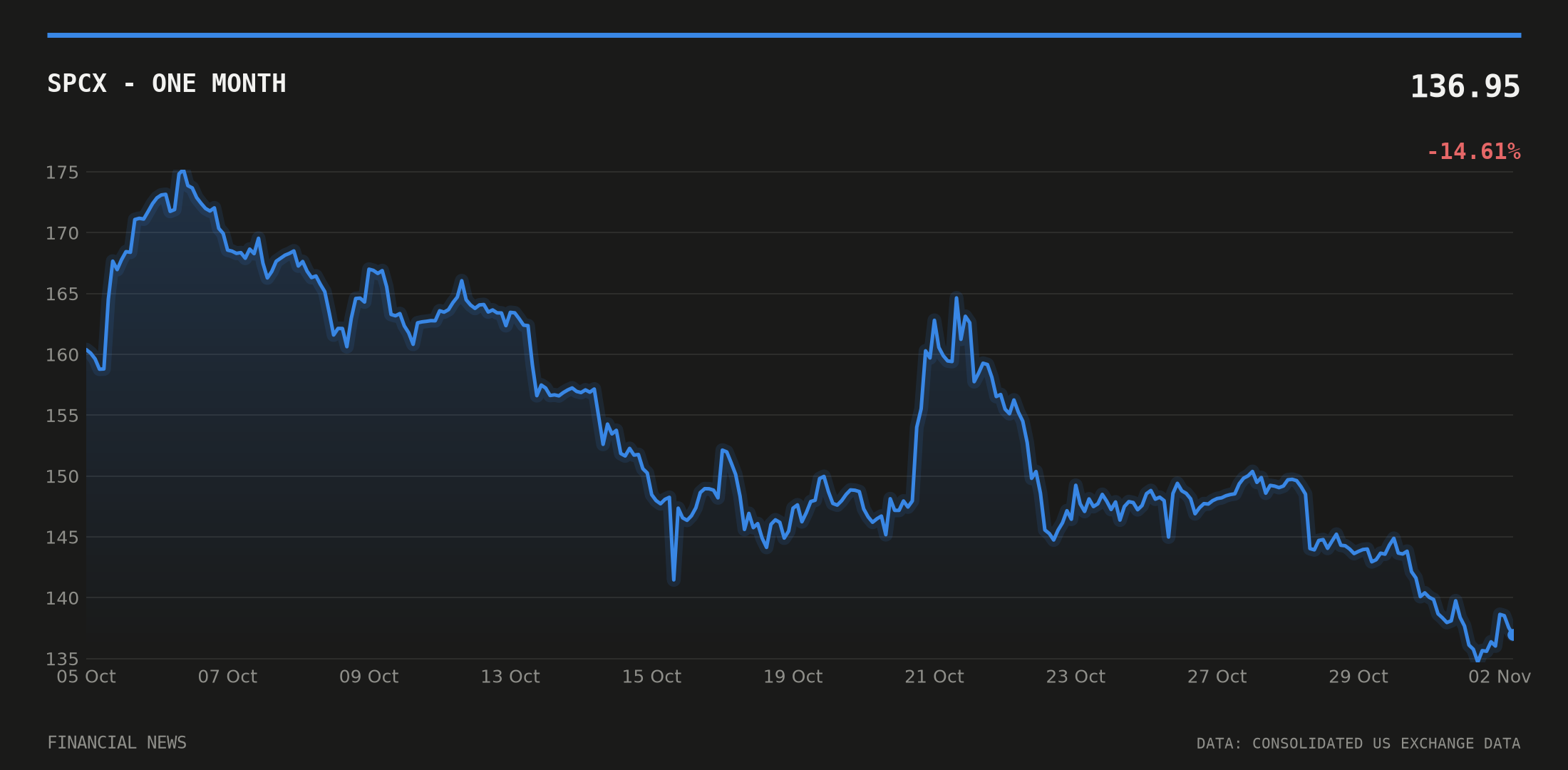
EchoStar shares rose roughly 3.7% in premarket trading on the day the Washington Post report broke, Seeking Alpha said, citing the move as a sign of investor interest in the talks even before any formal confirmation. SpaceX shares, by contrast, traded at $136.51 as of 2 November, up 0.63% over 24 hours but down 17.79% over 20 days, on volume running at only 22% of its 20-day average.
Short interest in SPCX has eased into the news. FINRA’s daily short-sale ratio for the stock fell from 0.693 on 20 October 2026 to 0.454 on 30 October, a decline that predates the Boost Mobile reports but coincides with the run-up to SpaceX’s third-quarter filing.
The broader rate backdrop has also turned slightly more favourable for risk assets tied to capital-intensive expansion plans. The 10-year US Treasury yield stood at 4.98% on 29 October 2026, down from 5.05% previously, against a US unemployment rate of 4.2% for September, according to data from the Federal Reserve Bank of St Louis. Lower long-end yields reduce the discount applied to companies pursuing large, multi-year infrastructure bets such as a nationwide wireless build-out.
Neither SpaceX nor EchoStar has confirmed a signed agreement. Market participants are watching for any formal disclosure from either company, alongside further detail on the tower-leasing talks that would underpin a Starlink Mobile network independent of the big three carriers.
This article is for information only and is not investment advice or a recommendation to buy or sell any asset. Markets move quickly; figures are correct as sourced at the time of writing. Always do your own research before making financial decisions.