The events at the Edgar Thomson Plant near the Monongahela River in western Pennsylvania have an almost ironic quality. The men whose grandsons still reside in these towns, the steelmakers who created this nation’s industrial foundation, observed U.S. For decades, Steel struggled to update its outdated facilities. The check is now being written by a Japanese company. And that check is beginning to feel less complicated than it used to for many people in the Mon Valley.
U.S. Steel announced in October 2026 that it would invest about $3 billion to construct a new hot strip mill at Edgar Thomson, which is a part of its Mon Valley Works complex. The hot rolling equipment currently in use is almost ninety years old. The length of time this infrastructure has been waiting can be inferred from that sentence alone. That outdated line will be replaced by the new mill, which will increase yearly production capacity by 60%, from roughly 2.2 million tons to 3.5 million tons. After permits are granted, construction begins, with the first production scheduled for late 2029.
As part of Nippon Steel’s larger U.S. commitment, which will total $11 billion through the end of 2028, the investment is the biggest single project to date. In June 2025, Nippon Steel completed its acquisition of U.S. Steel. The deal was first blocked on national security grounds, but it was eventually cleared by a revised partnership structure supported by Trump. A U.S. “golden share” that grants the government approval and veto power over significant decisions, such as relocating headquarters from Pittsburgh, shifting jobs overseas, or cutting capital, is part of the final structure. The headquarters of U.S. Steel remain in Pittsburgh. The building retains the American flag. The underlying machinery will be updated by Nippon Steel.
The new mill will serve the energy industry, home appliance manufacturers, and automobile consumers—markets that depend more and more on accurate, high-quality flat-rolled steel, which is difficult for outdated American machinery to consistently produce. An in-line slab sizing press and new walking beam furnaces are intended to simultaneously increase material yield, product quality, and energy efficiency. These are not esthetic improvements. These are the kinds of capital-intensive adjustments that determine whether a steel plant can compete not only on price but also on quality with mills in Germany and South Korea. Although it sounds like a press release, U.S. Steel CEO David Burritt’s description of it as bringing “world-class technology to the Mon Valley” isn’t totally incorrect in this instance.
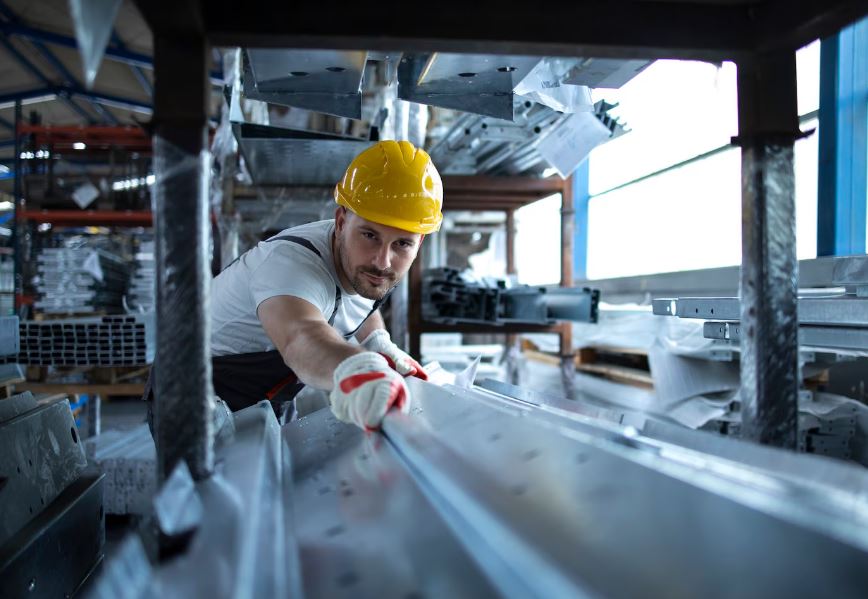
A $3 billion construction project in western Pennsylvania has significant and noteworthy economic repercussions. According to U.S. Steel, the Mon Valley investment will produce up to $1.7 billion in economic benefits over a three-year period, directly and indirectly creating thousands of jobs. There is something tangible about a new mill expanding rather than contracting for communities that have spent years witnessing steelmaking capacity decline rather than increase. A $300 million extension for blast furnaces is part of the larger plan, which means the investment is dispersed across several states rather than concentrated in one. The Gary Works in Indiana is also scheduled for upgrades.
It’s worthwhile to take a step back and consider what this deal truly resolved. For a while, the foreign company’s purchase of U.S. Steel was viewed as a simple case of industrial sovereignty. It made sense to be concerned: Beyond its current place in the market, U.S. Steel is a name with real historical significance, connected to the growth of American manufacturing. Beneath that question, though, is a less sentimental one: who was going to cover the cost of the modernization that U.S. Steel obviously required? The business had had difficulty making the capital expenditures necessary for its facilities. The funds and the motivation came from Nippon Steel, one of the biggest and most technologically sophisticated steelmakers in the world. The resulting governance structure, which included the Pittsburgh headquarters, the golden share, and job protections, was an effort to resolve the sovereignty issue without abandoning the capital.
It’s still too soon to say for sure how this will turn out. The building process has not yet begun. Permits are still pending. Furthermore, 2029 is still a few years away. However, the story feels a little different now than it did eighteen months ago, with a $3 billion commitment landing in Mon Valley for a mill that will increase rather than decrease American steelmaking capacity.