Kazakhstan, Central Asia’s largest country and an important producer of oil, uranium and other natural resources, is looking to diversify its economy and develop new sources of growth. One of its most ambitious initiatives is Alatau City, a new investment and technology hub taking shape near Almaty, the country’s largest city and commercial centre.
Designed to bring together modern infrastructure, international investment and digital innovation, Alatau aims to become a major centre for business and economic development in the region. With opportunities emerging for British companies in sectors ranging from finance and engineering to technology and construction, the project is attracting international interest.
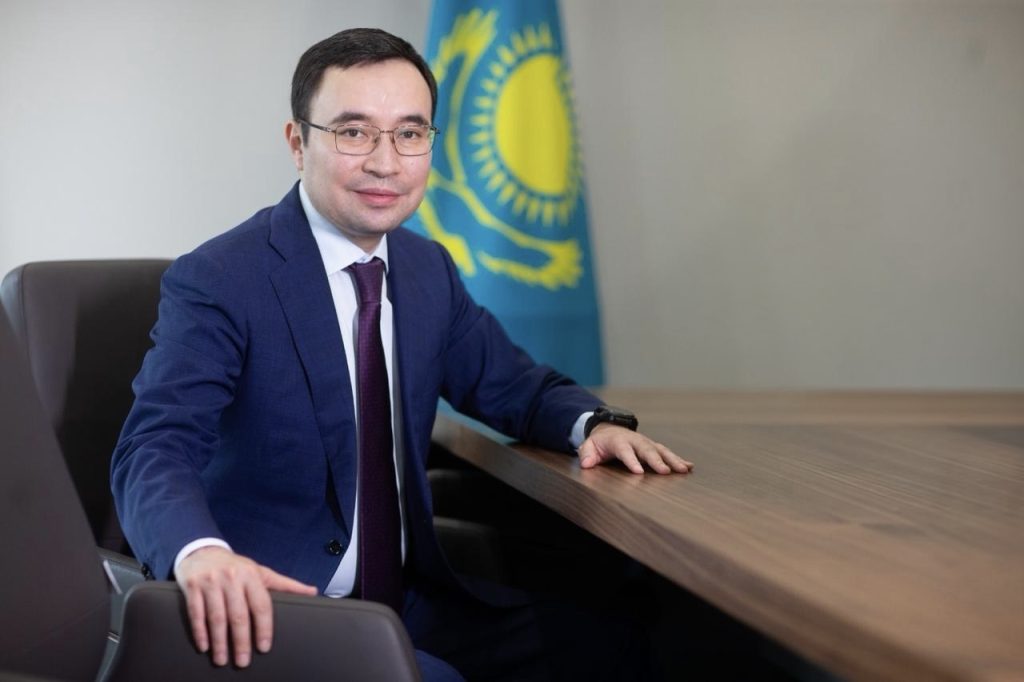
As Kazakhstan presents its vision for Alatau in London this week, Financial News spoke to Alisher Abdykadyrov, CEO of Alatau City Authority, about the city’s ambitions, investment potential and plans for the future.
For British readers who may be hearing about Alatau City for the first time, could you explain what the project is, where it is located, and why Kazakhstan has decided to develop it?
Alatau City is one of Kazakhstan’s most ambitious development projects. It is designed to become a new centre for investment, innovation and international business.
The city is located in south-eastern Kazakhstan, near Almaty, the country’s largest business and financial centre. Alatau is strategically positioned along major transport corridors linking Central Asia with China and Europe.
The project is also a key part of Kazakhstan’s wider strategy to diversify its economy. We will develop new industries, attract international expertise and create highly skilled jobs. Our aim is to strengthen the country’s role as a regional hub for investment and business.
The President of Kazakhstan demonstrated his commitment to the project by signing a dedicated Constitutional Law in May 2026. The law establishes the legal foundations for Alatau City’s development.
What is the long-term vision for Alatau City? Which industries and economic activities do you expect to play the biggest role in its development?
Our long-term vision is to make Alatau City an internationally competitive economic centre. It will combine advanced industries, financial services and innovation with a high quality of life.
The city’s development concept is built around four interconnected districts, focusing on finance and business, science and innovation, tourism, and industry and logistics. The city operates under a special legal regime designed to accelerate development.
Importantly, we do not simply want to attract investment in individual sectors. We want to create an environment where these industries complement one another. This will generate new business opportunities and skilled jobs.
We are also placing strong emphasis on talent and skills, international partnerships and sustainable development.
Our ultimate goal is a diversified, innovation-driven economy.
Alatau is being developed as Kazakhstan’s first fully digital city. What does this mean in practical terms, and how will modern technology benefit businesses, investors and future residents?
For us, a fully digital city means integrating technology into infrastructure, public services and city management from day one, rather than adding digital solutions at a later stage.
We are developing an integrated digital ecosystem. It brings together smart infrastructure, artificial intelligence (AI) and data-driven urban management. Businesses will access services more efficiently. Investors will benefit from greater transparency. Residents will find everyday life more convenient.
One particularly promising area is urban air mobility. Alatau City has hosted Central Asia’s first passenger flight of an electric vertical take-off and landing (eVTOL) air taxi. The AutoFlight Prosperity aircraft can reach speeds of up to 200 kilometres per hour.
We are also developing drone delivery services for parcels and food, working with companies including Keeta Drone and A2Z. Dedicated delivery terminals will support these services.
The planned infrastructure includes vertiports, while flight operations will be coordinated through a digital unmanned aircraft traffic management (UATM) system. Commercial operations are targeted for 2028–2029.
These initiatives reflect our wider ambition. We want Alatau City to be a testing ground for technologies that improve mobility, efficiency and quality of life. They will also create new opportunities for innovative businesses.
What progress has been made in developing Alatau City so far, and what are the main infrastructure and development priorities over the next few years?
Alatau City has already moved beyond the concept stage. We have made significant progress on the legal framework, infrastructure and investment projects.
In 2026, 28 infrastructure projects with a combined value of around KZT 35.3 billion are under way. They cover electricity, gas, water supply, wastewater and roads.
We reached a major milestone on 26 October 2026. A symbolic foundation stone was laid to mark the start of construction on the Iconic Complex. This multifunctional complex is planned as one of the city’s landmark developments.
We are also advancing major industrial and logistics projects with international companies. At the same time, we are working with strategic partners on the next stages of urban development.
Our immediate priorities include better transport links, reliable utilities, digital networks and sites ready for new investment projects.
Over the coming years, we will focus on aligning infrastructure delivery with private investment. We will also apply sustainable technologies and modern urban planning standards.
Our aim is to develop Alatau City in a coordinated way, with the infrastructure and institutions needed to support long-term economic growth.
Alatau City has identified 67 potential investment projects worth approximately $6.9 billion. Which sectors offer the most attractive opportunities for British and other international investors, and what advantages can businesses expect from investing in the city?
Our current investment pipeline comprises 67 projects with a combined estimated value of US$6.9 billion. They cover a broad range of sectors and offer opportunities for international investors.
We see particularly strong potential in infrastructure, logistics, advanced manufacturing, renewable energy, digital technologies and commercial property.
For British investors, infrastructure, sustainable construction, engineering, fintech and professional services are especially relevant. These are areas where UK expertise is recognised worldwide.
One of Alatau City’s main advantages is its strategic location near Almaty and major Eurasian transport routes. This provides access to growing regional markets.
Equally important is the special legal framework adopted in May 2026. It provides the basis for a competitive, transparent and investor-friendly regulatory environment.
We are working to create the right conditions for long-term investment. These include more efficient administrative procedures, stronger investor protection and reliable infrastructure.
For international businesses, Alatau City offers an opportunity to become part of a new economic centre at an early stage. Companies can build strategic partnerships and take part in projects with long-term commercial potential.
Alatau City has introduced a special legal regime designed to attract international investment, with plans to incorporate principles of English common law into its investment dispute resolution framework. How will this approach help create a favourable and predictable business environment for foreign investors?
Legal certainty and predictable regulation are essential for long-term international investment. Investors need to know that their rights will be protected. They also need transparent and effective ways to resolve commercial disputes.
An important next step is a specialised framework for resolving investment disputes. It will be based on principles of English common law. We also propose applying the law of England and Wales.
English law is widely used in international commercial transactions. Investors and financial institutions around the world know it well. Using its principles can reduce legal uncertainty and build confidence in contracts.
However, legislation alone is not enough. Effective implementation, transparent procedures and accountable institutions matter just as much.
Our goal is to create a business environment where international investors can make long-term commitments. They should clearly understand their rights, their obligations and the rules that apply to their activities.
Your visit to London comes as Kazakhstan seeks to deepen its economic partnership with the United Kingdom. British companies, including Arup and Norton Rose Fulbright, have already contributed expertise to Alatau City’s development. Where do you see the greatest opportunities for further cooperation with British businesses, financial institutions and investors?
The United Kingdom is an important partner for Kazakhstan, particularly in investment, financial services, engineering, technology and international business standards.
British expertise is already contributing to Alatau City’s development. Arup and Norton Rose Fulbright, for example, are involved in urban planning and the development of its legal framework.
We see considerable potential to expand this cooperation. Key areas include infrastructure, sustainable construction, digital technologies and advanced engineering.
Another important area is investment and project finance. We welcome discussions with international financial institutions, institutional investors and other partners. Together, we can explore ways to finance commercially viable infrastructure and development projects.
We are also interested in working together on innovation, renewable energy, smart mobility and modern urban services.
Our visit to London is a chance to strengthen existing relationships. We also want to introduce new partners to Alatau City’s investment potential and find practical areas for collaboration.
We believe international cooperation delivers the greatest value when it brings capital, expertise and technology together. This combination creates sustainable economic opportunities.
Our message to British businesses is simple: Alatau City offers an opportunity to help shape a new centre of economic growth in Central Asia.