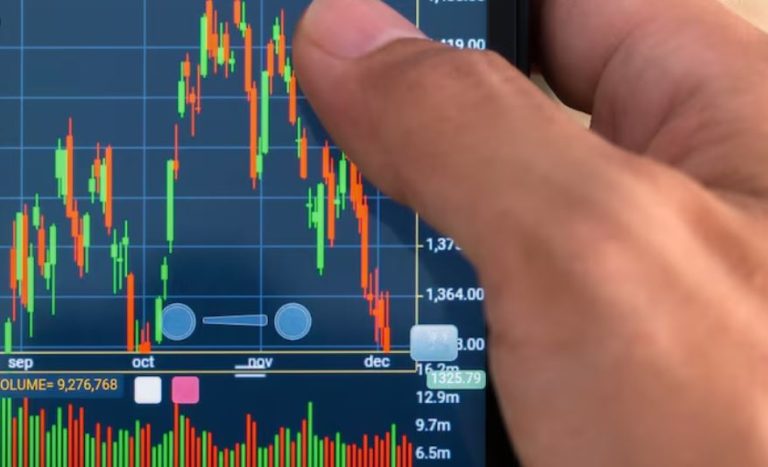
This year, Robinhood debuted at $150. It is currently trading at about $85. The company hasn’t had a single disastrous quarter to point to, and that represents a 40% decline from the all-time high it set just over a year ago. Sentiment, cryptocurrency, and a valuation that left virtually no room for disappointment have all contributed to the gradual decline.
The tension was clearly shown in the Q3 2026 earnings report, which was released on October 27. Revenue was $1.42 billion, slightly less than what analysts had predicted but up roughly 12% year over year. In fact, the adjusted EPS of $0.60 exceeded the $0.56 consensus estimate. Thus, the quarter wasn’t particularly bad. However, rather than getting better, Robinhood’s biggest revenue problem—crypto—got worse. For the fourth quarter in a row, cryptocurrency trading revenue dropped 55% to $120 million. It is difficult to ignore that run of losses for a business that gained significant traction due to consumer enthusiasm for cryptocurrencies.
The fact that the rest of the business is genuinely growing is what makes the cryptocurrency decline especially annoying for Robinhood. Revenue from options increased by 31% to $399 million. At $121 million, equity revenue increased by 41%. Robinhood’s entry into prediction markets, event-contract revenue, increased sixfold to $173 million.
The number of funded accounts increased by 9% to 30.4 million, while the total platform assets increased by 19% to $396 billion. Subscriptions to Robinhood Gold reached 5.2 million, a 34% increase from the previous year. These figures don’t indicate a troubled business. They depict a business whose most erratic revenue stream consistently cuts through the positive news.
Observing all of this gives the impression that Robinhood’s stock price is more influenced by the state of the cryptocurrency market each week than by its primary business. On October 30, HOOD dropped 7.2% on a day when the business made no announcements, filings, or earnings. The action was linked to a decline in cryptocurrency values following Binance’s announcement of the biggest cryptocurrency hack ever. The hacked exchange was not run by Robinhood.

However, the stock moved in sympathy with Coinbase, which fell 10.6% that day, because the market links Robinhood to cryptocurrency trading activity. Management is unable to completely control this dynamic, which is being treated like a cryptocurrency company when the business has obviously been diversifying away from that label.
More intriguing than the daily price chart indicates is what Robinhood is constructing beneath the clutter. The business introduced its own blockchain network, Robinhood Chain, in July. The chain generated over $50 million in fees and handled $100 billion in decentralized exchange trading during its first quarter of operation. The Canadian cryptocurrency exchanges Bitbuy and Coinsquare were acquired by Robinhood in June along with WonderFi. Additionally, it is the only trustee and brokerage company for Trump accounts, a government program that automatically opened almost 70 million accounts in Q3 and provided eligible children with a $1,000 government contribution. It’s unclear if those accounts will ever turn into actively involved clients. However, the enrollment scale is not insignificant.
The real complexity arises during the valuation process. HOOD is trading at roughly 15 times trailing twelve-month revenue and 39 times earnings. It is evident that the market is pricing Robinhood for growth that hasn’t yet fully materialized when you compare that to Nu Holdings, a Brazilian fintech with over 140 million customers and a P/E closer to 15.6. With a 42% profit margin and $4.47 billion in revenue in 2025, the company’s performance is truly impressive. However, the stock must continue to perform well at these multiples in a setting where a poor cryptocurrency week can negate a strong earnings beat.
It’s difficult to ignore the fact that, despite the underlying company growing its product line, user base, and geographic reach, the market has essentially been repricing Robinhood downward all year. Whether cryptocurrency finds its footing and whether the new wagers on prediction markets and tokenized assets begin making a significant contribution to the bottom line will determine whether that repricing ultimately turns into a buying opportunity. That aspect is still unclear.