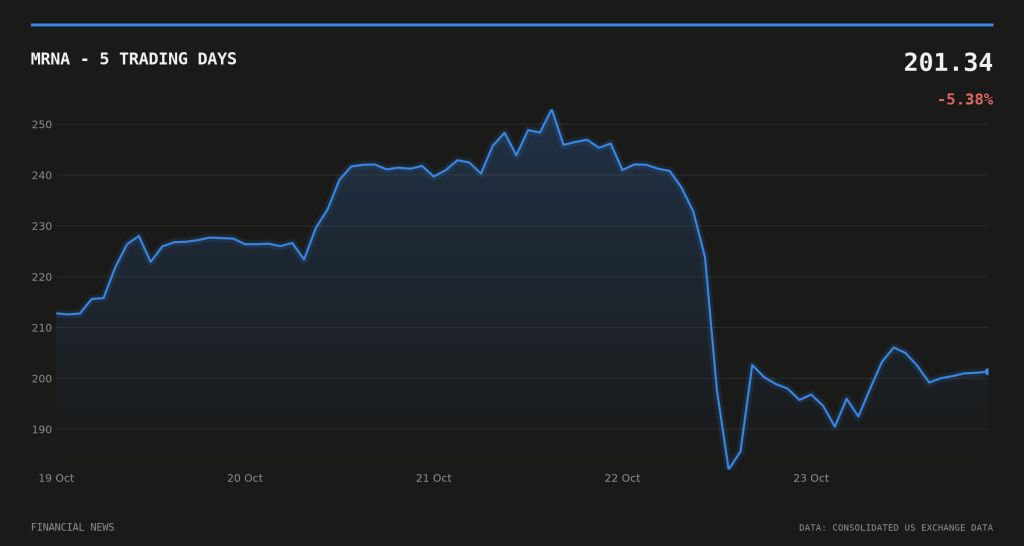
Moderna cancer vaccine data showed a 42% reduction in melanoma recurrence or death, the company and partner Merck confirmed on 22 October 2026, two days after an embargo breach forced them to release results early.
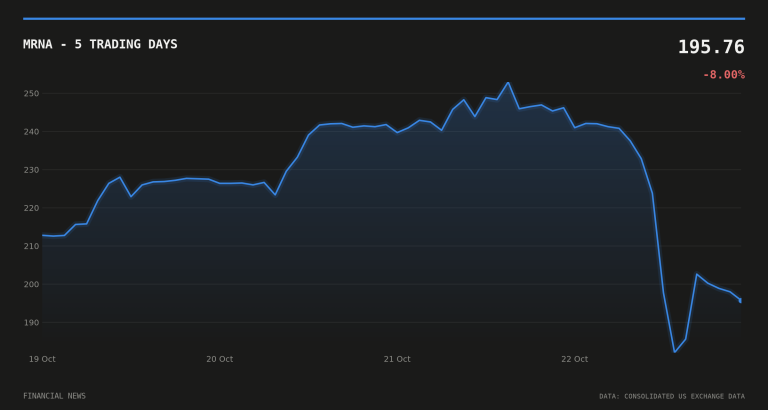
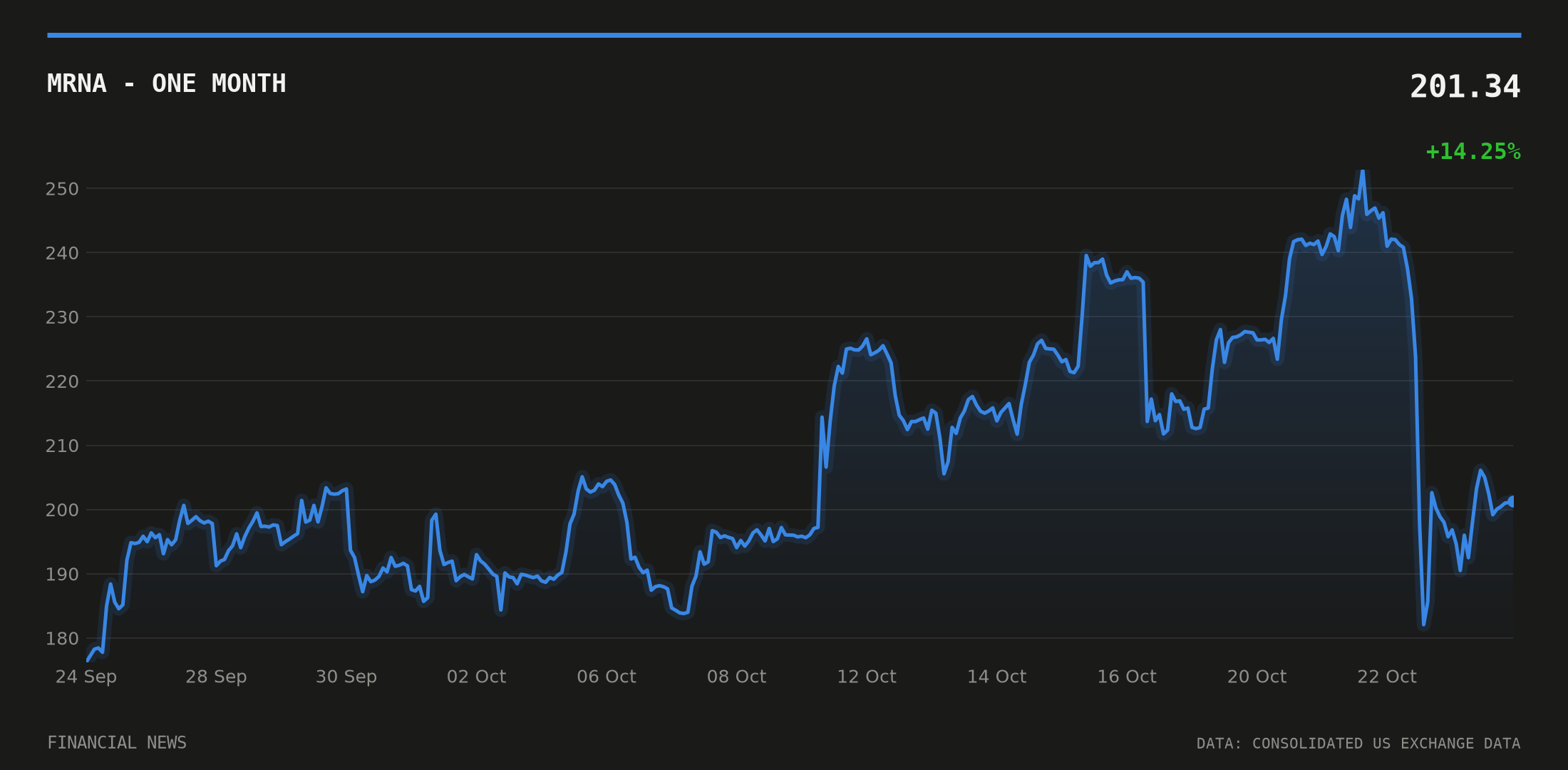
Moderna (NASDAQ: MRNA) shares fell as much as 26% intraday to $181.14 when the Phase 3 trial data leaked online, before closing down 17.6% that day, according to CNBC.
What the Moderna cancer vaccine data showed
The Phase 3 INTerpath-001 trial tested intismeran autogene, an individualised mRNA therapy, alongside Merck’s Keytruda (pembrolizumab) in patients with completely resected stage IIB-IV melanoma. The combination cut the risk of recurrence or death by 42% versus Keytruda alone, a hazard ratio of 0.58, with a two-sided p-value below 0.001, according to Merck’s own release of the figures.
Median follow-up stood at 24.6 months, roughly the two years referenced when Moderna first flagged a positive outcome. A pre-specified sensitivity analysis covering the period after the six-month immunisation course found an even larger effect, with a hazard ratio of 0.42. Distant metastasis-free survival also improved, with the combination cutting the risk of distant spread or death by 38%, Merck’s release showed. Overall survival data remain immature, leaving the durability of the benefit as the open question for the therapy’s long-term value.
An embargo breach, not a trial failure
Moderna first disclosed in August 2026 that INTerpath-001 had met its recurrence-free and distant-metastasis-free survival endpoints, without releasing the underlying numbers. The detailed data was due to be unveiled at the European Society for Medical Oncology’s Presidential Symposium on 24 October. Instead, ESMO confirmed the embargo on the trial’s late-breaking abstract had been breached, forcing the companies to issue their results two days ahead of schedule, as ESMO itself stated.
Stock swings outpace the clinical story
The gap between the intraday plunge and the eventual close is the clearest sign that trading mechanics, not the science, drove the sharpest moves. A result investors had largely expected to be positive instead triggered a sell-off because nobody had the detail, and algorithmic and retail flows reacted to a leak rather than a verified release.
By 23 October, Moderna shares had settled at $201.34, down 1.79% on the day but still up 6.59% over the prior 20 trading sessions, against a 20-day range of $182.07 to $252.95, according to consolidated US exchange data. FINRA short-sale data showed no surge in bearish positioning around the leak, with the daily short-sale ratio holding in a tight 0.60 to 0.71 band through the episode, suggesting the swings reflected confused trading rather than an organised bet against the stock.
A loss-making pipeline bet
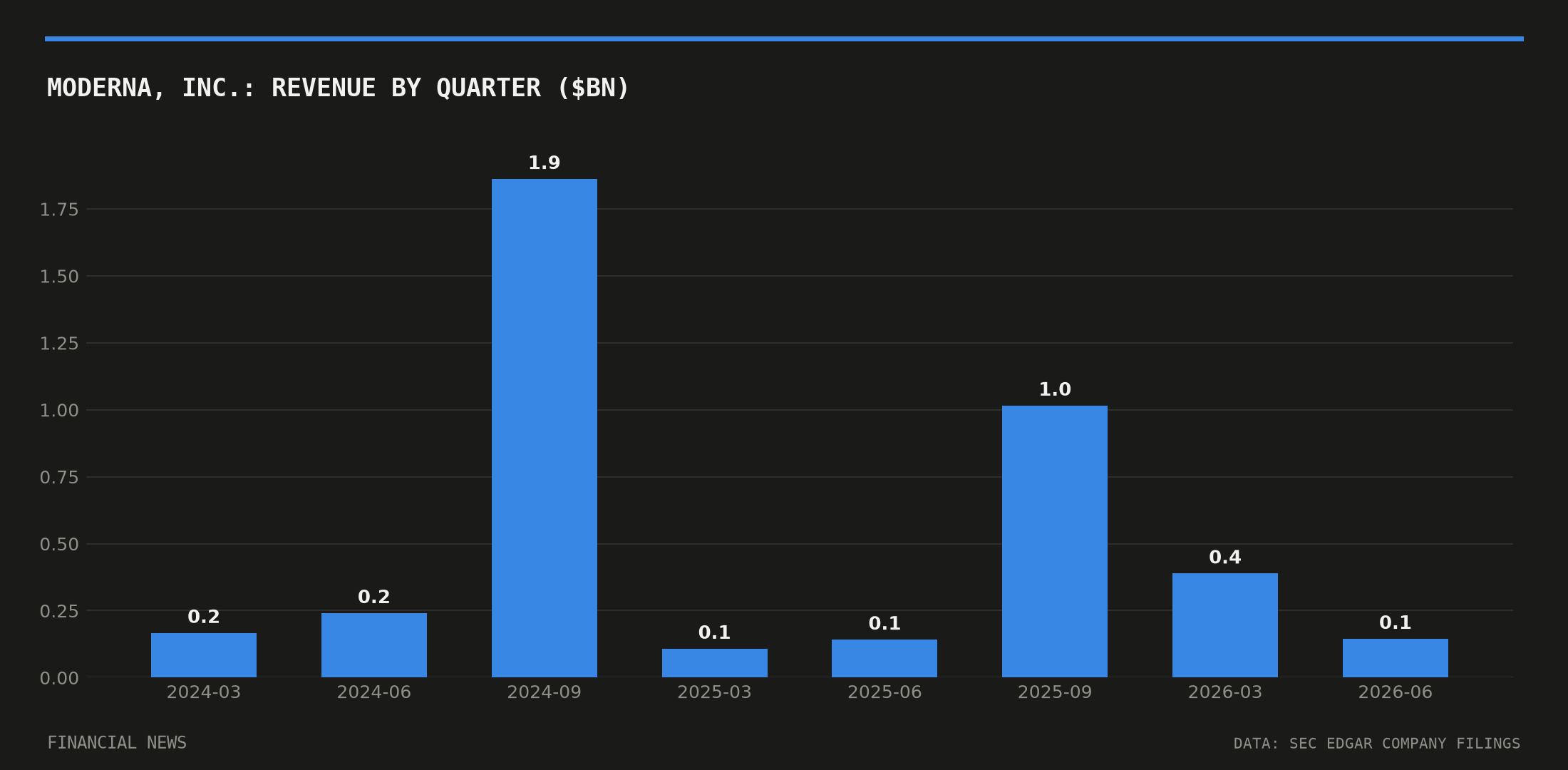
The volatility lands against a backdrop of persistent losses as Moderna leans on cancer and rare-disease programmes to offset collapsing Covid-19 vaccine demand. The company reported a net loss of $782m on revenue of just $145m in the second quarter of 2026, following a $1.343bn loss in the first quarter, according to filings with the SEC. Quarterly revenue has swung sharply between periods, from $1.016bn in the third quarter of 2025 – driven by seasonal vaccine deliveries – to $389m in the first quarter of 2026, underscoring how dependent the share price has become on pipeline news flow rather than product sales.
Intismeran autogene, partnered with Merck since 2016, is viewed inside both companies as the clearest near-term route to diversifying away from that vaccine dependency. Regulatory filings based on the INTerpath-001 dataset are expected to follow the Presidential Symposium presentation, with overall survival data – still immature – likely to shape how regulators and oncologists weigh the therapy’s long-term case.
This article is for information only and is not investment advice or a recommendation to buy or sell any asset. Markets move quickly; figures are correct as sourced at the time of writing. Always do your own research before making financial decisions.