Apollo Global Management (NYSE: APO) confirmed on 26 October 2026 that it will take a minority equity stake in Mubadala Capital, the Abu Dhabi-backed alternative asset manager. Neither company disclosed the size of the stake or the price paid.
Media reports before the announcement put the figure at nearly 10%, citing people familiar with the matter. That number appears nowhere in the official Apollo release or the companies’ joint statement.
What the companies actually said
Apollo joins the founders of Silver Rock Financial as an equity holder in Mubadala Capital, with Mubadala Investment Company remaining the majority shareholder, according to the joint release. Apollo is one of several new minority investors; together they are expected to commit an aggregate $5bn to Mubadala Capital’s investment strategies at initial close.
The deal is expected to close in the fourth quarter of 2026, subject to regulatory and legal approvals. Goldman Sachs and Jefferies advised Mubadala Capital, with Skadden Arps as legal counsel. Morgan Stanley and Paul, Weiss advised Apollo.
The CNBC report that first surfaced the nearly-10% figure, citing people familiar with the matter, also noted the deal “had not yet been publicly announced” at the time of its report. Within hours, the companies made it official — without putting a number on the stake.
A relationship that predates this deal
Apollo and Mubadala are not strangers. The two first struck a multibillion-dollar partnership in 2022 and extended it in 2024, according to Apollo’s investor relations archive. That history gives Monday’s stake purchase the shape of a deepening tie-up rather than a cold-start transaction.
Mubadala Capital itself is sizeable. It manages, advises and administers more than $755bn, while its wholly owned core alternatives businesses run more than $60bn, per figures cited by CNBC. The scale underscores why a sub-10% stake, even unconfirmed, drew attention from dealmakers across the City.
Shares rise, filings stay quiet
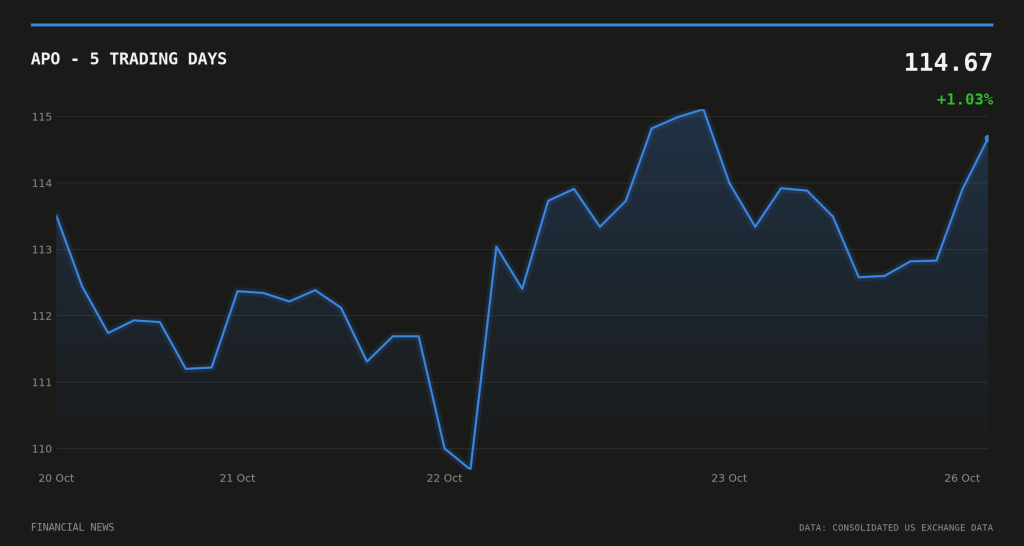
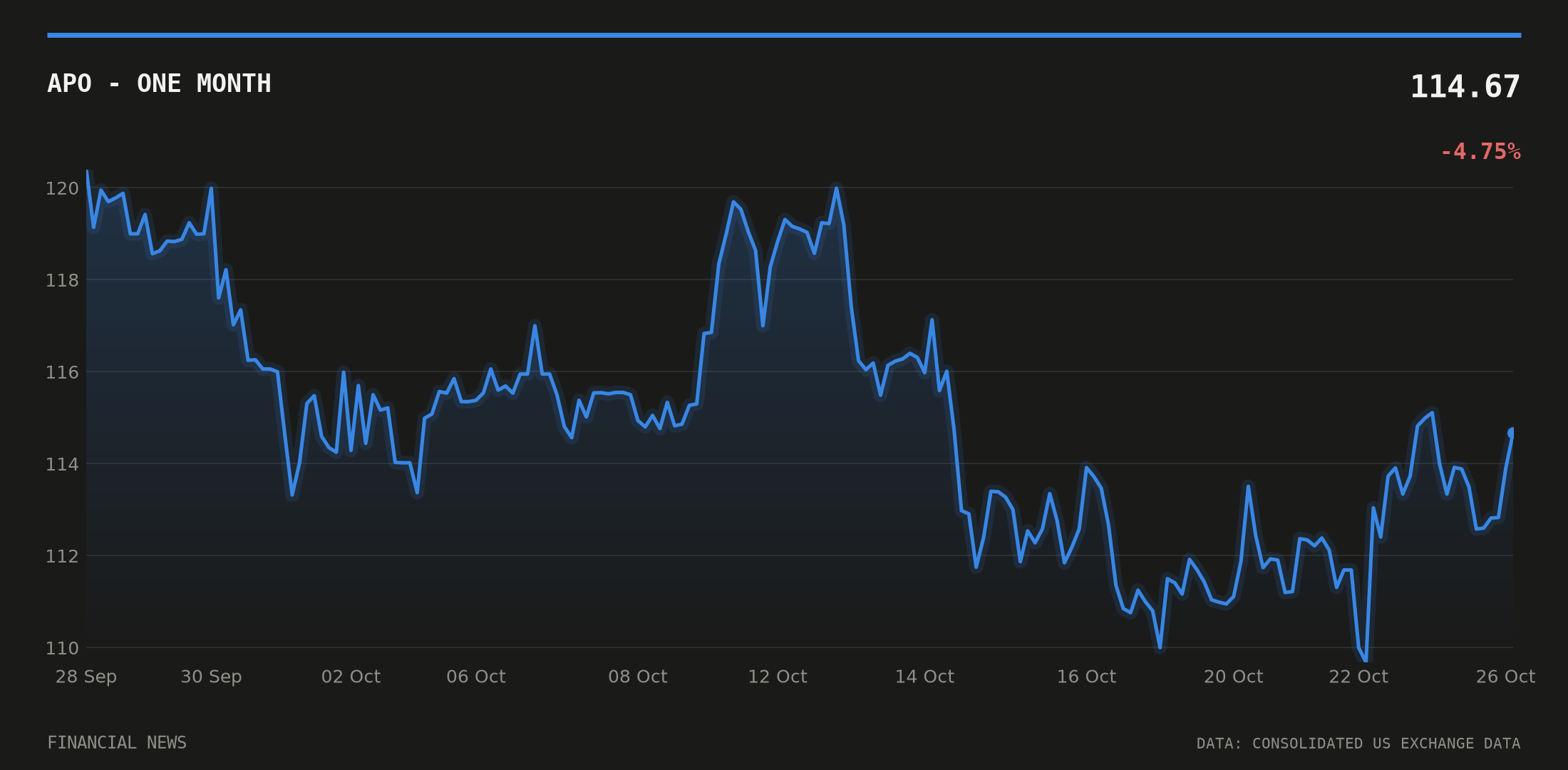
APO shares traded at $115.85 as of 26 October, up 1.73% on the day and within a 20-day range of $109.68 to $119.99. Trading volume ran below the 20-day average. No 8-K or other filing specific to the Mubadala Capital stake has appeared in Apollo’s SEC filing history as of the announcement; the most recent disclosures on record remain routine 10-Q submissions.
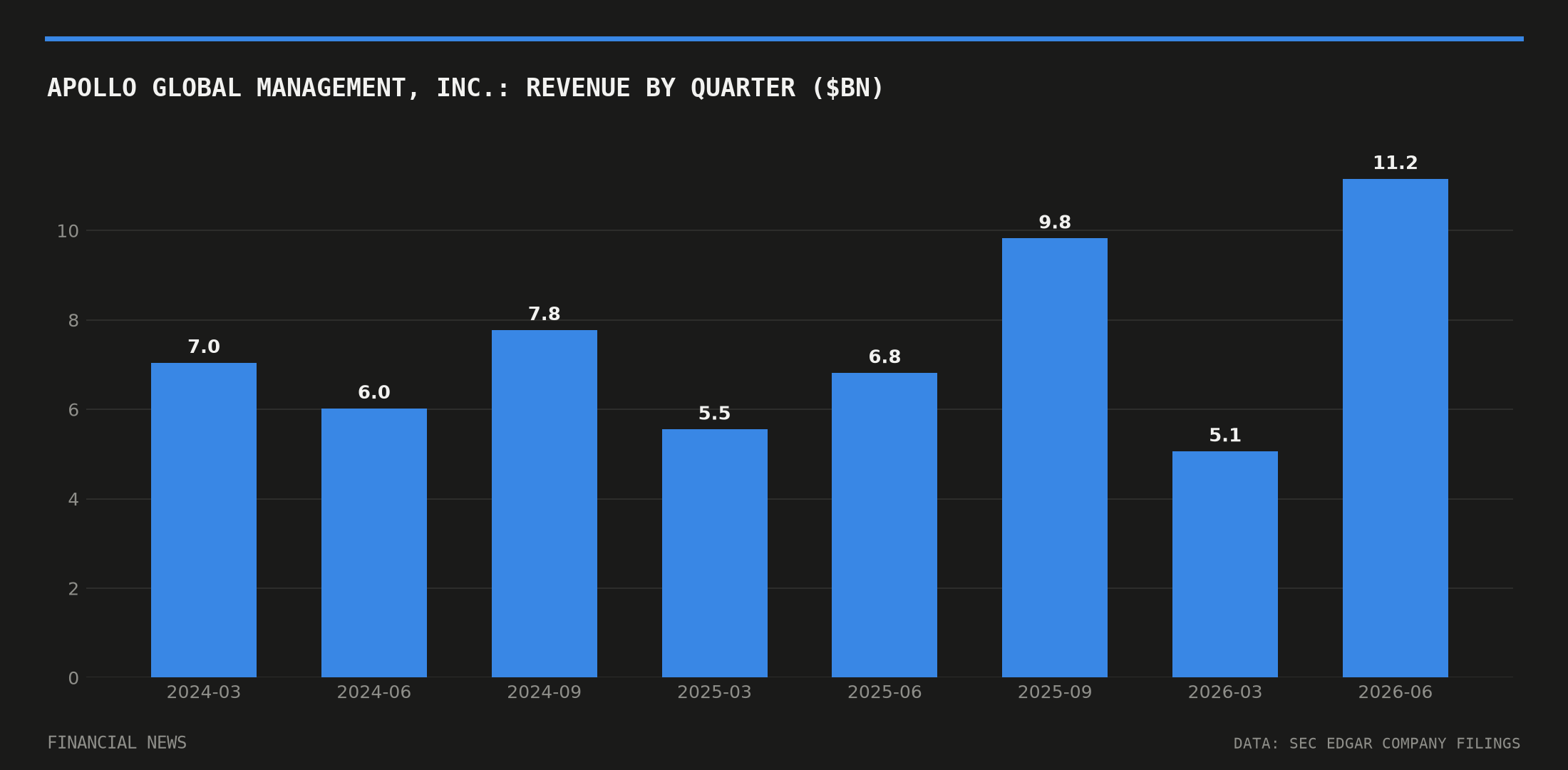
Those quarterly filings show how volatile Apollo’s reported earnings can be. Net income swung from a loss of $1.9bn in the first quarter of 2026 to a profit of $1.36bn in the second quarter, according to Apollo’s 10-Q filings with the SEC. Diluted earnings per share followed the same pattern, moving from a loss of $3.27 to a profit of $2.15 over the same two quarters. Revenue in the second quarter of 2026 reached $11.15bn, against $5.06bn in the first quarter, per the same filings. A year earlier, in the third quarter of 2025, net income ran to $1.74bn on revenue of $9.82bn, the sharpest quarter in the two-year run of figures disclosed to the SEC.
The backdrop for dealmaking has shifted too. The 10-year US Treasury yield stood at 4.96% on 22 October 2026, down from 5.13% previously, with the 10-year/2-year spread holding flat at 0.31 percentage points, according to Federal Reserve data. Easing long-term borrowing costs have generally supported private capital fundraising and stake sales across the alternatives sector this year.
Short interest in Apollo stock has eased in recent sessions. FINRA data show the short-sale ratio falling from 0.54 on 16 October to 0.362 by 23 October, suggesting less bearish positioning heading into the Mubadala Capital news.
What remains unconfirmed
The core of the story is solid: Apollo is buying into Mubadala Capital, and the companies confirmed it within hours of the leak. What nobody has confirmed, on the record, is how much of the business Apollo is getting — or what it is paying for it. Until a filing or an on-record statement puts a number on the stake, “nearly 10%” remains sourced to people familiar with the matter, not to the companies themselves.
This article is for information only and is not investment advice or a recommendation to buy or sell any asset. Markets move quickly; figures are correct as sourced at the time of writing. Always do your own research before making financial decisions.