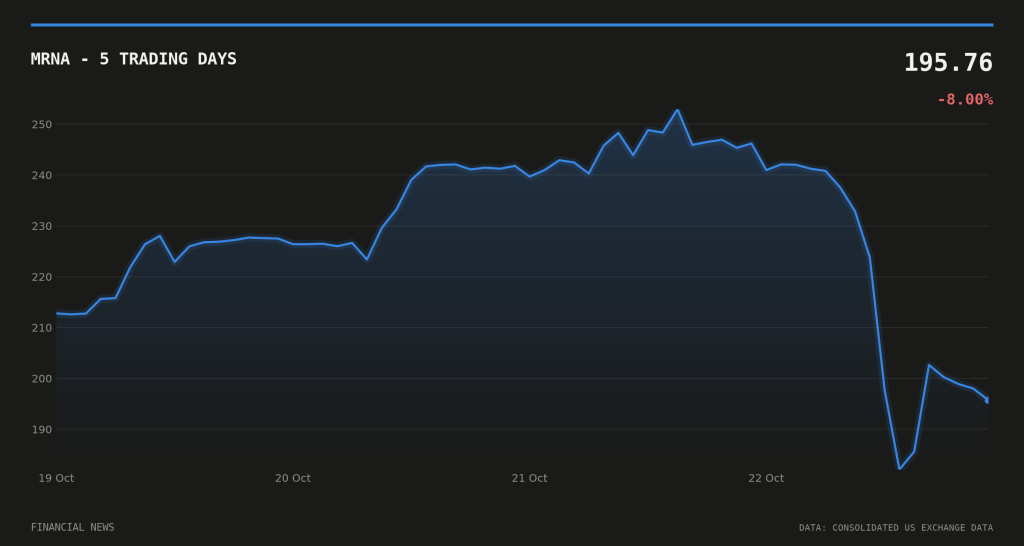
Shares in Moderna, Inc. (MRNA) closed down 25.2% at $183.88 on 22 October 2026, after a melanoma vaccine data leak surfaced hours before a scheduled presentation in Madrid.
The selloff wiped out about $24bn in market value, according to Reuters reporting carried by The Globe and Mail, ending a rally that had lifted the stock more than 500% so far in 2026.
Leak hit before the Madrid presentation
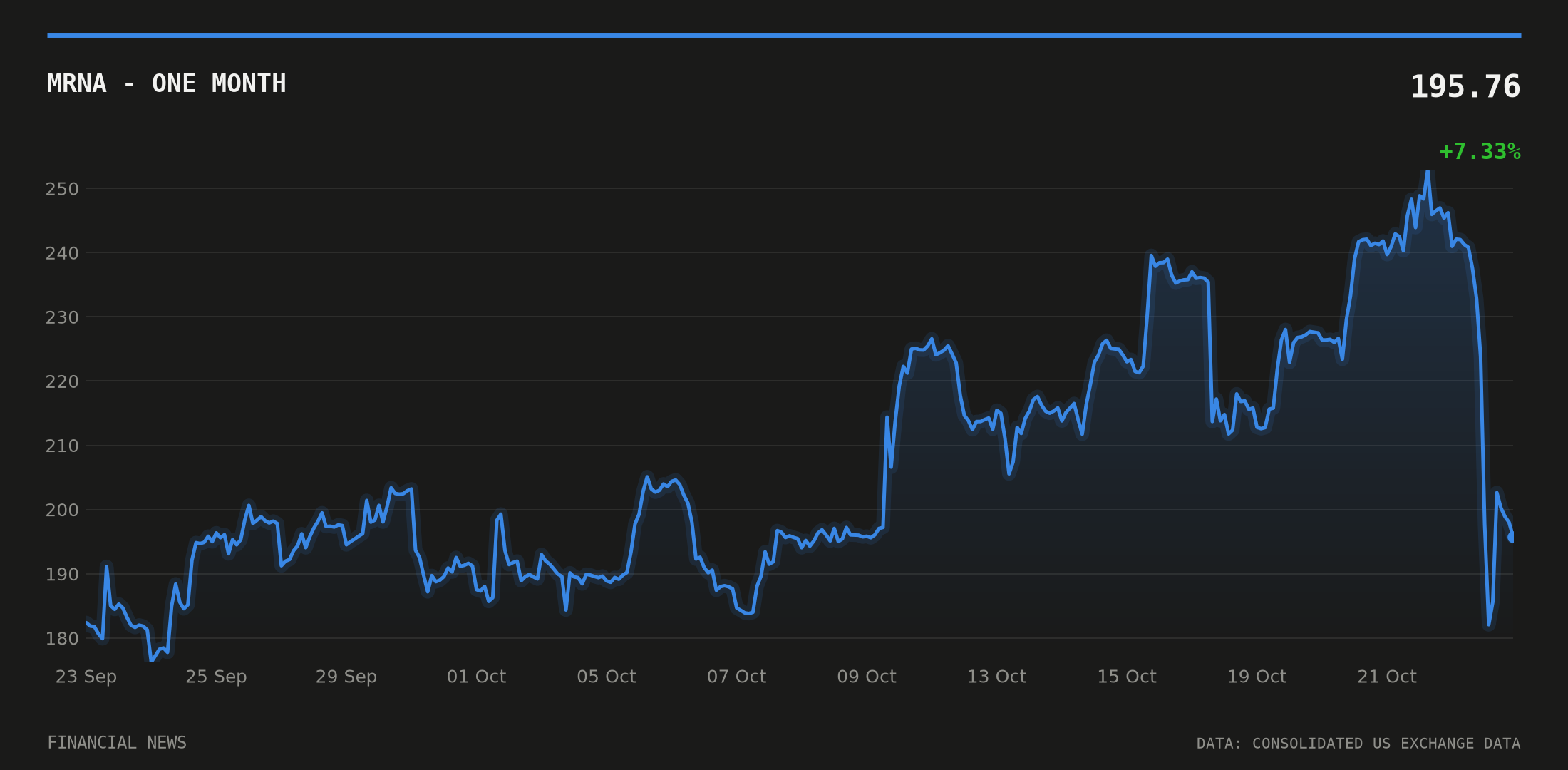
Partial results from the Phase 3 INTerpath-001 trial briefly appeared on the medical news site Oncology Central before being taken down, according to an investor notice from the Law Offices of Frank R. Cruz. Trading in Moderna shares was briefly halted once the reports spread, The Motley Fool reported.
Merck (MRK), Moderna’s partner on the vaccine, fell nearly 1% the same day. The full data had been due for the Presidential Symposium at the European Society for Medical Oncology congress in Madrid on 24 October.
What the data actually showed
The vaccine, intismeran autogene (mRNA-4157), is given alongside Merck’s Keytruda (pembrolizumab) to patients with high-risk melanoma after surgery. In the Phase 3 trial, the combination cut the risk of recurrence or death by 42% versus Keytruda alone, with a hazard ratio of 0.58 and a two-sided p-value below 0.001, Merck said in its official announcement.
The combination also cut the risk of distant metastasis or death by 38%, a hazard ratio of 0.62. Two-year recurrence-free survival stood at 82.2% for patients on the combination versus 70.0% on Keytruda alone, Merck disclosed.
Those figures are strong by oncology standards. They fall short, though, of the benchmark investors had been using: a Phase 2b readout from December 2023 that showed a 49% reduction in recurrence or death risk, a figure disclosed in Moderna’s 2024 annual report. The gap between 49% and 42% looks like the proximate trigger for the selling, rather than any sign the therapy failed.
A sell-the-news move, analysts say
Analysts at William Blair and TD Cowen described the reaction as a classic sell-the-news move rather than a verdict on the trial, Reuters reported via The Globe and Mail. Moderna’s stock had priced in high expectations: Citigroup analyst Geoff Meacham downgraded the shares a month earlier, calling the pre-leak valuation ‘unjustifiable’ given an implied need for roughly $13bn a year in oncology revenue, according to Forbes.
The move stayed largely contained to Moderna. Merck’s shares were barely affected, and 24/7 Wall St. reported that BioNTech (BNTX) dipped about 2% while Pfizer (PFE) edged higher on the same session, pointing to a selloff specific to Moderna’s reliance on the vaccine rather than a sector-wide retreat.
Positioning data add to that picture. FINRA’s daily short-sale ratio for Moderna held in a narrow band of 0.61 to 0.71 across the ten sessions before the leak, showing no build-up in short interest ahead of the news, according to FINRA figures. The wider market backdrop was equally quiet: the 10-year Treasury yield stood at 5.13% on 21 October, barely moved from 5.12% the prior session, according to Federal Reserve data.
Losses persist despite oncology hopes
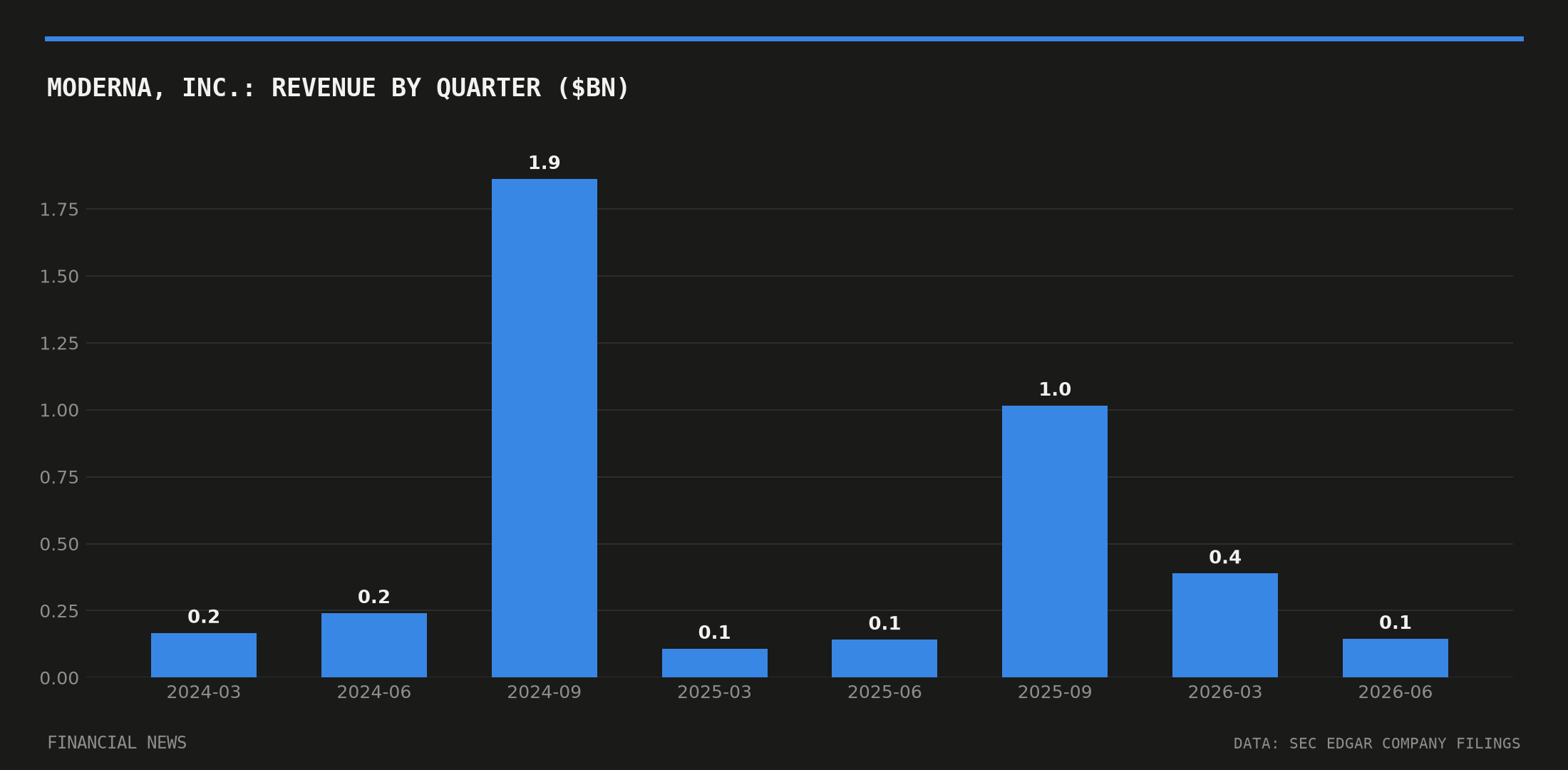
The episode lands as Moderna continues to post losses from its core business. The company reported a net loss of $782m for the second quarter of 2026, according to its quarterly filing with the SEC. Investors had been betting that the melanoma vaccine, alongside other oncology candidates, could eventually offset declining Covid-19 vaccine revenue, which helps explain why a slightly softer-than-hoped readout hit the shares as hard as it did.
Attention now turns to Madrid, where Merck and Moderna are due to present the full INTerpath-001 dataset at the ESMO Presidential Symposium on 24 October. Market participants will be watching whether the formal presentation, including any further safety or subgroup detail, changes the reading of a trial that most oncology specialists still regard as a clear success.
This article is for information only and is not investment advice or a recommendation to buy or sell any asset. Markets move quickly; figures are correct as sourced at the time of writing. Always do your own research before making financial decisions.