

Last week, Donald Trump stated that Canada wants to reach a trade agreement “very badly” and that it might happen “fairly soon.” A few days later, he called Canada a “terrible trade partner,” signed a memo instructing federal agencies to remove goods of Canadian origin from U.S. government procurement, and threatened to impose high tariffs on the European Union if it proceeded with a proposal to admit Canada as its first associate member. The same president made both sets of remarks during the same week.
Trump’s approach to trade has become accustomed to this combination of growing punitive measures and optimism about a deal. If you acknowledge that pressure and negotiation are the same tool for this administration, it is not inherently contradictory. However, it does make it genuinely challenging to determine the true direction of US-Canada relations.
The background is important. Last month, trade negotiations between Washington and Ottawa broke down, with each party accusing the other. Canadian Prime Minister Mark Carney reportedly turned down a near-deal at the last minute, according to U.S. officials. According to Canadian officials, the United States did not make significant concessions, especially with regard to truck tariffs. As a result, Ottawa’s retaliatory actions went into effect on September 8, the U.S. imposed 50% tariffs on a wide range of Canadian goods, and later this month, Trump issued an executive order prohibiting the import of specific Canadian motorcycles, dairy products, and alcoholic beverages. In industries ranging from heavy machinery to auto parts, supply chains that cross borders several times during production are beginning to feel the disruption in tangible ways.
Trump’s statements that a deal might be reached “fairly soon” are met with some skepticism in that context, which makes sense. Observing this from the outside, it seems as though the punitive executive orders and the upbeat language are operating independently of one another. The office of Canadian Trade Minister Dominic LeBlanc issued a cautiously neutral statement in response to the most recent procurement order, stating that they had “taken note” of the restrictions and would review them with an emphasis on the interests of Canadian workers. Not precisely the words of two parties coming to an agreement.
The EU dimension followed. Speaking to the European Parliament on September 17 with Canadian Prime Minister Carney in the front row, Ursula von der Leyen, President of the European Commission, suggested that Canada become the first associate member of the EU. She spoke of expanding beyond trade to a more comprehensive “alliance for the future” encompassing defense, technology, energy, and vital minerals. Her language was purposeful. Carney, who has been clear about Canada’s need to lessen its reliance on the US economy, referred to the EU and Canada as “natural partners.” Additionally, he is anticipated to speak directly to the parliament.
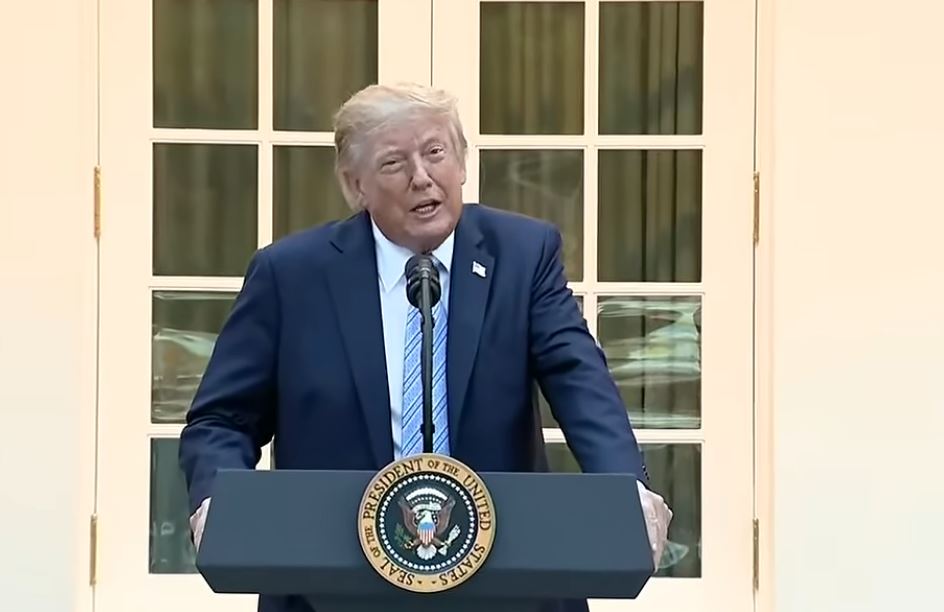
Trump responded right away. He described the EU proposal as “laughable” and threatened to impose “very serious tariffs or stop trading with Europe” if he saw it as a “hostile act.” If implemented, the threat would violate the current US-EU trade agreement and run the risk of quickly escalating on a second front. The minister of Europe for France swiftly retaliated, pointing out that Washington has no authority to control the geopolitical decisions made by the EU. A representative for the European Commission stated that the planned collaboration with Canada was “not against anyone else, but for our common strength.”
Since the EU does not currently have a mechanism for it and the proposal caught several member states off guard, it is still unclear how seriously the idea of EU-Canada associate membership will develop. However, the political message it conveys is clear. After its relationship with Washington became erratic, Canada is searching for other anchors. Whether or not that change results in official institutional outcomes, it is already changing Canada’s international positioning.
It’s still difficult to determine exactly what Trump wants from Canada. He has referred to Canada as the “worst country to deal with” and charged that it wants the advantages of being a U.S. state without the responsibilities. In the same sentence, he has also stated that a deal is near. Both Ottawa and Brussels are silently observing whether that agreement comes to pass before those inconsistencies are resolved.
