The Ohio State University and Microsoft Corp (NASDAQ: MSFT) announced a five-year strategic partnership on 10 November 2026. The deal pairs Ohio State’s Wexner Medical Center with Microsoft’s AI and cloud technology across clinical care, education and research.
Neither side disclosed a contract value. No related filing has surfaced on SEC EDGAR.
What the five-year strategic partnership covers
The agreement spans four areas: building what the universities call a smarter, more resilient care environment; modernising cloud and data infrastructure; applying AI to support clinicians and researchers; and expanding AI skills and certifications for students and communities across Ohio, according to the joint release.
The tie-up extends work already under way. A smart-hospital platform using Azure and connected devices for energy and resource management is already live at Ross Heart Hospital and James Outpatient Care, according to StreetInsider. Ohio State and Microsoft have worked together for decades, including a 1999 software licensing agreement covering students, faculty and staff, according to Ohio State News.
No disclosed figures, no market reaction
TheNextWeb and TradingView both reported that the release carried no contract value or quantified financial impact for Microsoft. That absence matters for a company of Microsoft’s size: the group reported revenue of $92.279bn and net income of $36.629bn for the quarter ended 30 September 2026, its fiscal first quarter of 2027, according to its 10-Q filing. Diluted earnings per share for that quarter came to $4.92.
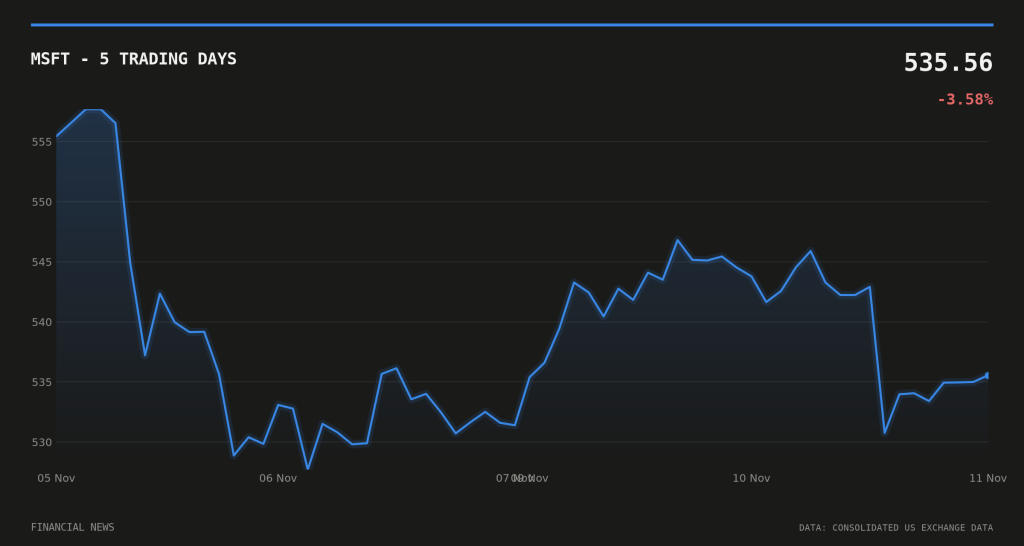
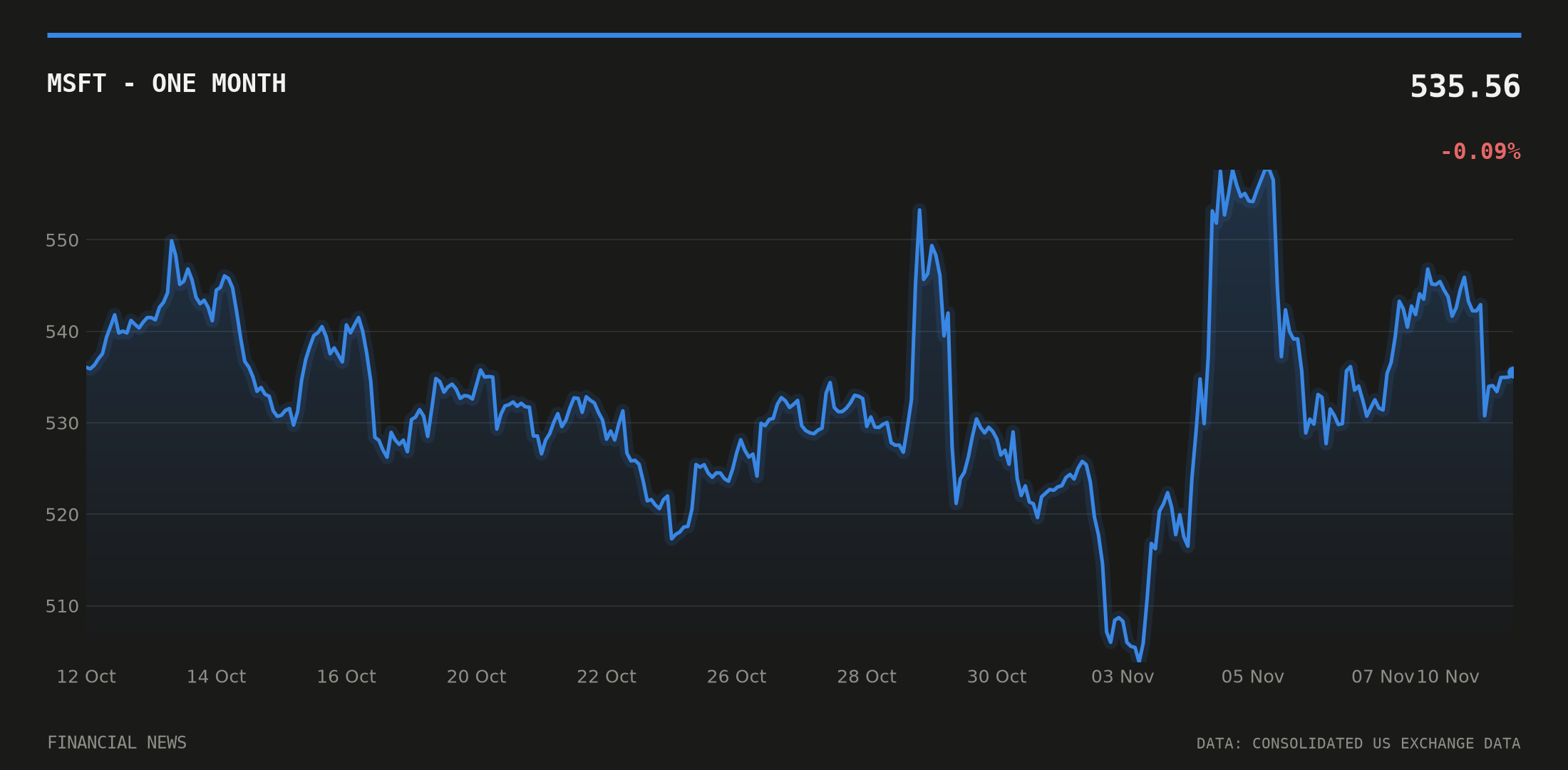
Microsoft shares traded at $535.00, up 0.8% on the day and 1.6% over 20 sessions, as of 11 November 2026. That is in line with the stock’s recent range of $503.82 to $557.70 over the prior 20 days, consistent with no outsized reaction to the announcement.
Two Form 4 filings landed either side of the announcement. Chief executive Satya Nadella filed a Form 4 on 9 November for the period covering 6 November, and finance chief Amy Hood filed a separate Form 4 on 10 November. Both reflect routine transactions under pre-existing trading plans and are unconnected in content to the partnership.
Earnings trend shows steady growth, not a step change
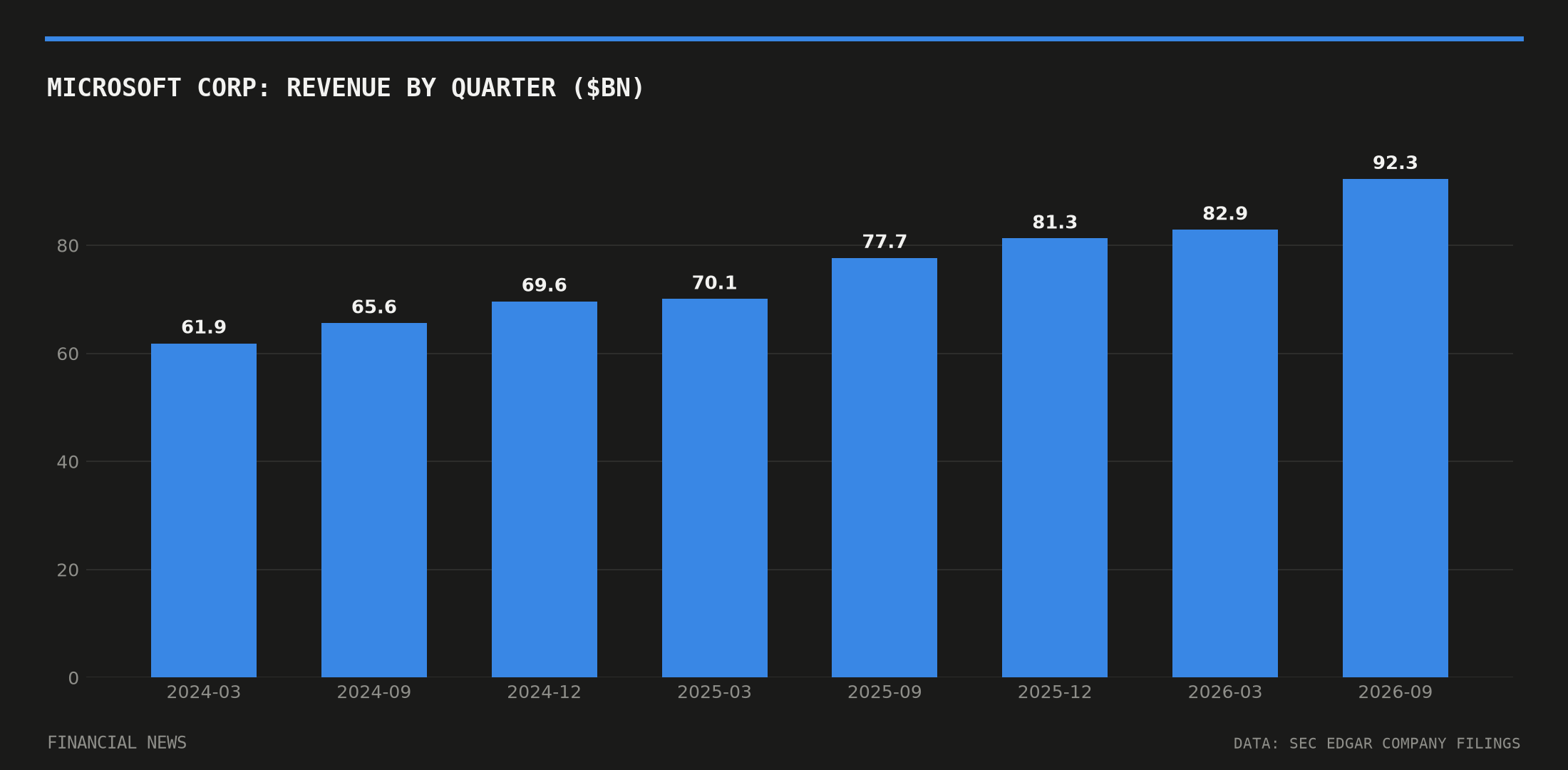
Microsoft’s net income has climbed in each of the past several reported quarters: $21.939bn in the quarter ended March 2024, rising to $24.667bn by September 2024, $24.108bn in December 2024, and $25.824bn by March 2025, according to the company’s quarterly filings. The pace accelerated through the following year, with net income reaching $27.747bn in the quarter ended September 2025 and $38.458bn in the December 2025 quarter, before easing to $31.778bn in the March 2026 period and climbing again to $36.629bn in the latest reported quarter. Quarterly revenue followed a similar upward path, from $61.858bn in the first quarter of the table to $92.279bn in the most recent filing. Against that backdrop, a healthcare and education partnership without a stated dollar figure is unlikely to move the needle on its own, however it may feature in future investor materials on Microsoft’s AI and cloud strategy.
The broader macro backdrop was unremarkable around the announcement. The 10-year Treasury yield stood at 4.88% on 9 November, up slightly from 4.86% the prior reading, while the 2-year yield rose to 4.56% from 4.51%, according to data from the Federal Reserve Bank of St. Louis. The 10-year/2-year spread narrowed to 0.25 percentage points from 0.32. US unemployment ticked down to 4.1% in October from 4.2% the prior month, while headline CPI edged up to 337.476 from 336.298, pointing to a steady rather than shifting rate environment for large-cap technology names heading into year-end.
For now, the partnership stands as a reputational marker of Microsoft’s push into healthcare AI rather than a disclosed financial event. Investors watching Microsoft’s cloud and AI narrative may look for mention of the Ohio State deal, or similar healthcare tie-ups, in the company’s next quarterly commentary, though no date for additional disclosure has been set.
This article is for information only and is not investment advice or a recommendation to buy or sell any asset. Markets move quickly; figures are correct as sourced at the time of writing. Always do your own research before making financial decisions.