JPMorgan Chase & Co (NYSE: JPM) declared preferred stock dividends on its Series II, OO and PP shares on 13 November 2026, the bank said.
The declaration covers three outstanding series of non-cumulative preferred stock and lands the same day JPMorgan filed a routine insider transaction form unrelated to the payout.
Routine filing, rising payout
Quarterly preferred dividend declarations are standard housekeeping for large US banks, filed on near-identical schedules each quarter. JPMorgan had $5.1 trillion in assets and $372bn in stockholders’ equity as of 30 September 2026, according to the release.
The wrinkle sits inside the Series II preferred. Its dividend has moved to a floating rate tied to a reference benchmark since 1 April 2025, a structure confirmed in JPMorgan’s quarterly filings. That mechanism means the per-share payout tracks short-term interest rates rather than staying fixed.
The numbers show the effect. Series II paid $158.37 per depositary share in February 2026, rose to $162.71 in May, and reached $165.36 in August, the most recent precedent disclosed before this latest declaration, according to JPMorgan’s investor relations archive. The OO and PP series, which are not floating-rate, paid $162.50 and $152.50 per share respectively in the same August round.
Rates still climbing
The move tracks a broader shift in US rates. The 10-year Treasury yield stood at 5.10% on 12 November 2026, up from 4.98% at the prior reading, while the 2-year yield rose to 4.86% from 4.73%, according to data from the Federal Reserve Bank of St Louis. The 10-year/2-year spread widened to 0.27 percentage points from 0.24.
Higher short-term yields feed directly into Series II’s reference rate, which helps explain why its quarterly distribution has climbed in each of the last three declarations. Investors holding the floating-rate series have effectively received a pay rise each quarter rates have pushed higher.
The pattern is not unique to JPMorgan. Morgan Stanley issued an almost identical preferred-dividend declaration on the same day, underscoring that this is synchronised quarterly mechanics across the largest US banks rather than anything specific to JPMorgan’s balance sheet.
Shares little moved
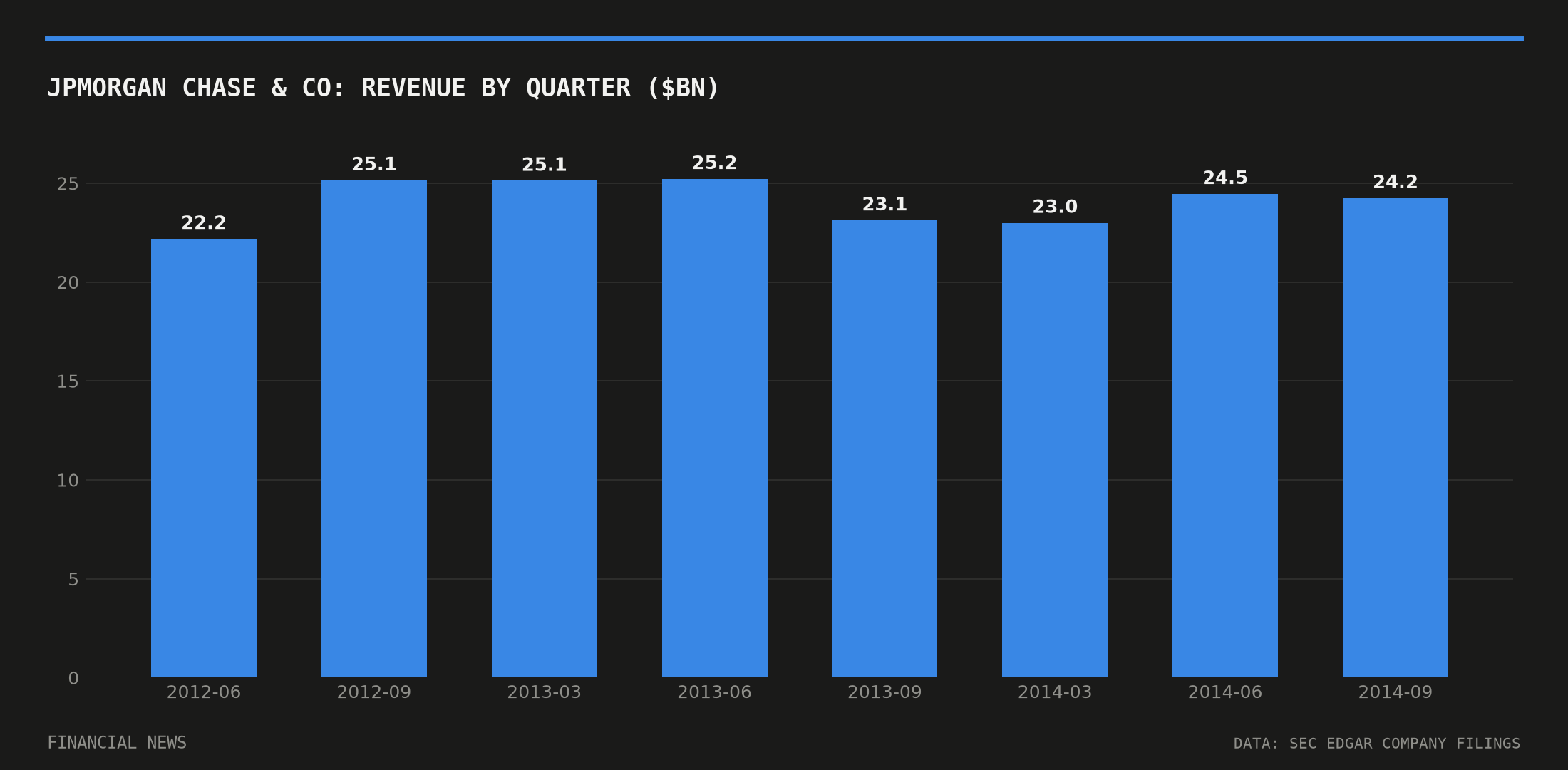
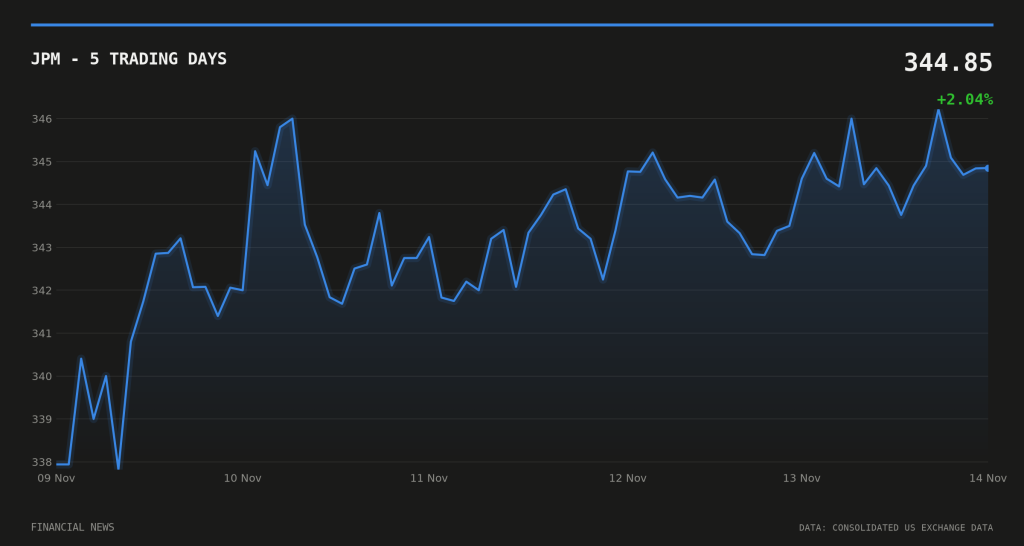
JPM shares closed at $344.85, up 0.32% on the session and 3.68% over the prior 20 trading days, with the stock trading in a range between $332.43 and $358.57 over that period, according to consolidated US exchange data. Trading volume ran below its 20-day average, consistent with a declaration that carries no earnings surprise and requires no market reaction.
Short interest in the stock has also eased in recent sessions. FINRA’s daily short-sale data put JPM’s short-volume ratio at 0.347 on 13 November, down from readings above 0.45 earlier in the month, suggesting no building bearish positioning around the announcement.
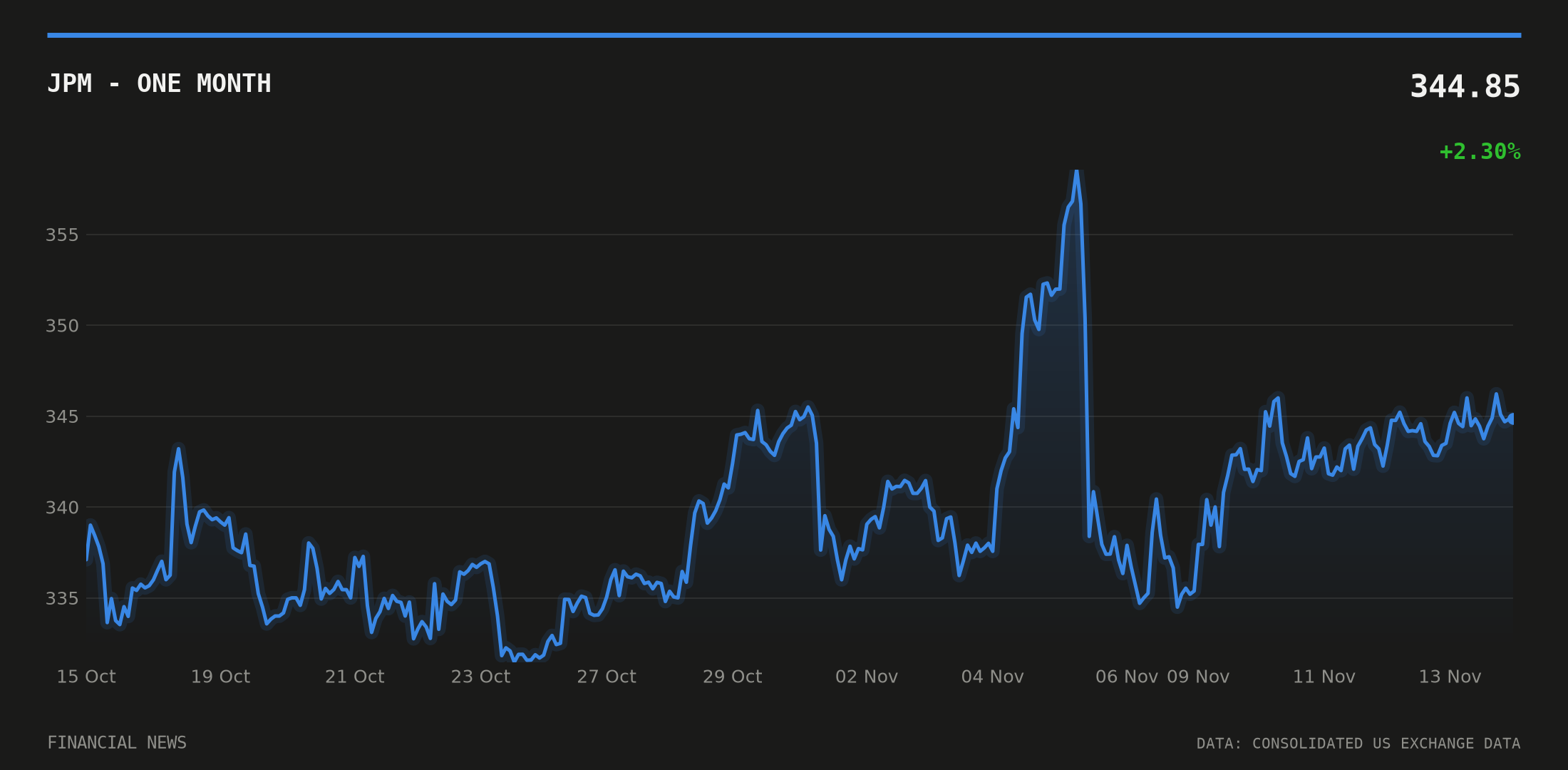
JPMorgan’s underlying earnings have remained strong through the period in which the floating-rate dividend has risen. The bank reported net income of $15.3bn for the third quarter of 2026, diluted earnings per share of $5.57, and $21.2bn of net income in the second quarter, according to its quarterly filings with the SEC. That profitability underpins the bank’s capacity to maintain preferred payouts even as the floating-rate tranche grows more expensive to service.
What the mechanics mean for holders
For holders of Series II depositary shares, the structure means future payouts will keep tracking the path of short-term US rates rather than remaining static. Market participants watching the Federal Reserve’s rate path into 2027 will be weighing whether the recent run of increases in the 2-year yield persists, since that benchmark feeds directly into the next declaration cycle.
JPMorgan typically announces the next round of preferred stock dividends roughly three months after the prior declaration, in line with the February, May, August and November cadence seen over the past year. The bank’s investor relations site carries the full schedule of record and payment dates for each series.
This article is for information only and is not investment advice or a recommendation to buy or sell any asset. Markets move quickly; figures are correct as sourced at the time of writing. Always do your own research before making financial decisions.