There is a Verizon store somewhere in Midtown Manhattan that has a glass front, a red logo, and a row of phones on plastic stands, just like every other Verizon store. By design, it is unremarkable. Wireless carriers require retail, which is why these stores exist. They require billing infrastructure, back office systems, and customer service representatives. To put it succinctly, they require everything that requires years and billions of dollars to construct. Last week, Dan Schulman, CEO of Verizon, wanted to make precisely that point.
Schulman argued against the notion that SpaceX and its Starlink satellite network could easily disrupt the U.S. mobile market during Verizon’s third-quarter earnings call on October 26. According to his estimate, in order to compete at scale, SpaceX would need to invest between $300 billion and $500 billion in addition to four to six years of construction before it would have any real chance of luring significant subscribers away from current carriers. According to him, he worked “under the assumption that everything SpaceX says they will do, they will do, and that they will execute flawlessly.” Then he continued with his argument.
A physics and economics argument forms the basis of Schulman’s position. He claimed that in suburban and urban areas, where 98% of Verizon’s revenue is generated, satellite connectivity just cannot match a terrestrial network. In those settings, he proposed that Verizon’s network is between 100 and 1,000 times more efficient than satellite.
SpaceX would need to build out 65,000 to 80,000 macro cell sites nationwide, purchase or lease a sizable amount of spectrum, construct fiber backhaul, install radio access network equipment, and then add retail and customer service operations on top of all of that in order to close that gap. His conclusion was clear: SpaceX would end up with essentially the same network, capabilities, and cost structure that Verizon currently has after all that investment and time. It would be the sixth rival in the US market, at most. Not fourth. Sixth.
In a brief response on X, Elon Musk stated that the real timeline would be two or three years rather than four to six. He did not provide a cost estimate. It’s still unclear who is interpreting the situation more accurately, and the distance between those two accounts is large enough to fit a satellite dish. Even SpaceX may not believe that starting from scratch is the quickest path, as evidenced by the company’s exploration of a potential acquisition of Boost Mobile to expedite its journey to a terrestrial network.
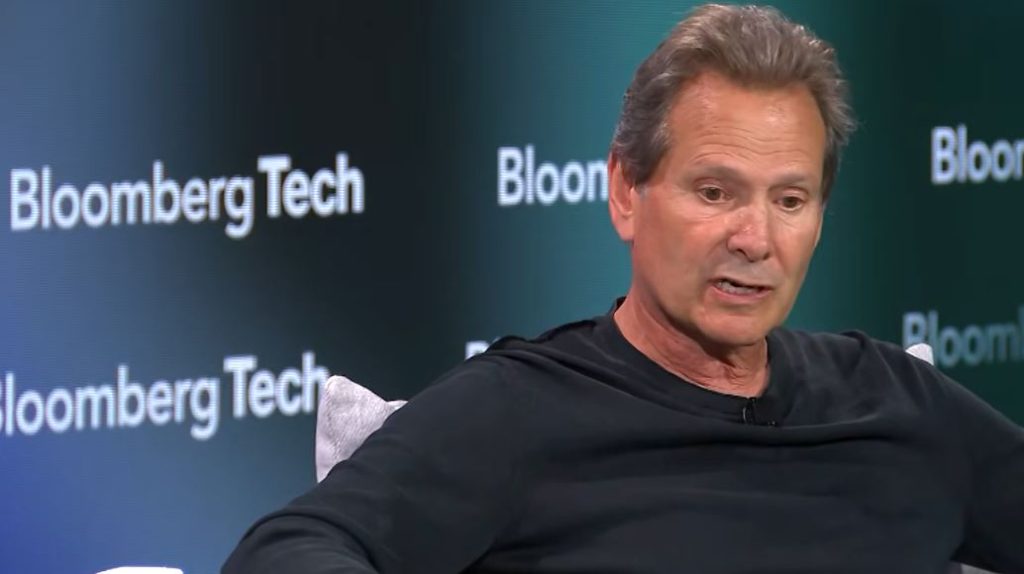
The fact that Schulman’s remarks were so detailed seems to have contributed to their impact. Saying that competition is difficult is one thing. On a live earnings call, guiding analysts through capital timelines, spectrum requirements, and macro site counts is quite another. According to Schulman, the information showed that Verizon has been closely monitoring SpaceX’s actions and that the company isn’t viewing this as a remote possibility because they are aware of who SpaceX is speaking to on towers. Prior to the call, telecom stocks had already been declining due to concerns about SpaceX. Following it, Verizon’s stock increased.
Additionally, Schulman clarified that Verizon does not intend to coast through the next five years while a rival develops. In a few years, the company hopes to have gigabit-plus millimeter wave coverage nationwide and is testing early 6G applications. Instead of framing it as a static defense, he presented it as a moving target. Verizon hopes to be two or three generations ahead of its current state of technology by the time SpaceX completes construction. Execution, funding, and variables that neither company has complete control over will determine whether that holds up.
The aspect of this debate that never made headlines is the most pertinent to regular consumers: Verizon will compete “ferociously” if SpaceX enters the market, according to Schulman. It’s worth clinging to that statement from the CEO of one of the biggest telecom firms in the nation. Anyone who pays a monthly phone bill might end up being the true winner of whatever happens next.