

Unilever volume growth reached its highest level in more than a decade during the second quarter of 2025, the consumer goods group reported on Tuesday, prompting management to raise its full-year guidance and sending shares 5% higher on the day.
Underlying sales rose 4.8% in the six months to 30 June, composed of 4.2% volume and 0.6% price. Momentum accelerated sharply into the second quarter, where underlying sales grew 5.8% on volume of 5.5%.
Q2 Unilever volume growth surprises the market
Aarin Chiekrie, equity analyst at Hargreaves Lansdown, said: ‘Unilever’s underlying sales growth accelerated sharply to 5.8% in the second quarter, far outpacing market expectations of 4.3%. This was driven by impressive volume growth across all its business segments, marking Unilever’s best volume quarter in over a decade.’
Chief executive Hein Schumacher said: ‘We have delivered a strong volume-led performance in the first half, with a significant step-up in the second quarter, the best volume quarter at Unilever in over a decade. Our Power Brands continued to outperform, with all Business Groups delivering volume-led growth.’ The quotes are drawn from Unilever’s H1 2025 results.
Turnover edged up 0.5% to €25.6bn, as operational gains and acquisition contributions were largely offset by currency headwinds. Free cash flow improved by €0.5 billion to €1.5 billion in the first half, while brand and marketing investment ran at 16.1% of turnover.
Power Brands and emerging markets carry the half
The group’s Power Brands, which include Dove and account for 78% of turnover, grew 6.0%. All four business groups delivered volume-led growth.
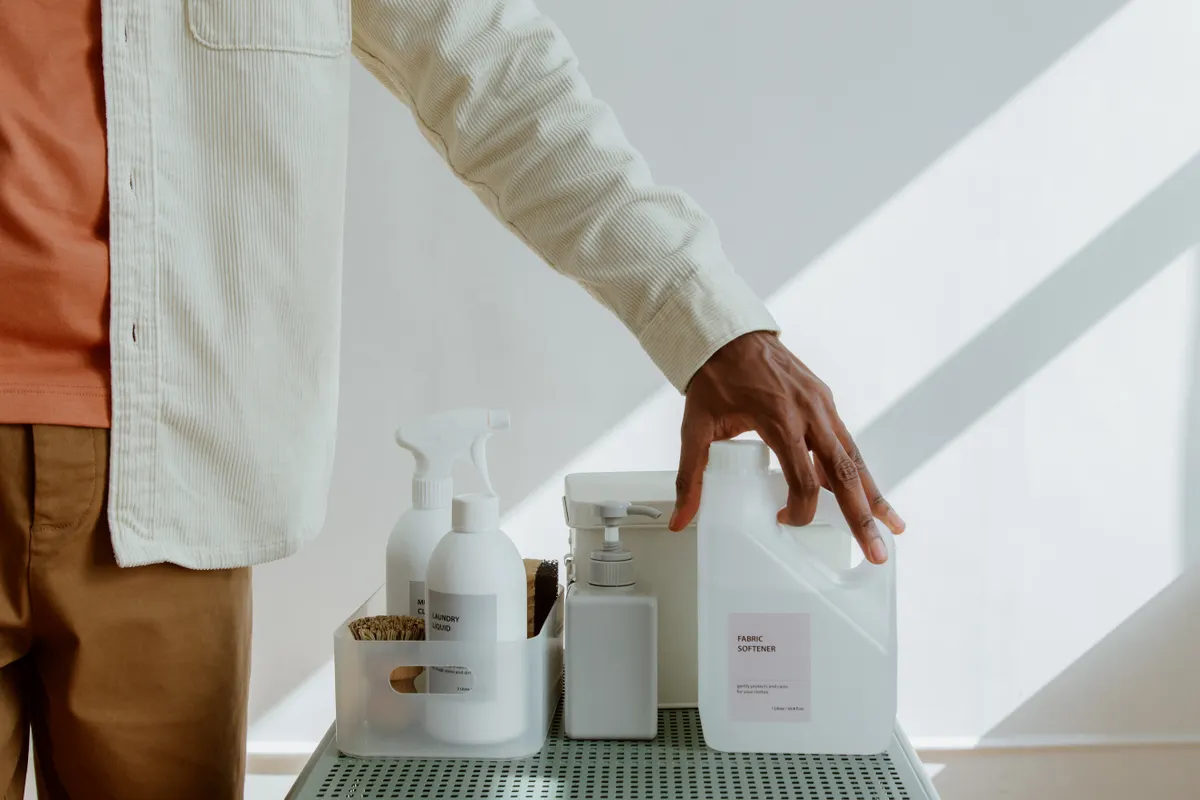
Home Care was the strongest performer for the half at 7.6%, with Q2 underlying sales accelerating to 9.1% on volume growth of 7.4%, supported by broad gains across Fabric Cleaning, Fabric Enhancers and Home & Hygiene. India, Brazil and Indonesia were the key contributors.
Beauty & Wellbeing grew 5.9% for the half, with Q2 underlying sales reaching 8.1%, supported by Dove, Sunsilk, Vaseline, K18 and Unilever’s prestige beauty labels. Personal Care grew 4.8% for the half and 5.9% in Q2, with the group reclaiming market leadership in US deodorants.
Foods lagged at 1.2%, held back by soft developed markets and stiffer competition in US condiments, where Unilever is attempting to recover share in premium and avocado mayonnaise.
Emerging markets, which represent 60% of the group, grew 7.0%, led by India, Indonesia and Latin America. Corrective action in Brazil has restored momentum. North America grew ahead of its market, aided by a portfolio shift towards beauty and personal care. Europe slipped 0.9%.
Underlying operating margin improved 10 basis points to 20.3%, supported by an €800m productivity programme completed ahead of schedule and tighter overhead control. Underlying earnings per share rose 2.4% to €1.61. On a reported basis, diluted EPS fell 2.5%, dragged down by currency effects.
Garry White, chief investment commentator at Raymond James, said: ‘There was another solid performance from Unilever in the second quarter, driven primarily by volume growth rather than price increases. As a result, management upgraded its guidance for the full year. This reflects the group’s focus on expanding market share while maintaining pricing discipline.’
Guidance raised; commodity costs loom in the second half
Unilever now expects full-year underlying sales growth within its 4% to 6% range, with around 3% volume growth and a modest improvement in operating margin on last year’s 20.0%.
Second-half underlying sales growth is guided at 4% to 5%, this time led more by pricing as commodity-driven increases feed through.
The group expects commodity inflation to remain elevated in the second half and plans to manage it through calibrated pricing, productivity improvements, formulation flexibility, pack-price architecture and sourcing actions. First-half gross margin of 46.8% is expected to hold broadly steady in the second half.
The second-half pricing test will be the clearest read yet on whether the group can push through cost recovery without surrendering the volume momentum it spent much of 2024 rebuilding. Foods and the US condiments category are the segments where that balance is hardest to strike.
