

Every October, as Ireland’s households prepare for the budget announcement, the same silent calculation goes on in the background: how much more will the heating oil cost this winter? “More than last year” has been the response for years. However, the October 6 announcement of Budget 2027 changed that equation, at least in theory.
After rising to €63.50 and threatening to reach €71 by May 2026, the carbon tax on home heating oil has been lowered to €48.50 per ton of CO2. In comparison to where the tax was trending, that rollback amounts to about €40 in savings for a 900-liter fill of kerosene, which is the typical order for a rural Irish home heading into a cold season. It is more like €45 on a 1,000-liter tank. For a family living on a fixed income or a single salary, especially in the midlands and the west where oil heating is practically the only viable option, this is not a small amount.
Ireland has a long-standing carbon tax. It was first implemented in 2010 as part of the nation’s initiative to gradually increase the cost of fossil fuels in order to encourage households to switch to greener options. Under the Finance Act 2020, which established a clear roadmap, the rate has been rising annually, reaching €7.50 per ton annually until 2030, when it would reach €100 per ton. That endpoint would have resulted in a carbon tax component of more than €220 for a 900-liter fill. In theory, the trajectory seemed doable, but in reality, it was truly burdensome, particularly when oil prices fluctuated on top of it.
Not only did Finance Minister Simon Harris announce a pause, but he also announced a reversal, removing the rates from the previous two years and halting future increases for the duration of the government. He was straightforward about the cause: he described energy expenses as “the most acute area of pressure” in household budgets. Speaking with residents of Westmeath, Roscommon, or Donegal who frequently spend €800 to €1,000 on a single oil delivery and have no viable short-term alternatives makes it difficult to disagree with that assessment.
The issue is that the reduction in the carbon tax did not immediately result in cheaper gas prices. According to industry sources, kerosene prices actually increased in the days after the budget by about 10 to 12 cents per liter, more than doubling the amount saved by the carbon tax.
Within days, a 500-liter delivery that had cost between €800 and €810 the week prior to the budget was sitting at about €850. In simple terms, Nicholas Hayes of the UK and Ireland Fuel Distributors Association described the budget measure as a “non-event” for households. In anticipation of a drop in oil prices, thousands of people postponed placing their orders, which led to an increase in demand at a time when supplies were already in short supply. In other words, before the tax savings reached anyone’s tank, they were absorbed by the market.
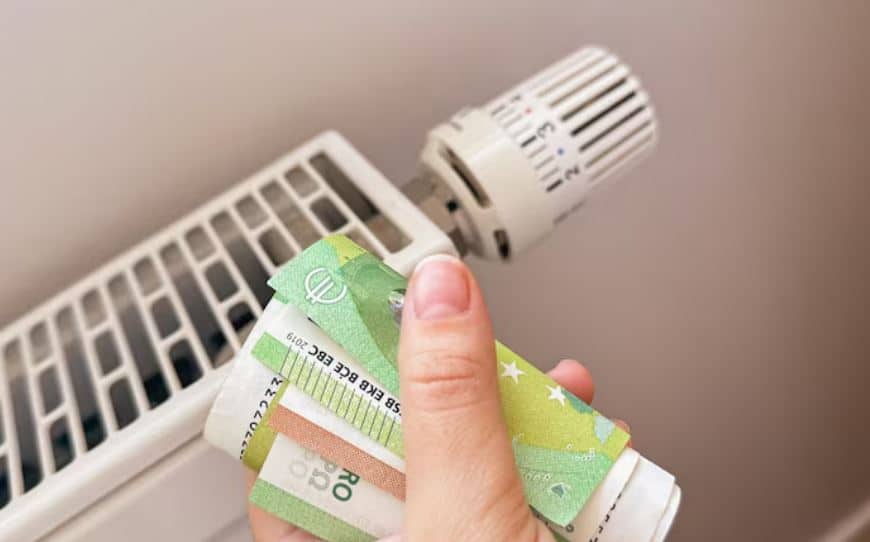
As supply chains adapt and wholesale prices level off, the situation might stabilize. However, it does highlight the fundamental conflict at the core of any tax-based strategy for energy costs: the government sets its own prices, but it has no control over what the market does in response. The current rate of €48.50 per ton increases the cost of heating oil by about 18 cents per liter, or between €157 and €180 for a standard fill, depending on the size of the tank. That’s real money, but it’s also just one part of a price that changes every day based on distributor margins, shipping logistics, and Middle Eastern events.
Historically, grants for home retrofits and climate action have benefited from carbon tax revenue. Additionally, the budget gave the Sustainable Energy Authority of Ireland a record €654.5 million for community and residential retrofit projects, which is the government’s longer-term solution. The exit ramp from the entire cycle is to get oil-dependent households onto heat pumps or better-insulated walls. However, that exit ramp is years away, and the price on the delivery docket is what counts right now for the Athlone family placing an oil order this week.
