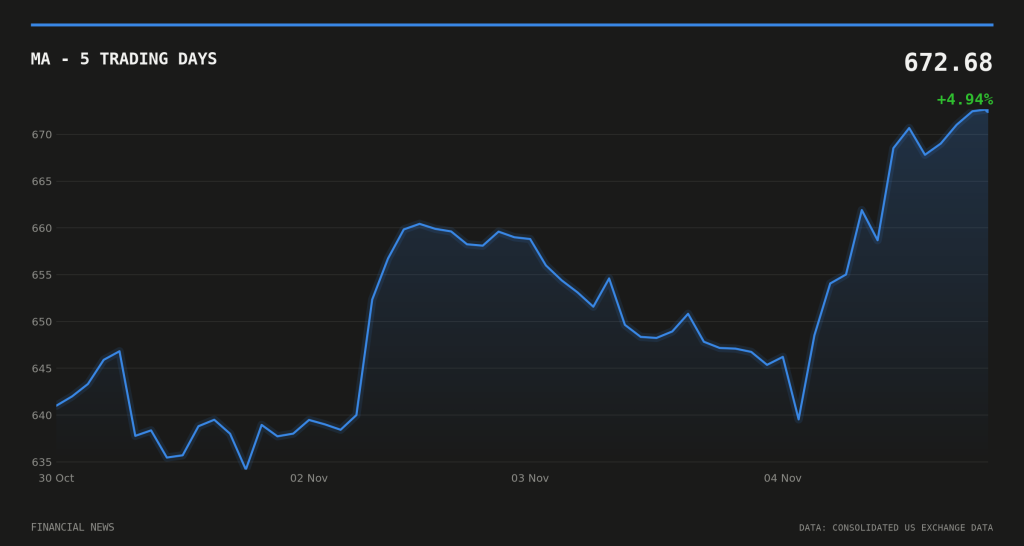
Mastercard (NYSE: MA) said on 4 November 2026 it is supporting the launch of Samsung Pay in Morocco, giving its cardholders a new way to pay with compatible Samsung devices.
The service, unveiled at a launch event in Casablanca, relies on Mastercard’s tokenisation technology to secure contactless payments made through compatible Samsung handsets, letting eligible cardholders at participating Moroccan banks tap to pay without exposing their underlying card numbers.
Mastercard Samsung Pay Morocco deal details
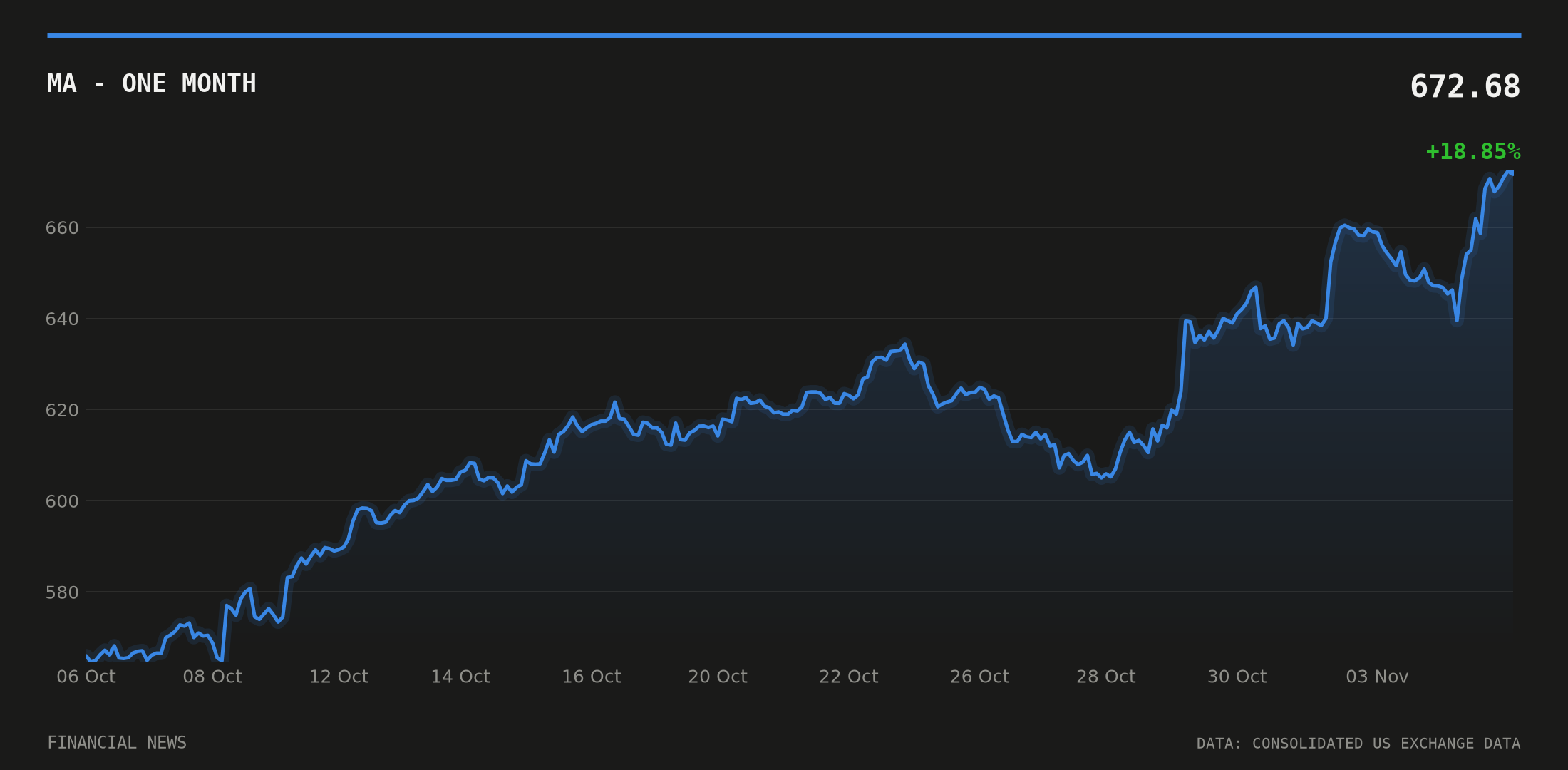
‘Supporting Samsung Pay in Morocco is another important step in expanding access to secure digital payment experiences, underpinned by our tokenization technology,’ said Mohamed Benomar, Mastercard’s Country Manager of North West Africa, as first reported by StreetInsider.
The launch event was also attended by Ahmed Rahou, Morocco’s Minister of Digital Transition and Administrative Reform, and Hongseok Lee, President of Samsung Electronics Maghreb Arab, according to a syndicated version of the release carried by Stockhouse.
Mastercard’s French-language release frames the Morocco rollout within a wider stated ambition to tokenise all of its online transactions by 2030, according to Yahoo Finance France‘s republication of the BusinessWire statement.
Insider filing lands hours before announcement
A Form 4 filing disclosed with the SEC on 3 November 2026 recorded a transaction by Mastercard reporting person Ling Hai, filed at 21:16 UTC that evening, according to SEC EDGAR. The Morocco announcement followed the next calendar day, published at 13:17 UTC on 4 November, putting the insider filing roughly 16 hours ahead of the press release.
The filing’s proximity to the Morocco news is coincidental rather than connected; Form 4s disclose routine changes in an insider’s holdings and carry no obligation to a company’s product announcements.
Earnings trajectory underpins the expansion
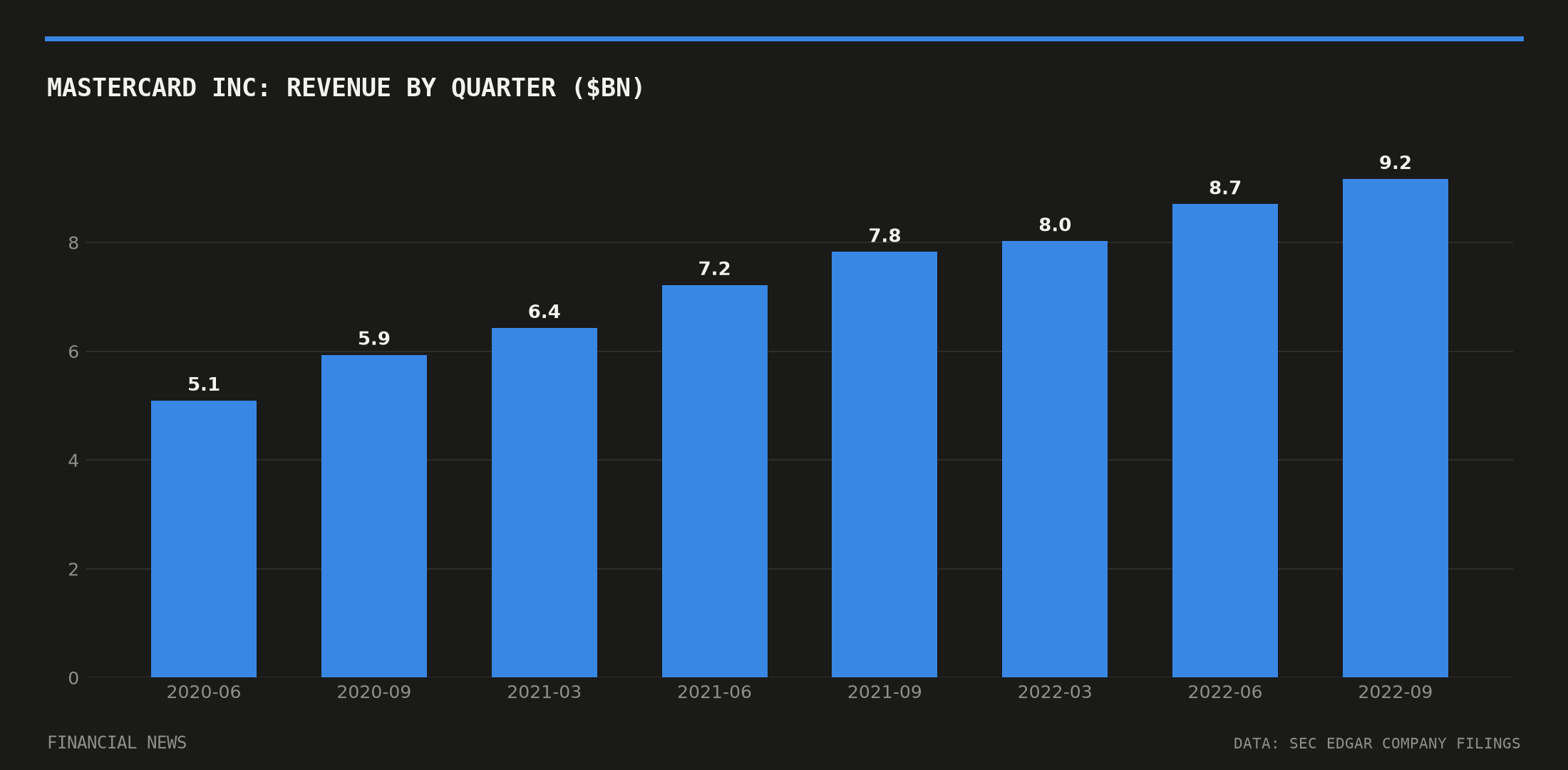
The Morocco tie-up lands days after Mastercard reported third-quarter 2026 diluted earnings per share of $5.28, filed in its 10-Q with the SEC on 29 October 2026. That figure extends a steady climb through the year: diluted EPS rose from $4.35 in the first quarter of 2026 to $4.97 in the second quarter, before reaching $5.28 in the third, per Mastercard’s quarterly filings.
The pace also outstrips the equivalent periods a year earlier, when diluted EPS stood at $3.59 in the first quarter of 2025, $4.07 in the second and $4.34 in the third, according to the company’s SEC filings. The emerging-markets push into mobile wallets such as Samsung Pay sits alongside that earnings momentum, part of a broader strategy of layering tokenised payment rails onto partner banks’ existing card bases rather than competing directly with handset makers.
Positioning and macro backdrop
Short interest in Mastercard shares showed no unusual spike around the announcement. Daily short-sale volume ratios tracked by FINRA ranged between roughly 0.23 and 0.56 over the ten trading sessions to 4 November 2026, consistent with recent trading rather than any shift in positioning tied to the Morocco news.
The announcement also arrived against a backdrop of firming US bond yields. The 10-year Treasury yield stood at 4.95% on 3 November 2026, up from 4.91% previously, while the 2-year yield held at 4.61%, according to FRED data from the Federal Reserve Bank of St Louis. The 10y-2y spread narrowed slightly to 0.32 percentage points, a backdrop payments investors continue to watch alongside consumer spending data, even though it bears no direct link to the Morocco rollout itself.
Mastercard has not disclosed a timetable for extending the Samsung Pay tie-up beyond Morocco, nor specified how many partner banks are enabling the service at launch. The company’s stated 2030 tokenisation target, cited in its French-language release, remains the clearest marker of where the strategy is headed next.
This article is for information only and is not investment advice or a recommendation to buy or sell any asset. Markets move quickly; figures are correct as sourced at the time of writing. Always do your own research before making financial decisions.