

Berkshire Hathaway (NYSE: BRK.A, BRK.B) chief executive Greg Abel called Alphabet (NASDAQ: GOOG, GOOGL) a ‘significant player’ in artificial intelligence, in comments to CNBC published on 2 September 2026.
The remark followed filings showing Berkshire added roughly $17bn to its Alphabet stake during the second quarter, according to CNBC, taking the position to around 106m Class A and C shares worth roughly $36.6bn.
A rushed weekend call, not a solo decision
Abel told CNBC that Google’s AI standing was a factor behind an additional $10bn Alphabet purchase authorised roughly three months earlier, as first reported by Reuters via Investing.com.
But separate reporting complicates the picture of Abel as the driving force. CNBC’s Warren Buffett Watch cited Bloomberg reporting that Abel gave a “rapid signoff” to the Alphabet purchase after a weekend call from Goldman Sachs – feeding analysis that Warren Buffett, not his successor, still drives Berkshire’s stock-picking. Buffett himself is credited with initiating the Alphabet position in the third quarter of 2025, months before Abel formally took over as chief executive in January 2026, according to The Motley Fool.
Abel struck a more cautious tone on AI at Berkshire’s first annual meeting under his leadership in May 2026, describing a “narrow AI” approach rather than an aggressive one, per Yahoo Finance and CNBC reporting cited in the pack. That makes his September comments a notable shift in emphasis, even if the underlying capital-allocation authority remains murky.
Stake size, but by how much?
Outlets do not agree on the scale of the Q2 increase. Yahoo Finance, citing Simply Wall St analysis, put the rise at 83%, alongside what it described as Berkshire’s biggest share buyback since 2021. Seeking Alpha’s figures point to a 45% increase, with Alphabet representing 9.41% of the portfolio as the fourth-largest holding – not the third-largest position implied elsewhere.
The gap matters because it changes how large a bet this actually is relative to Berkshire’s roughly $300bn-plus equity book, and whether Alphabet has overtaken other long-standing holdings in the pecking order. Neither figure comes from Berkshire’s own disclosures directly quoted in the reporting, and the outlets have not reconciled the difference.
Shares near 20-day lows as the comments circulated
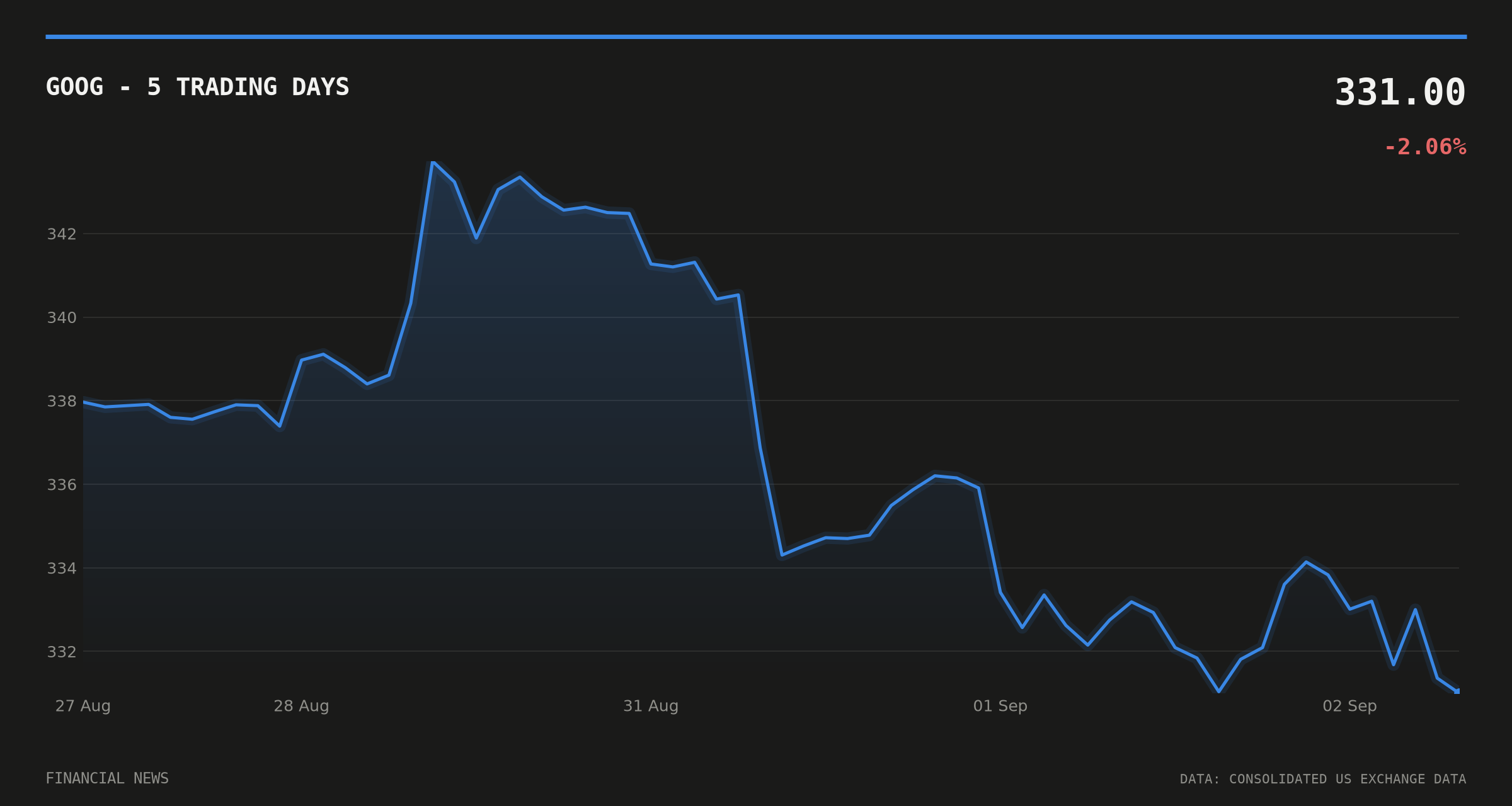
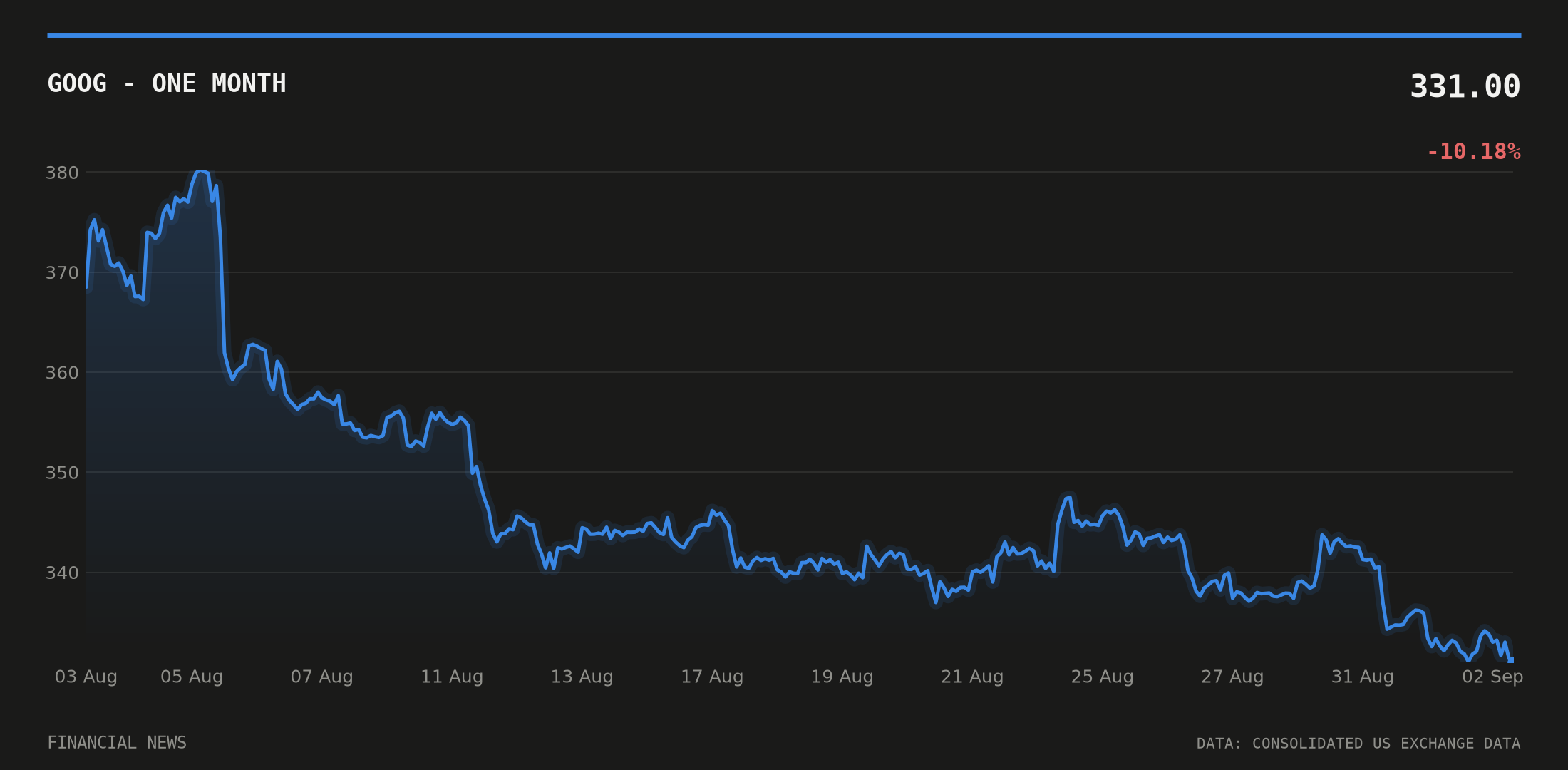
Whatever the framing, the market reaction did not read as a vote of confidence. GOOG shares traded at $331.45 as of 1pm UTC on 2 September, down 0.81% on the day and 3.04% over 20 days, sitting close to their 20-day low of $331.035, according to consolidated US exchange data cited in the pack.
FINRA’s daily short-sale data showed no corresponding spike in bearish positioning: GOOG’s short-volume ratio ran in a fairly narrow 0.2-to-0.4 band through late August and into September, per FINRA figures, suggesting the share-price softness was not being driven by an aggressive build-up of short bets around Abel’s remarks.
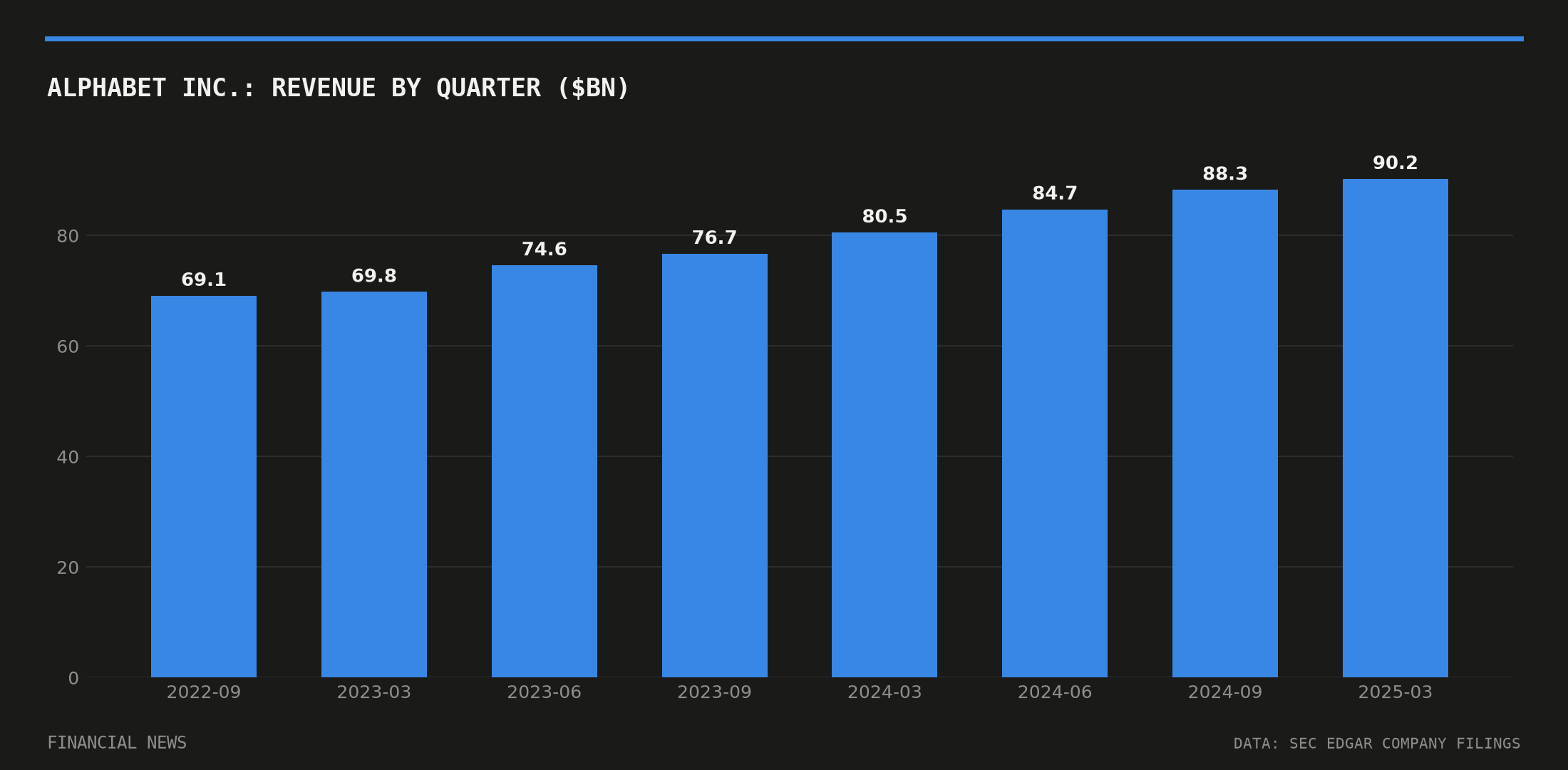
Alphabet’s own numbers underline why investors keep circling the stock. Net income hit $112.2bn in the second quarter of 2026, up sharply from $62.6bn in the first quarter, according to Alphabet’s 10-Q filing with the SEC. Diluted earnings per share rose to $9.11 from $5.11 over the same period. Quarterly revenue has climbed steadily too, from $69.1bn in the third quarter of 2022 to $90.2bn in the first quarter of 2025, per Alphabet’s SEC filings, the trend that AI-bull arguments for the stock tend to lean on.
What the numbers still don’t settle
The broader macro backdrop offers little extra steer. The 10-year Treasury yield stood at 4.75% on 31 August 2026, with the 2s/10s curve spread at 0.40, according to FRED data from the Federal Reserve Bank of St Louis – a backdrop that has left mega-cap tech valuations under scrutiny without pointing decisively either way on Alphabet specifically.
Berkshire’s next 13F filing, due in mid-November, should show whether the Alphabet position kept growing under Abel’s watch, or whether the September comments mark the high point of his public enthusiasm for the stock rather than the start of a new buying pattern.
This article is for information only and is not investment advice or a recommendation to buy or sell any asset. Markets move quickly; figures are correct as sourced at the time of writing. Always do your own research before making financial decisions.
