

Medtronic (NYSE: MDT) said on 1 September 2026 it would make a strategic investment in Pi-Cardia Ltd, an Israeli developer of heart-valve technology, to bolster its complex transcatheter aortic valve replacement business.
The headline number is up to $80m. But the agreement also carries an estimated upfront acquisition price of up to $210m, subject to customary adjustments, plus potential earn-outs that could push the total consideration well beyond that, according to the company’s release.
An investment that is really an option
The structure matters. Medtronic’s $80m stake functions as a paid-for option on a much larger buyout, rather than a straightforward minority holding. Under the terms, Medtronic is expected to become the exclusive global commercial distributor of Pi-Cardia’s ShortCut device from 2027, as first reported by Investing.com, citing Reuters.
ShortCut is a catheter-based leaflet-modification device, the first cleared by the US Food and Drug Administration for use ahead of valve-in-valve TAVR procedures in patients at risk of coronary obstruction. Medtronic’s release said pivotal-trial patients showed successful leaflet splitting across the board and a favourable safety profile.
‘Our investment in Pi-Cardia reflects our commitment to building a portfolio of technologies that will shape the future of TAVR, particularly for patients with complex anatomy,’ said Jorie Soskin, vice president and general manager of Medtronic’s Structural Heart business, according to Investing.com.
Timing complicates the share-price read
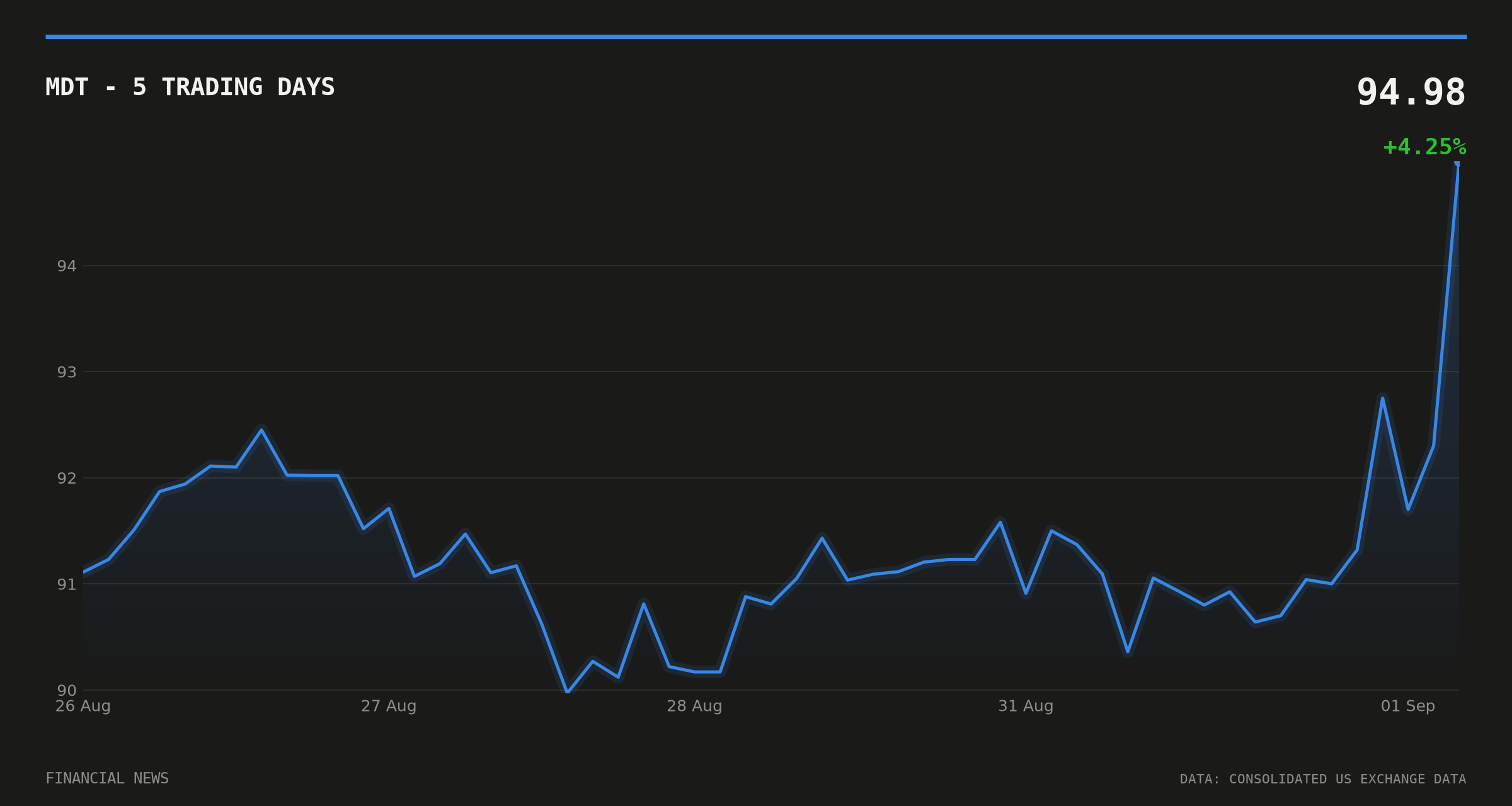
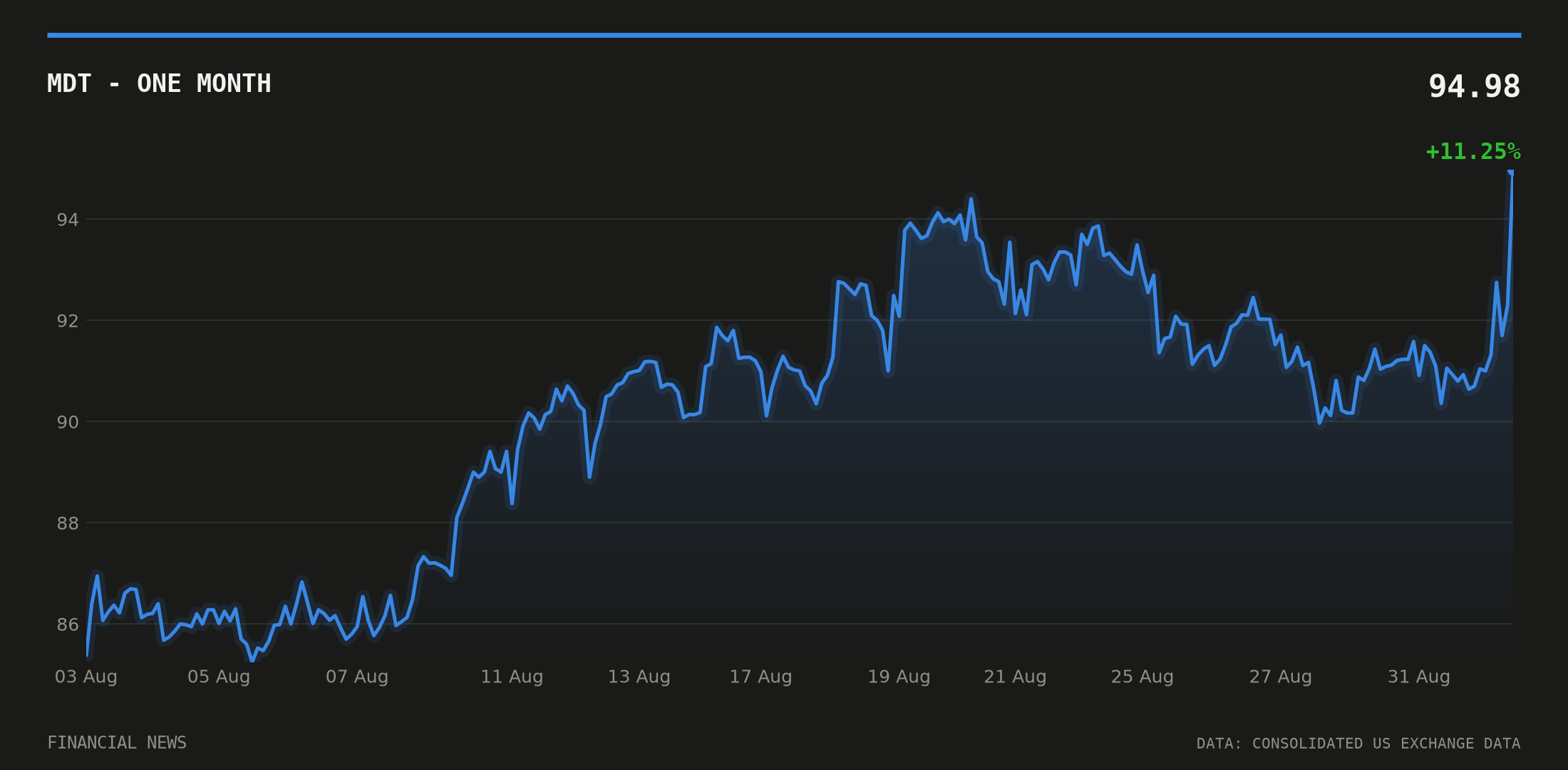
Medtronic shares last traded at $95.06, up 4.81% on the day and 7.56% over 20 days, with volume 1.74 times the 20-day average, according to consolidated US exchange data. Attributing that move to the Pi-Cardia deal alone is difficult, though: Medtronic had already scheduled its first-quarter fiscal 2027 results for the same date, 1 September, per a company announcement from July.
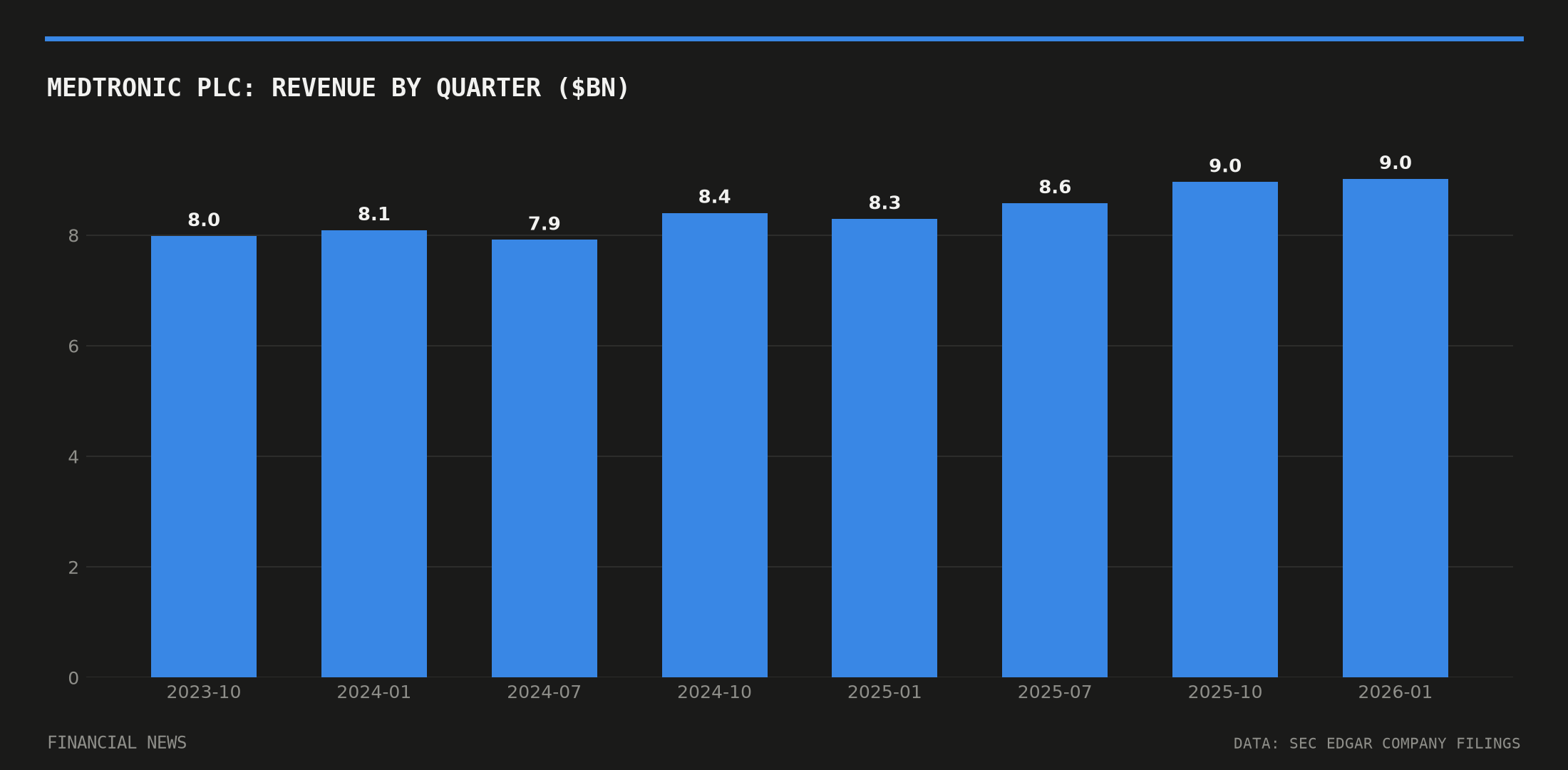
The scale gap between the two events underlines the point. Medtronic’s quarterly revenue has grown from $7.984bn in fiscal 2024’s second quarter to $9.017bn in fiscal 2026’s third quarter, based on its 10-Q filings with the SEC. Against that base, an $80m stake — even one attached to a potential $210m-plus acquisition — sits well within the range of a bolt-on rather than a market-moving transaction.
Part of a pattern, not a one-off
Pi-Cardia is not Medtronic’s only recent move of this kind. In January 2026 the company made a similar strategic investment in Anteris Technologies tied to a $320m combined capital raise for its DurAVR valve, according to a GlobeNewswire release at the time. German market commentary on the Pi-Cardia deal has grouped it with a second cardiac transaction announced the same week, framing both as consistent with a run of smaller structural-heart stakes rather than one large acquisition, per ad-hoc-news.de.
ShortCut’s regulatory footing predates this week’s announcement. The device secured Centers for Medicare and Medicaid Services New Technology Add-On Payment status effective 1 October 2025, a designation reserved for breakthrough technologies, according to a prior BusinessWire report. Its FDA clearance as a catheter-based leaflet-modification device was covered independently by MedTech Dive in 2024, ahead of Medtronic’s involvement.
What the deal architecture signals
For investors parsing structural-heart strategy, the Pi-Cardia agreement reads less like a single capital commitment and more like an option Medtronic can exercise if ShortCut’s commercial rollout goes to plan from 2027. That distinction — investment now, acquisition later, at a price roughly 2.6 times the initial outlay — is the detail likely to matter most once the transaction moves from press release to closing terms.
Medtronic has not set a date for exercising the acquisition option. Its next scheduled disclosure will be the 10-Q covering the quarter in which the Pi-Cardia agreement was signed, due with fiscal 2027’s first-quarter filing.
This article is for information only and is not investment advice or a recommendation to buy or sell any asset. Markets move quickly; figures are correct as sourced at the time of writing. Always do your own research before making financial decisions.
