United Airlines Holdings (NASDAQ: UAL) confirmed a widespread system outage on 16 November 2026 that disrupted departing flights across its network, the carrier said in a statement reported by CNBC.
The airline resolved the fault the same day, with no impact on flights already in the air, and a spokesperson said there was no indication the outage was a cyberattack, as first reported by CNN.
United Airlines system outage follows FAA ground stop
The disruption came three days after a nationwide ground stop halted US flights for more than four hours, a separate episode CNN linked to the failure and did not attribute to United’s systems.
An internal company alert indicated the fault affected access to multiple applications used by flight crews, according to CNN. A memo from the union representing United pilots pointed to the weight-and-balance calculation system, saying the company could not provide outbound flights with final weights, CBS News reported. NBC News separately confirmed the outage hit crew communications and messaging tools alongside the weight-calculation function, both essential to clearing an aircraft for departure.
Investigations into the earlier 13 November ground stop subsequently traced that incident to a routine replacement of air traffic control communications routers, rather than a cyberattack, according to Al Jazeera’s reporting on the FAA’s aging infrastructure. Transportation Secretary Sean Duffy had attributed the ground stop to overloaded switches and routers in the agency’s ageing air traffic control network.
Shares slip as disruption compounds a rough week
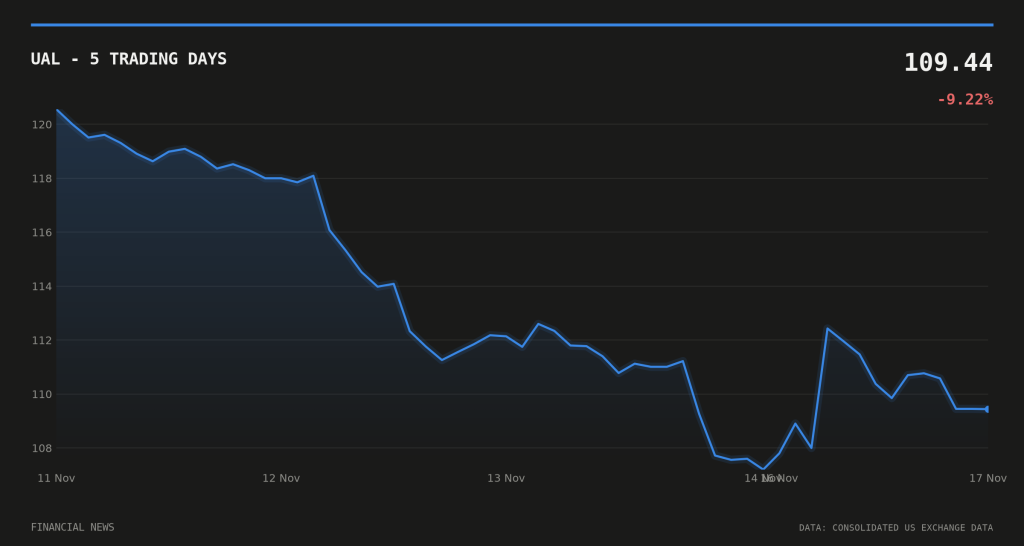
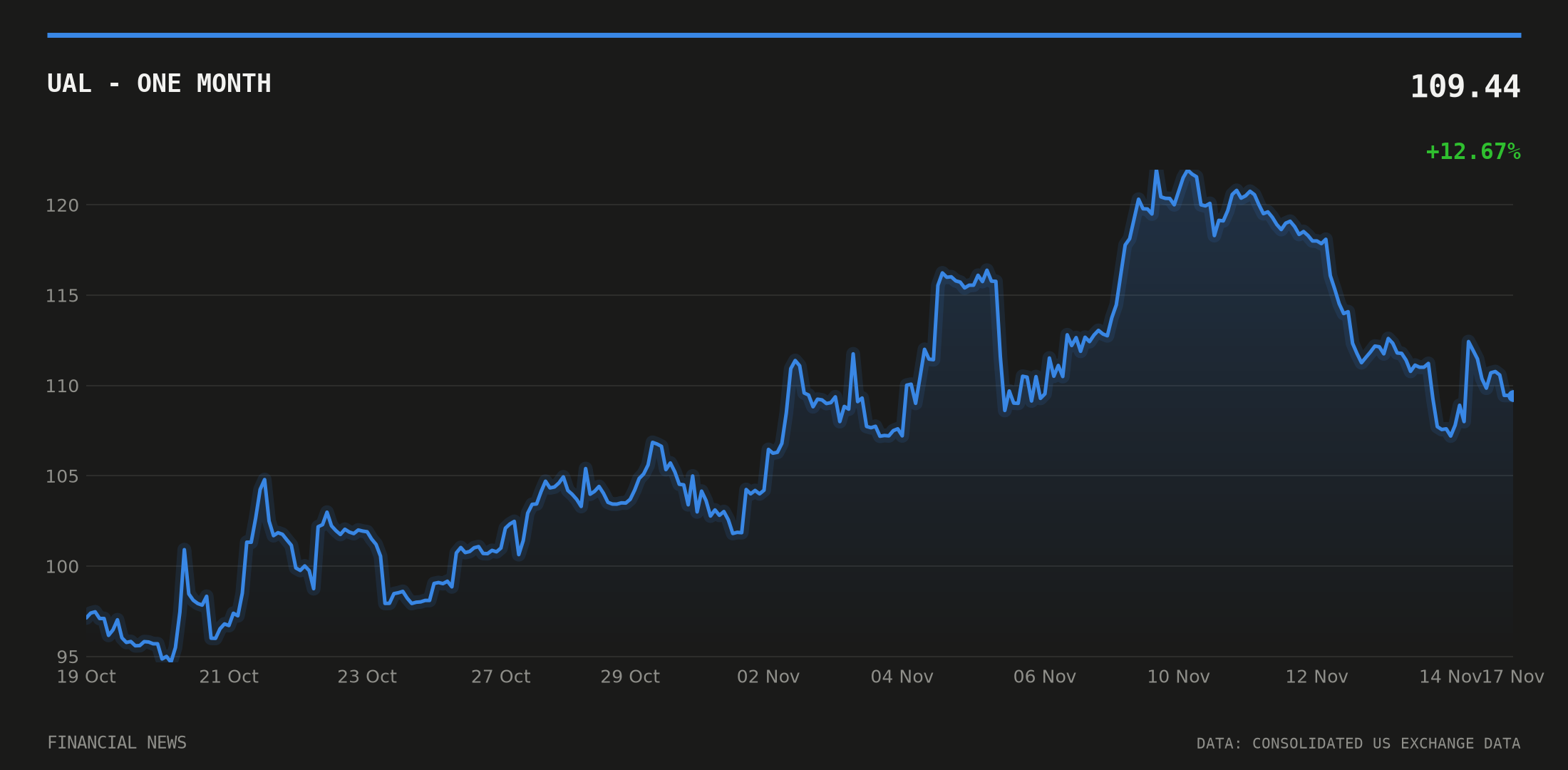
UAL shares fell 2.8% in after-hours trading once the outage was disclosed, according to GuruFocus, and dropped roughly 3% intraday on the Monday session, Yahoo Finance reported. The stock had already underperformed the airline peer median on 12 November, down 6% that day as markets priced in disruption risk ahead of the ground stop, according to Trefis.
FINRA short-sale volume data show UAL’s short ratio swinging between roughly 0.33 and 0.66 over the two weeks surrounding the outage, with the ratio at 0.48 on 16 November versus 0.645 three trading days earlier on 13 November. That range sits within the stock’s recent pattern rather than marking an extreme, though it underlines how quickly bearish positioning can move around a single news cycle.
A carrier still posting record quarterly profit
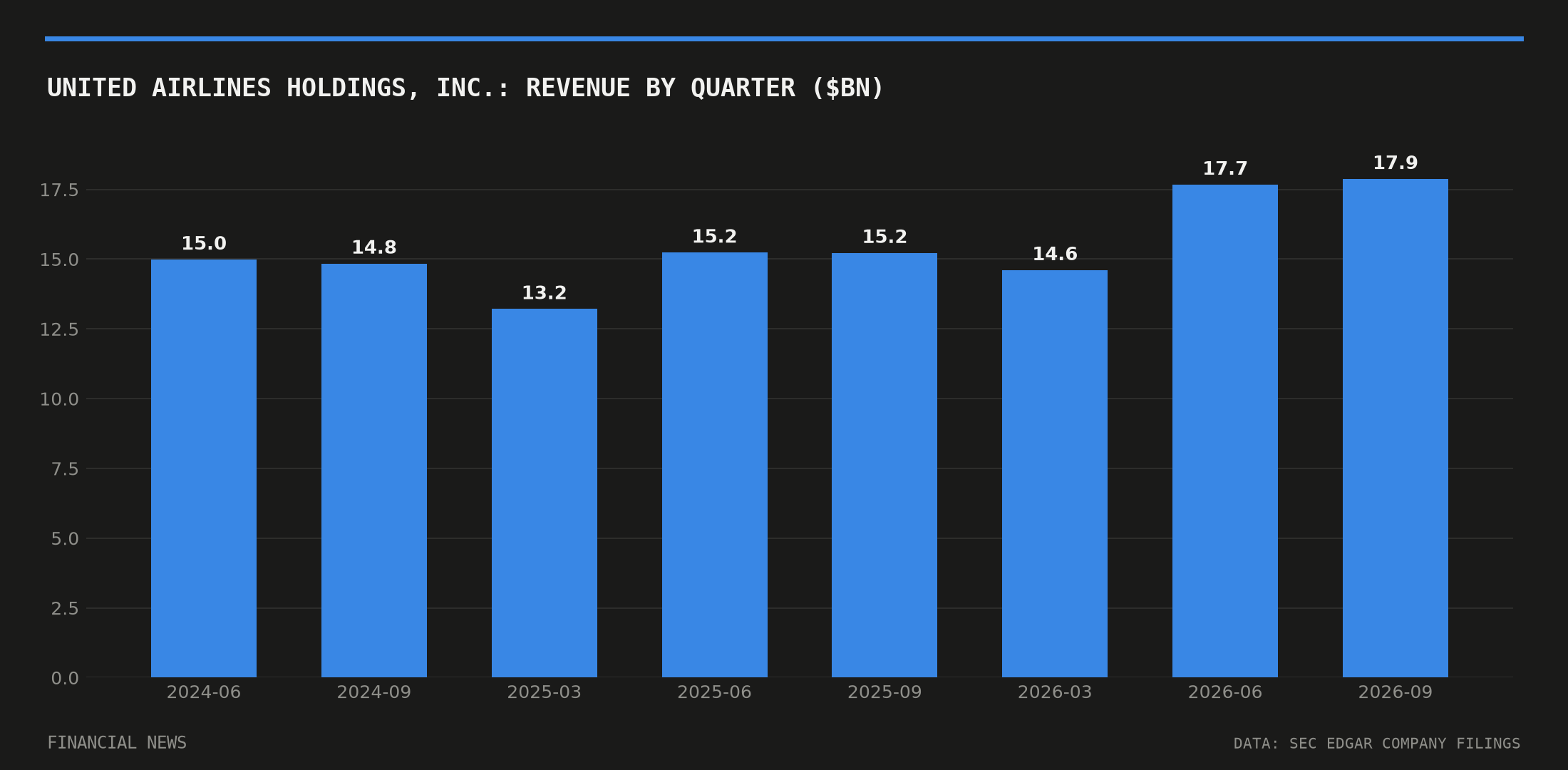
The outage lands on an airline that has been reporting improving results. United posted net income of $1.029bn and diluted earnings per share of $3.14 for the third quarter of 2026, the period immediately preceding the disruption, according to its 10-Q filed with the SEC. Revenue for that quarter reached $17.875bn, up from $17.672bn in the second quarter and $14.608bn in the first, filings show.
The trajectory marks a recovery from a softer start to the year: United’s first-quarter 2026 net income of $699m and EPS of $2.14 compared with $1.029bn and $3.14 in the third quarter, filings show. A year earlier, the airline reported net income of $949m on EPS of $2.90 for the third quarter of 2025, and $973m on EPS of $2.97 for the second quarter of 2025, according to its 10-Q filings. The comparison shows a carrier whose underlying profitability has strengthened through 2026 even as operational reliability came under renewed strain in November.
Macro backdrop adds to sector pressure
The outage also lands against a backdrop of elevated borrowing costs across the economy. The 10-year US Treasury yield stood at 5.15% as of 13 November 2026, up from 5.10% previously, according to data from the Federal Reserve Bank of St. Louis. Higher long-term rates typically weigh on capital-intensive sectors such as airlines, which carry significant fleet financing and lease obligations. The unemployment rate, meanwhile, eased slightly to 4.1% in October from 4.2% the month before, per the same St. Louis Fed data series, a modest signal for consumer demand heading into the year-end travel period.
United has not disclosed a cost estimate for the November disruption, and the airline’s next scheduled quarterly filing would offer the first formal accounting of any operational or reputational impact from the back-to-back incidents. For now, market participants are watching whether the pattern of ageing infrastructure failures, first at the FAA, then inside United’s own crew systems, proves to be an isolated fortnight or the start of a wider reckoning with legacy aviation technology.
This article is for information only and is not investment advice or a recommendation to buy or sell any asset. Markets move quickly; figures are correct as sourced at the time of writing. Always do your own research before making financial decisions.