Johnson & Johnson (JNJ) agreed on 16 November 2026 to buy Ollin Biosciences, a privately held, Texas-based biotech developing a late-stage antibody for eye disease, the company said in a statement.
J&J will pay $2.2bn upfront in cash, with further payments tied to regulatory and sales milestones that could take the total value to roughly $3.3bn, according to the confirmed terms cited by StockTitan.
The Ollin Biosciences deal headline figures don’t quite agree
Coverage of the Ollin Biosciences deal has produced two different headline numbers, and neither matches the confirmed structure exactly.
An early Financial Times-sourced report put the total at up to $3.4bn, based on $2.2bn upfront plus an assumed $1.2bn in milestones. The Wall Street Journal, by contrast, headlined the deal at $2.2bn – the upfront cash tranche alone, stripping out the contingent payments entirely.
J&J’s own disclosed terms cap the milestone component at roughly $1.125bn, implying a maximum deal value closer to $3.3bn rather than the $3.4bn figure still circulating. The gap is modest in dollar terms but illustrates how M&A price tags can drift between early reporting and the figures companies actually confirm.
A bispecific antibody for diabetic eye disease
The deal centres on OLN324, an investigational bispecific antibody in Phase 3 development that targets both VEGF and Ang2, two proteins implicated in retinal vascular disease. Ollin is developing it for diabetic macular oedema and wet age-related macular degeneration, according to Business Wire‘s description of the programme.
J&J has described the asset as having “best-in-class potential in ophthalmology,” language used in its own announcement of the transaction. The company expects the acquisition to close before the end of 2026, subject to regulatory clearance and customary conditions, StockTitan reported.
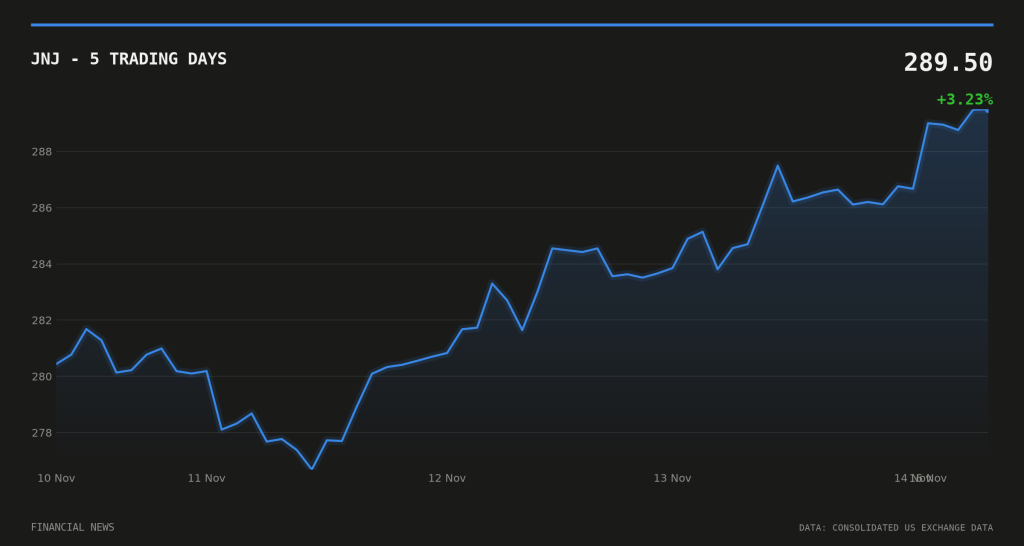
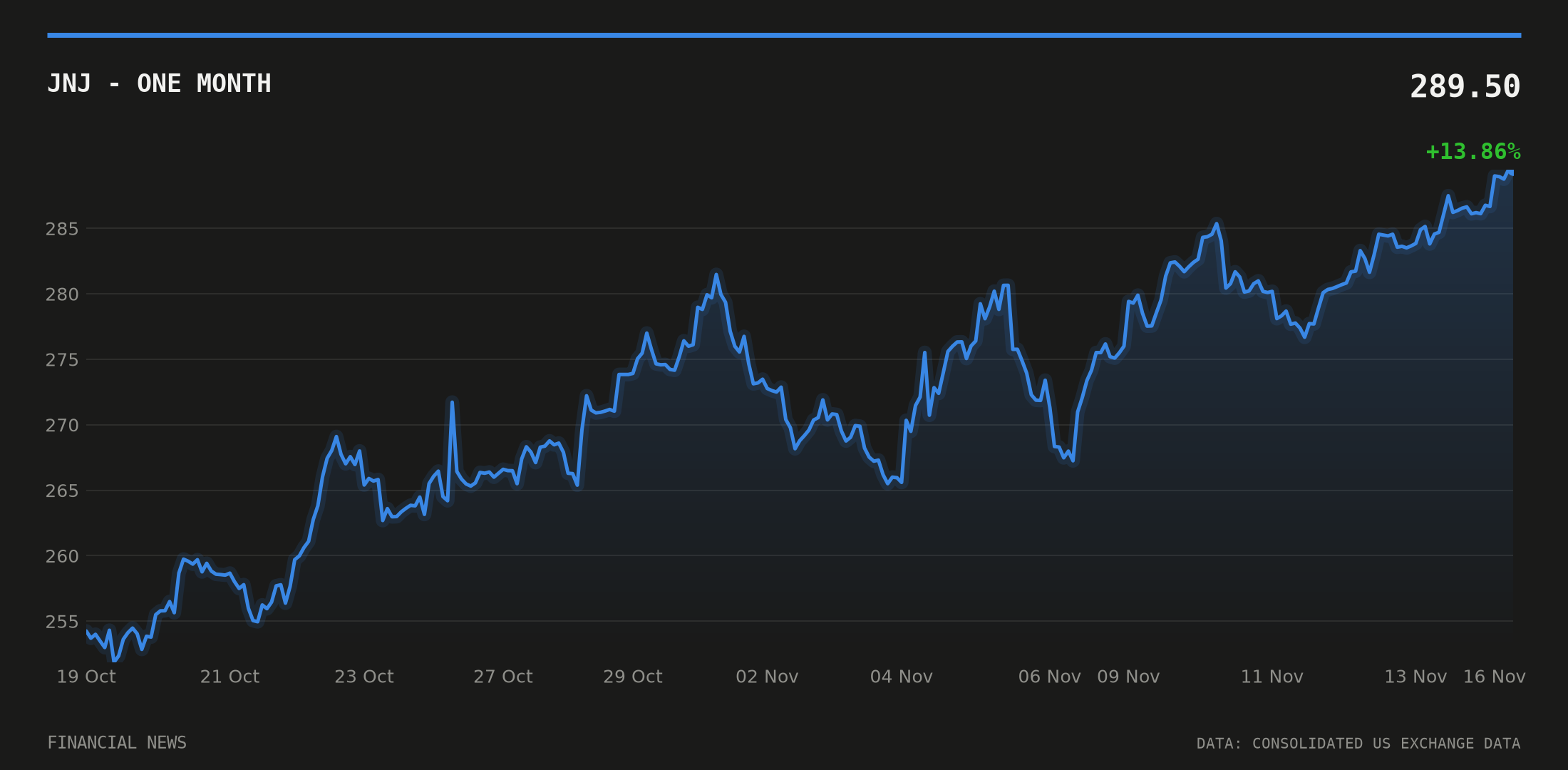
JNJ shares were quoted at $289.47 as of the Monday announcement window, up 1.17% on the day and roughly 8.65% over the preceding 20 trading sessions, according to consolidated exchange data. FINRA’s daily short-sale figures show the stock’s short ratio climbing to 0.461 by 13 November, from readings as low as 0.205 earlier in the month – a pattern the data alone cannot explain, though it sits ahead of the announcement.
The deal lands weeks after a $5.8bn charge
The Ollin Biosciences deal follows a rough third quarter for J&J’s bottom line. Net income for the three months to 27 September 2026 fell to $210m, or $0.09 a share, down from $5.53bn a year earlier, after the company booked a roughly $5.8bn other-expense charge tied to its proposed resolution of talc litigation claims, Yahoo Finance reported following the earnings call.
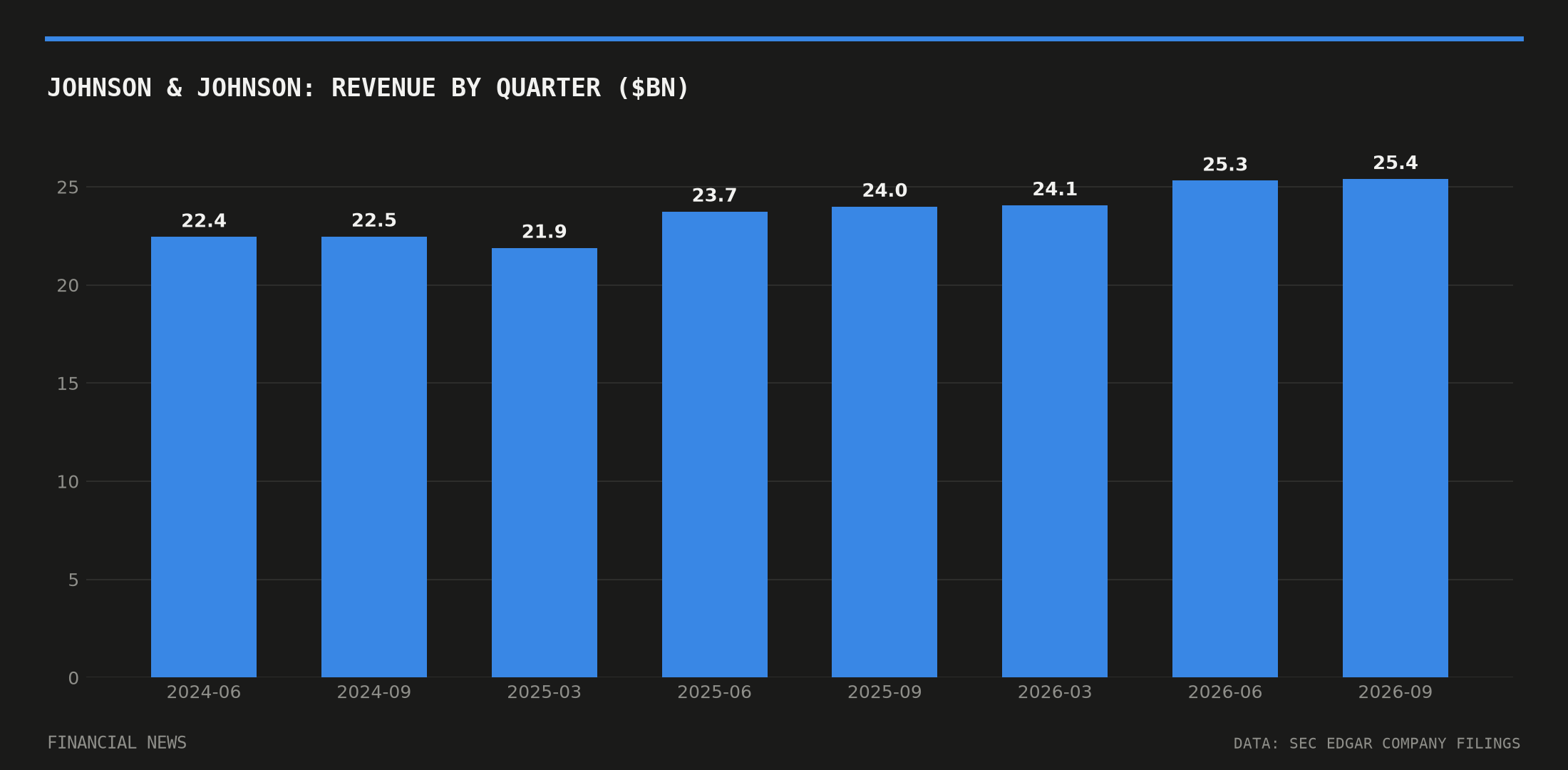
Revenue kept growing through the charge, reaching $25.399bn in the quarter, up from $23.993bn a year earlier, filings show. The disconnect between a shrunken headline profit and rising top-line sales underscores that the litigation charge was a one-off accounting item rather than a sign of operational strain – and leaves J&J’s underlying cash-generation capacity intact for bolt-on acquisitions such as this one.
Ollin is not an isolated purchase. J&J completed its acquisition of oncology-focused Firefly Bio earlier in 2026, according to an 8-K filing with the US Securities and Exchange Commission. Taken together, the two deals point to a pattern of targeted pipeline additions rather than a single transformative bet.
What happens next
J&J expects to close the Ollin Biosciences deal before year-end, pending regulatory sign-off. Investors will be watching whether the final disclosed terms – and any post-closing milestone disclosures – settle the gap between the $2.2bn and $3.4bn figures that have framed coverage of the transaction so far.
This article is for information only and is not investment advice or a recommendation to buy or sell any asset. Markets move quickly; figures are correct as sourced at the time of writing. Always do your own research before making financial decisions.