Tyson Foods (NYSE: TSN) published its fourth-quarter and fiscal 2026 results on 16 November, confirming the numbers via its investor relations site ahead of a Form 8-K filing with the Securities and Exchange Commission.
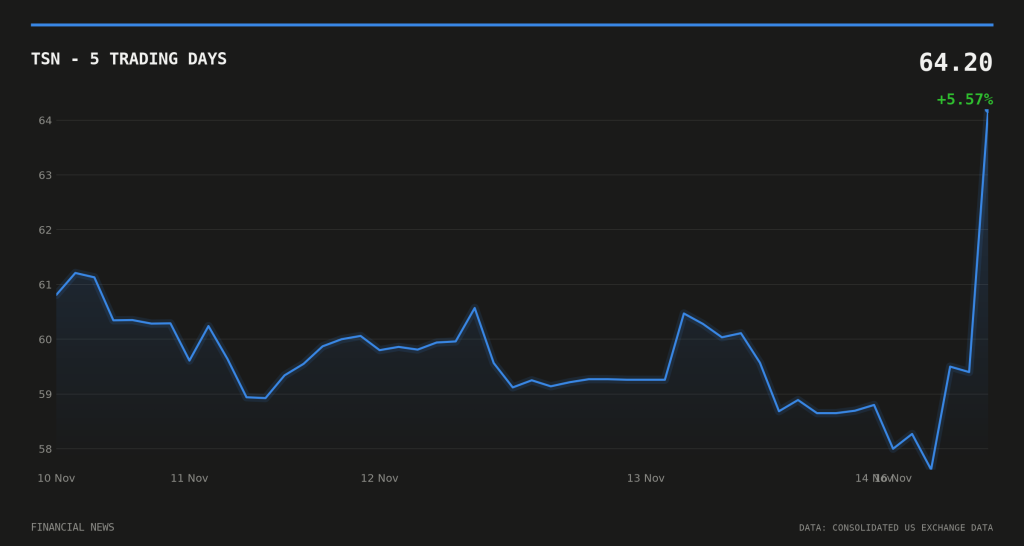
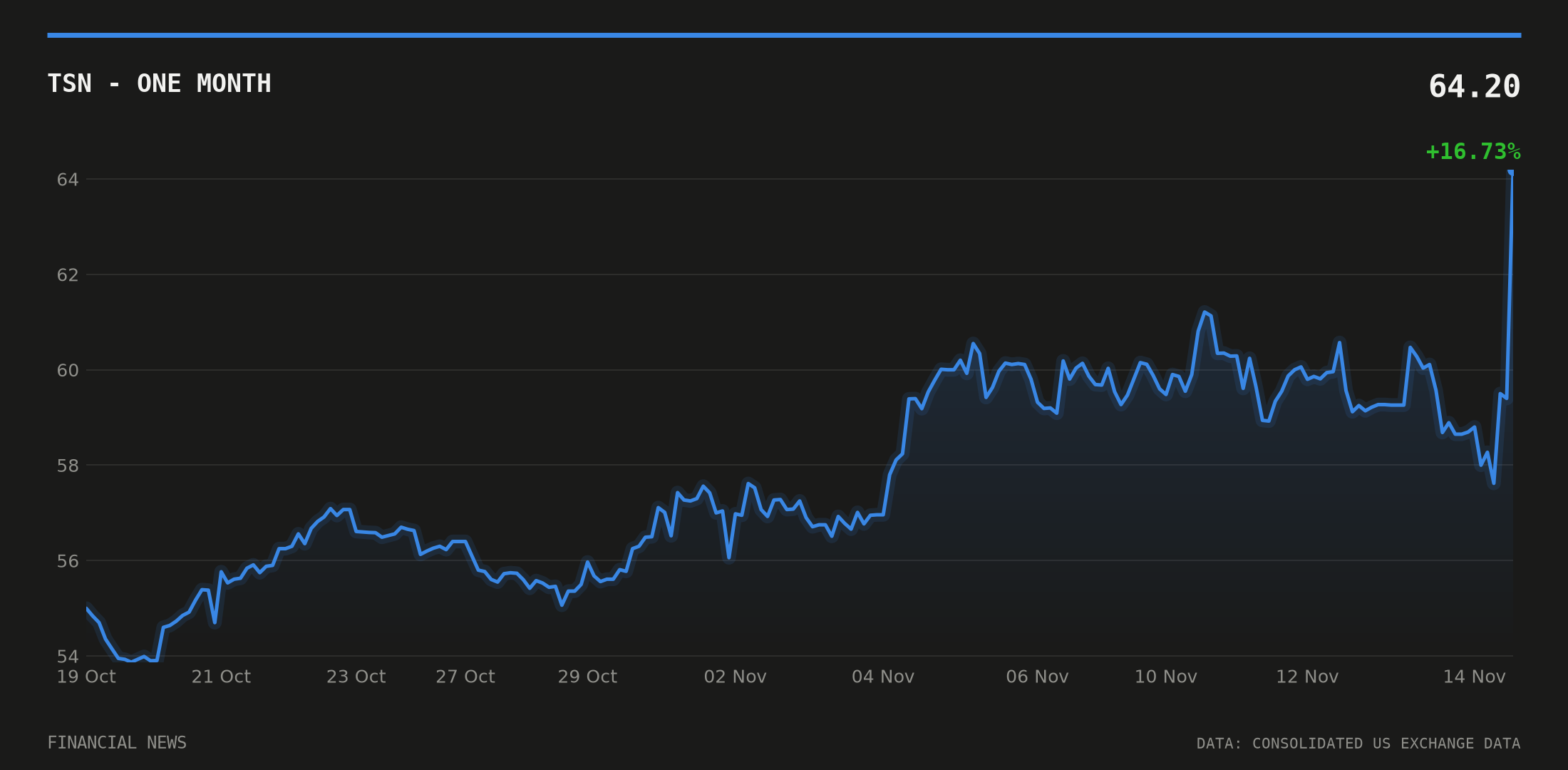
Shares closed 7.2% higher on the day, at $62.92, a fresh 20-day high, according to consolidated US exchange data.
A Tyson Foods Q4 loss headline that doesn’t match the tape
A separate report carried a sharper claim: that Tyson swung to a net loss in the quarter and warned of weak sales heading into fiscal 2027, as finanzen.ch reported.
That framing sits awkwardly against the share-price reaction. Stocks rarely rally 7.2% on the day a company discloses a quarterly loss and flags soft demand ahead. Tyson’s gain over the past 20 trading days now stands at 11.96%, against a 20-day low of $55.065.
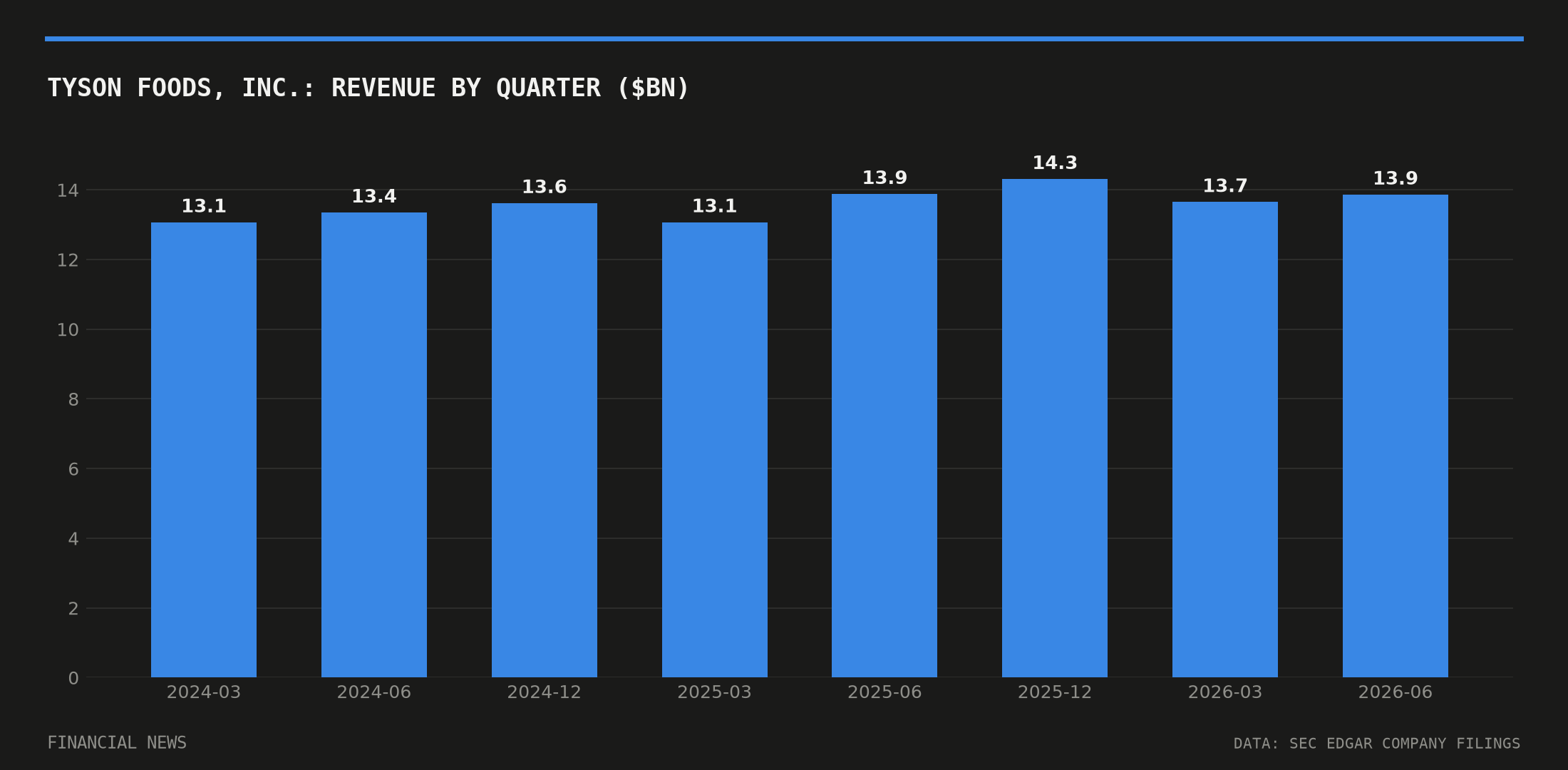
The underlying filings offer no support for a loss either. The most recent SEC-filed quarter available – fiscal Q3 2026, ended 27 June 2026 – showed net income of $182m and diluted earnings per share of $0.52, according to Tyson’s 10-Q filed with EDGAR on 3 August 2026. That continued an unbroken run of profitable quarters stretching back to at least fiscal Q2 2024, with net income ranging from $7m to $359m across the eight most recent periods on file.
No SEC filing covering the actual fourth quarter of fiscal 2026 has yet appeared in the public record; the 8-K referenced in Tyson’s own announcement had not been indexed at the time of writing. Until that document surfaces, the loss figure attributed to the quarter cannot be checked against a primary source.
Positioning data shows no warning signs
Short-selling activity in TSN gives little indication that traders were bracing for bad news. FINRA’s daily short-sale volume ratio for the stock ran between 0.542 and 0.688 across the ten trading sessions from 2 to 13 November, according to FINRA data – a range consistent with ordinary turnover rather than a build-up of bearish bets ahead of the print.
Trading volume around the release itself ran below the 20-day average, suggesting the share gain was not driven by an unusual burst of activity either.
The macro backdrop into the print was mixed for consumer-staples names. The 10-year US Treasury yield stood at 5.10% on 12 November, up from 4.98% previously, with the 2-year at 4.86% and the 10y-2y spread widening to 0.27 points, according to Federal Reserve data. A steepening curve of that kind typically reflects reduced recession fear – again in tension with a narrative of a company warning on weak demand. US unemployment eased to 4.1% in October from 4.2% the prior month, while CPI ticked up to 337.476 on the same Fed measure, pointing to a resilient if not especially strong consumer backdrop for protein demand.
What the 8-K needs to settle
Tyson’s own release is unambiguous about process: the company says results are available on its investor relations site and will be furnished to the SEC on Form 8-K, standard practice for a US-listed issuer reporting quarterly numbers. It makes no reference to a loss or to any guidance for fiscal 2027.
Until that 8-K exhibit is filed and indexed, the loss and FY27 sales-warning framing carried elsewhere should be treated with caution. Eight consecutive profitable quarters on the SEC record, a 7.2% share-price rally and short-interest data showing no pre-earnings bearish build-up all point the other way.
Investors will get clarity once Tyson’s 8-K exhibit, expected to contain the full earnings release and management’s conference-call commentary, appears on EDGAR. Tyson management was due to host a call at 9:00am Eastern Time on 16 November to walk through the figures in detail.
This article is for information only and is not investment advice or a recommendation to buy or sell any asset. Markets move quickly; figures are correct as sourced at the time of writing. Always do your own research before making financial decisions.