The UK’s Investigatory Powers Tribunal has ordered the Home Office to confirm the existence of a secret Apple data order, ruling against the government’s bid to keep it hidden. The decision was handed down on 19 November 2026.
It is the first known case in which the UK government has been compelled to acknowledge issuing a technical capability notice, as first reported by TechCrunch.
Secrecy regime cracked over secret Apple data order
The tribunal rejected the Home Office’s argument that disclosure would damage national security, according to Reuters. Firms are normally barred from acknowledging receipt of a technical capability notice under the Investigatory Powers Act, and the government maintains a standing policy of neither confirming nor denying such orders, Liberty said in a statement.
The legal challenge was brought jointly by Liberty and Privacy International, two separate rights groups, according to Liberty’s own statement. The order reportedly targeted data held in Apple’s encrypted cloud storage. A final hearing on the specific details of the order is expected next year.
Apple (NASDAQ: AAPL) has previously resisted UK demands for encryption backdoors. The company withdrew its Advanced Data Protection feature, which offers end-to-end encrypted iCloud backups, for UK users rather than comply with an earlier reported government demand, AppleInsider reported, a dispute that has run since early 2025.
Apple shares barely move on the ruling
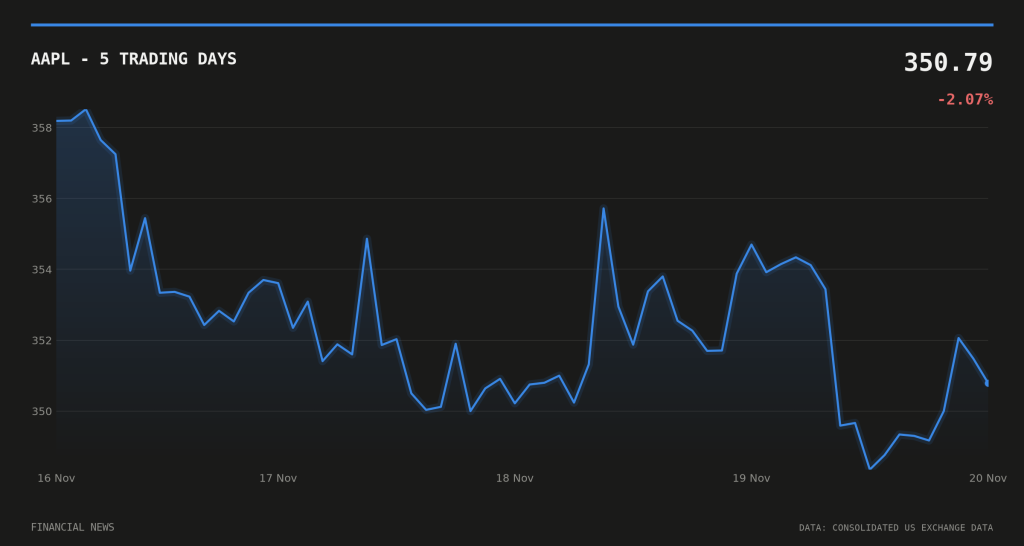
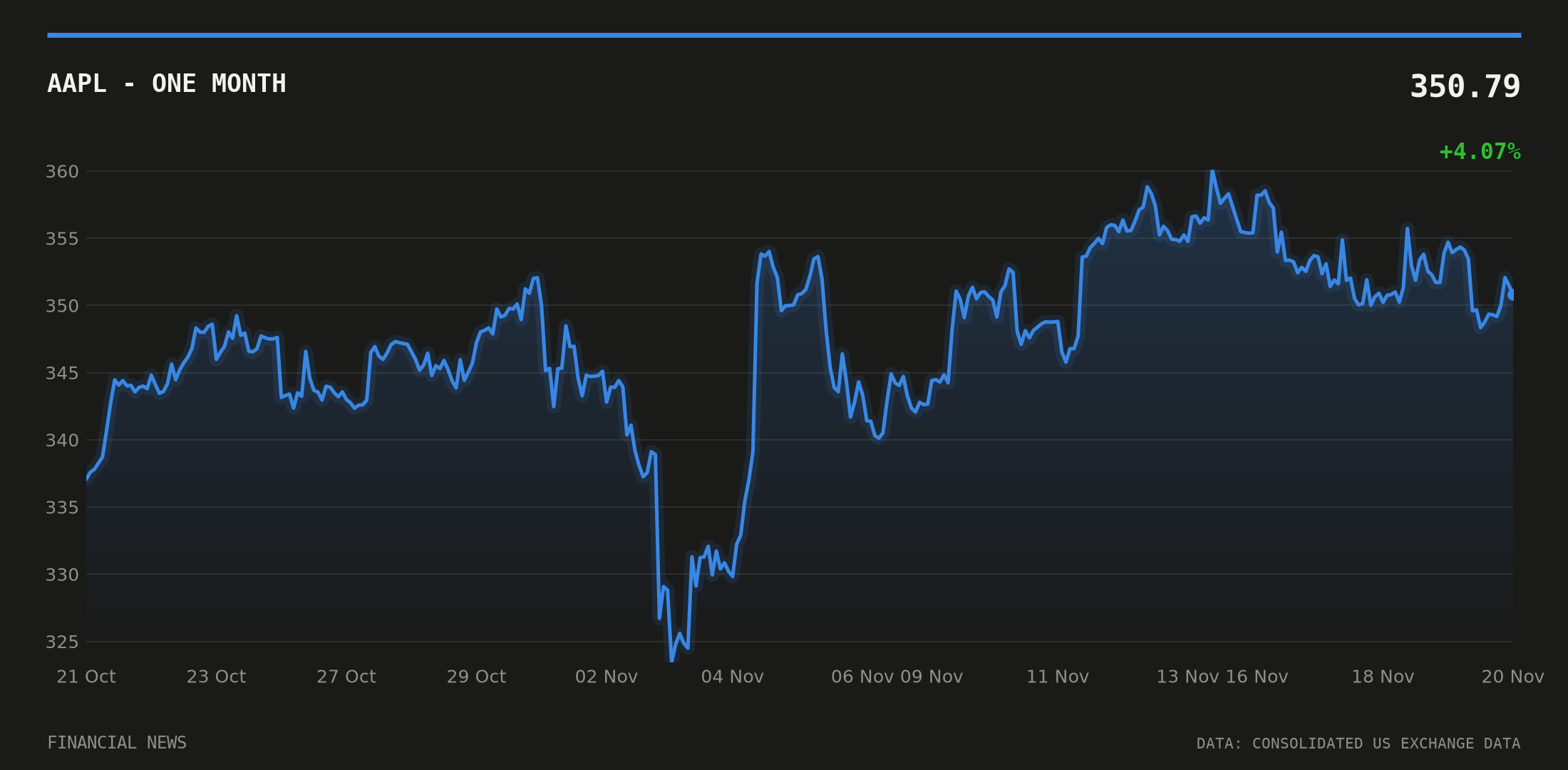
Apple stock showed little reaction. Shares closed at $350.62, up 0.53% on the day and 0.18% over 20 days, with volume at 98% of the 20-day average.
FINRA’s daily short-sale data showed no spike in bearish positioning around the ruling. The short-volume ratio ran between 0.379 and 0.605 across the ten trading sessions to 19 November, a range consistent with recent weeks rather than any abrupt shift in sentiment.
Two Form 4 filings landed at the SEC around the same date — one from board member Arthur Levinson on 18 November and another from general counsel Jennifer Newstead on 19 November — but both are routine insider disclosures unconnected to the tribunal matter, according to SEC EDGAR filings.
Scale of the business the order concerns
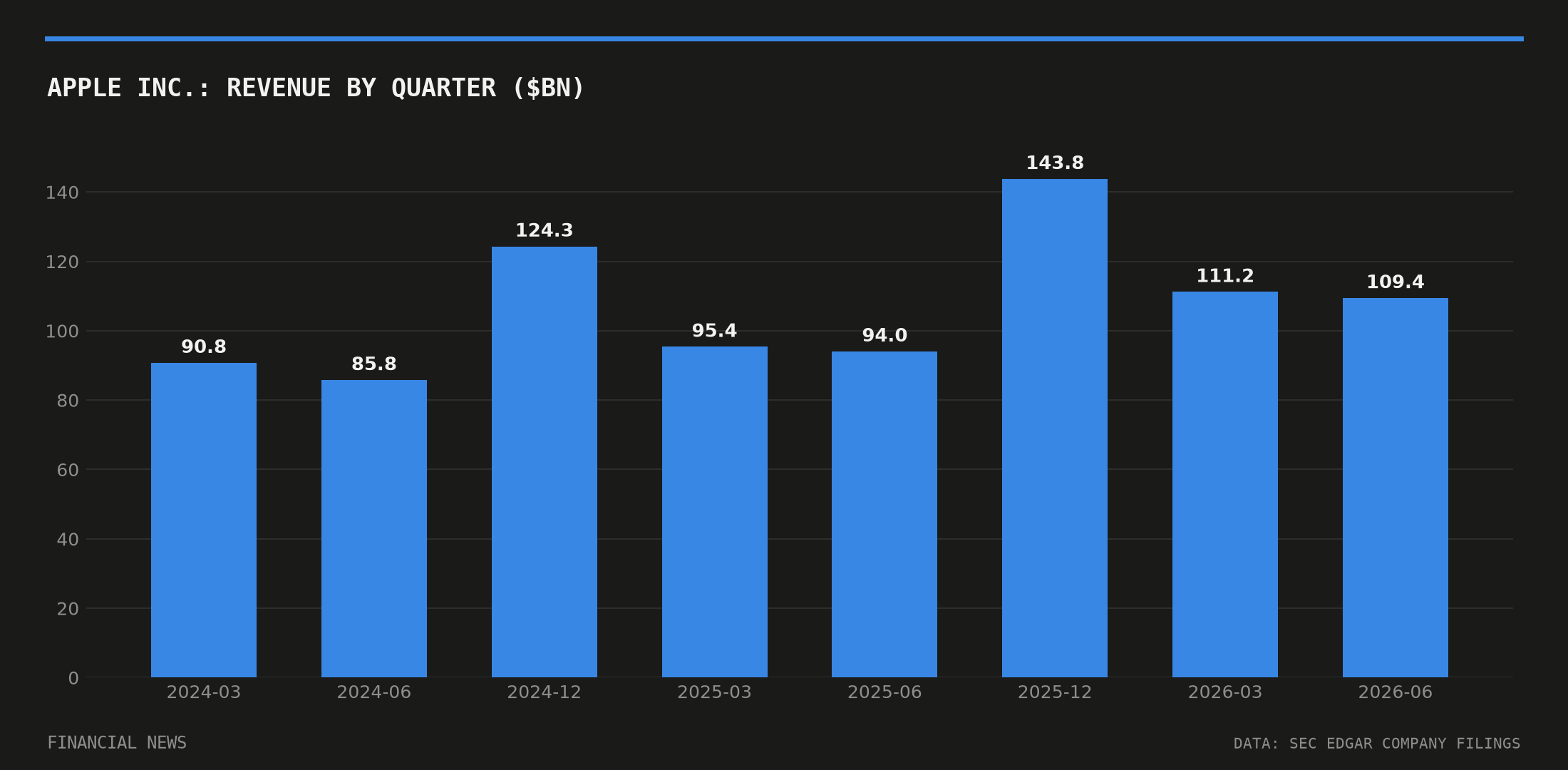
The secret Apple data order lands against a backdrop of a business reporting consistently large quarterly numbers. Apple’s fiscal 2026 first quarter, covering the holiday period to 27 December 2025, produced revenue of $143.76bn and net income of $42.1bn, diluted earnings of $2.84 a share, according to its 10-Q filing with the SEC.
The following two quarters were smaller, as is typical outside the holiday period: revenue of $111.18bn in the second fiscal quarter to 28 March 2026, with net income of $29.58bn, and $109.42bn in the third fiscal quarter to 27 June 2026, with net income of $29.79bn and diluted earnings of $2.02 a share, Apple’s filings show. A year earlier, the equivalent quarters produced net income of $23.6bn and $21.4bn respectively, underlining the scale Apple has added since.
None of that financial detail bears directly on the tribunal’s findings. But it frames the stakes: any order compelling access to iCloud data would touch a cloud and services business sitting inside a company generating tens of billions of dollars in quarterly profit, with hundreds of millions of UK and international customers relying on its encryption promises.
Coverage of the ruling appeared near-simultaneously across technology and business outlets on 19 November, including Reuters, TechCrunch, AppleInsider and Computer Weekly, suggesting the tribunal’s decision was a published ruling rather than a leak. What remains open is the detail: the tribunal has yet to disclose the specific scope of the order, with that hearing expected in 2027.
This article is for information only and is not investment advice or a recommendation to buy or sell any asset. Markets move quickly; figures are correct as sourced at the time of writing. Always do your own research before making financial decisions.