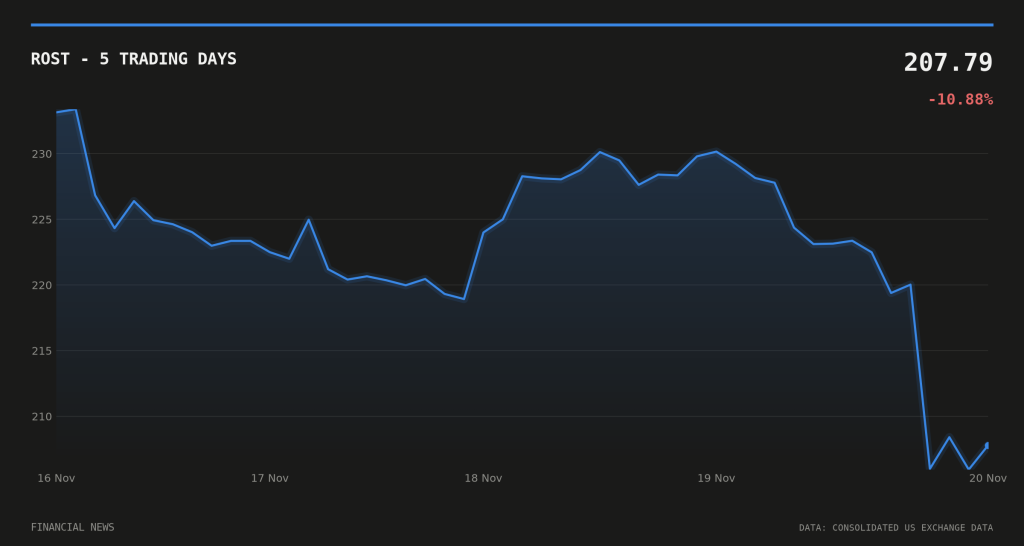
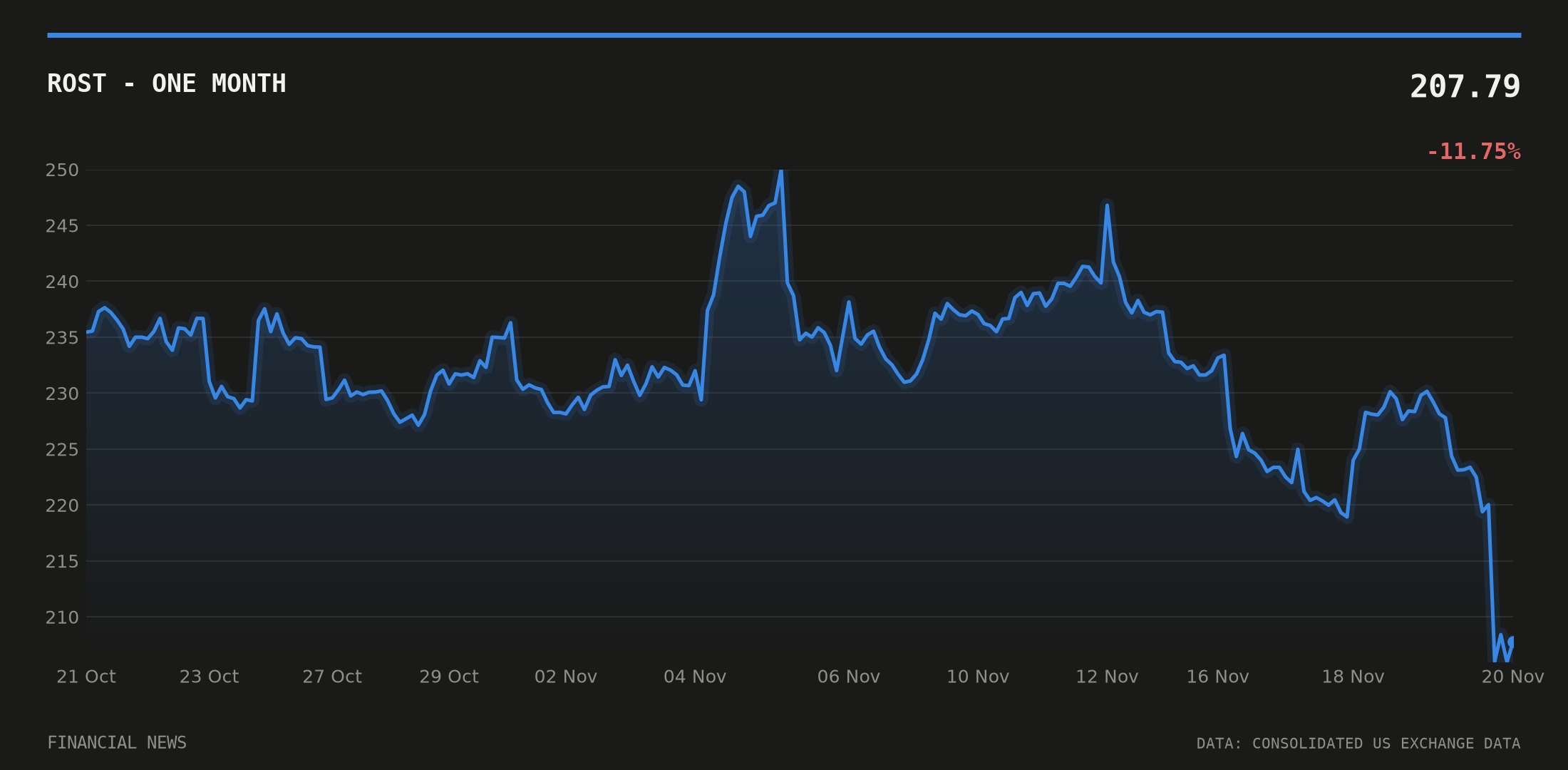
A Ross Stores (Nasdaq: ROST) guidance cut wiped out almost 7% of the discount retailer’s market value on 19 November 2026, even after the company posted stronger-than-expected third-quarter sales and profit.
Shares closed the session down 6.97% at $207.79, Reuters reported, extending a 10.11% decline over the prior 20 trading days on volume 1.41 times the recent average.
A beat that didn’t matter to the market
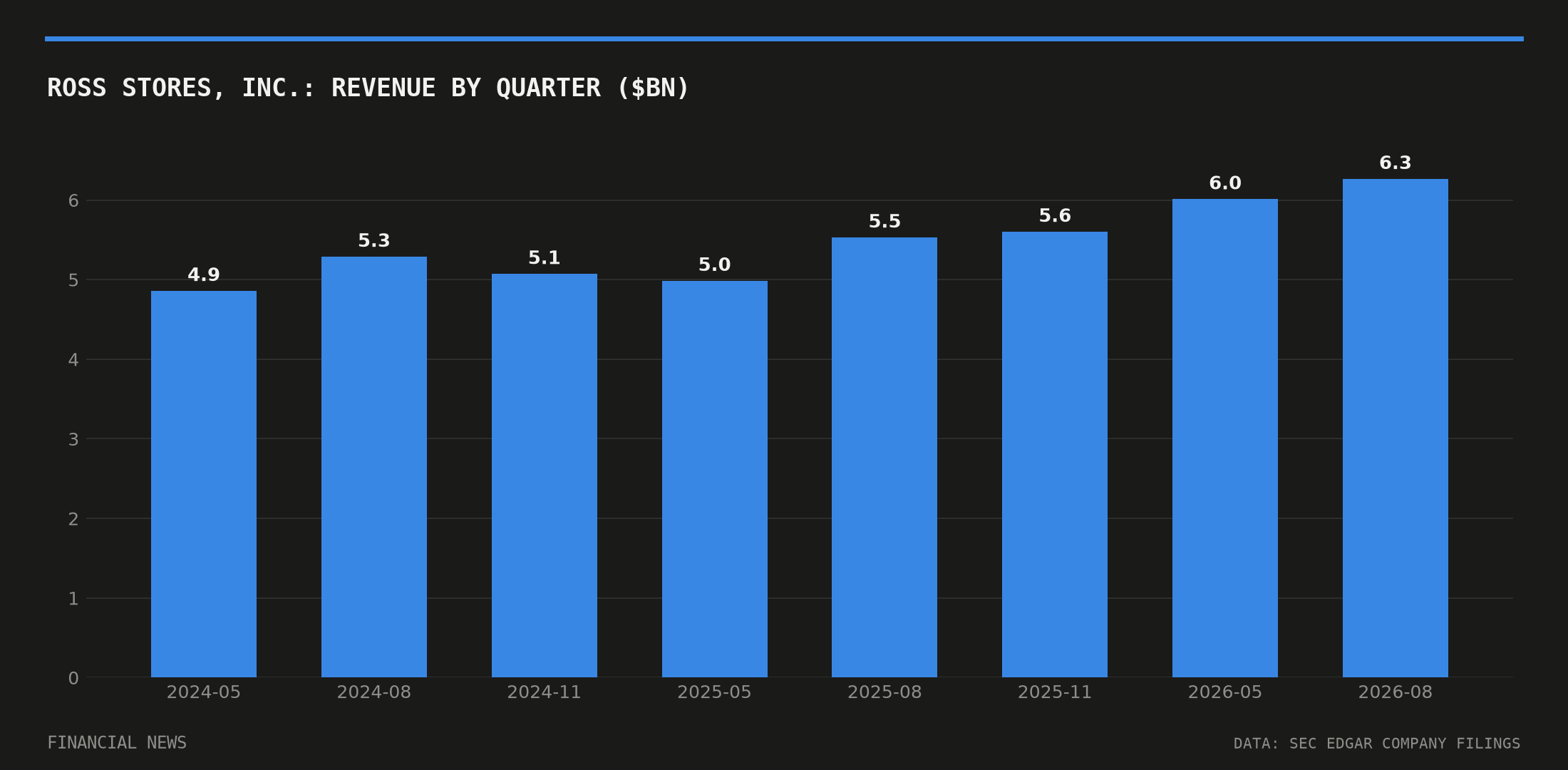
Ross Stores reported third-quarter sales of $6.26bn, up 12% from $5.60bn a year earlier, according to the company’s own filing. Comparable store sales rose 8%, building on a 7% gain in the same quarter last year.
Diluted earnings per share came in at $1.91, up from $1.58 and well above the company’s own guidance range of $1.75 to $1.83. Net income rose to $606.3m from $511.935m a year earlier, a figure that matches the retailer’s prior-year filing with the SEC. Operating margin reached 12.3%, up 70 basis points and above the 11.7%-12.0% range Ross had planned for.
The chain opened 51 new stores in the quarter – 41 under the Ross Dress for Less banner and 10 dd’s DISCOUNTS outlets – completing its full-year target of 115 new locations, the filing shows.
The guidance that spooked investors
None of that stopped the stock from falling. The reason: fourth-quarter earnings guidance of $2.16 to $2.25 a share, a midpoint of $2.21, came in below Wall Street’s expectation of roughly $2.27, as first reported following the release.
Ross held its holiday-quarter comparable-sales forecast at 4% to 5% growth – a figure that implies a slowdown from the 8% pace just posted. Barron’s noted the guidance, not the quarter itself, drove the sell-off.
Full-year earnings guidance was lifted to $8.75-$8.84 a share. But roughly $0.60 of that figure stems from an IEEPA tariff refund booked in the second quarter rather than from underlying trading, according to the company’s own numbers – a detail that trims the apparent scale of the upgrade.
Why the Street was braced for less, not more
Reuters pointed to a broader strain on US shoppers: elevated food and fuel costs, a softening labour market and fierce competition from TJX, Burlington, fast-fashion chains and Amazon all feature in the cautious outlook for the holiday quarter.
Chief executive Jim Conroy told analysts that back-to-school demand lifted trading early in the third quarter, but unseasonably warm weather weighed on fall apparel sales later on, according to a transcript of the earnings call carried by MarketBeat.
The sell-off does not appear to be a function of short-sellers piling in. FINRA data show ROST’s short-sale ratio at 0.441 on 19 November, down from 0.509 the previous session – consistent with long holders exiting rather than a short squeeze unwinding.
Broader bond markets offered little explanation either. The 10-year Treasury yield sat at 5.07% on 18 November, essentially unchanged from the prior session, while the unemployment rate held at 4.1% in October – hardly the backdrop for a macro-driven repricing of a single retail stock.
What happens next
Ross reports fourth-quarter results in the new year, when investors will find out whether the softer comparable-sales guidance proves conservative or accurate. Until then, the gap between Wall Street’s $2.27 consensus and the company’s $2.16-$2.25 range stands as the figure most likely to move the shares again.
This article is for information only and is not investment advice or a recommendation to buy or sell any asset. Markets move quickly; figures are correct as sourced at the time of writing. Always do your own research before making financial decisions.