
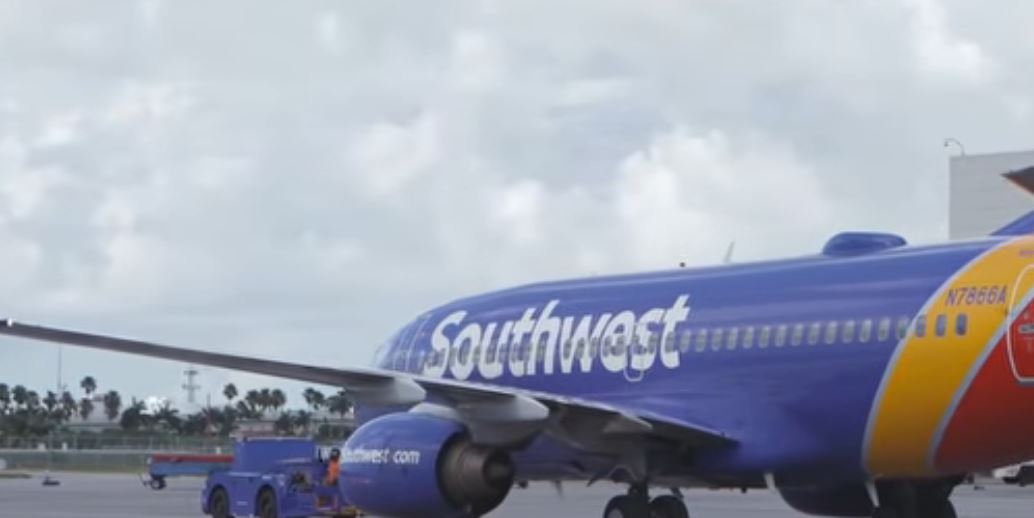

On a busy Tuesday afternoon, Nashville International Airport feels like most American airports: it’s packed, noisy, and somewhere close to the gate, you can smell the combination of jet fuel and fast food. Most of the traffic that passes through that building is controlled by Southwest Airlines.
Over the course of more than 50 years, the airline has operated hundreds of flights and carried thousands of passengers, the majority of whom were accustomed to the straightforward experience. Southwest intends to open a roughly 30,000-square-foot lounge in that same building within the next year or two, with a reported $53 million construction and fit-out cost.
It takes a moment to comprehend that figure. An airline that, up until recently, allowed travelers to choose their own seats at the gate like a school lunch line is paying fifty-three million dollars for a single airport lounge. Although Southwest has been rapidly evolving—assigned seating was introduced in January 2026, followed by extra-legroom options—the lounge project seems to be the most obvious indication that the airline is attempting to truly transform from its previous state.
Four initial locations—Austin, Baltimore, Honolulu, and Nashville—are part of the larger plan, and construction has already begun at all four. In high-demand markets, Southwest plans to eventually expand its network of at least eleven lounges. Prior to the first lounges opening in late 2027, a new co-branded Chase credit card is anticipated to be introduced. Although Southwest hasn’t formally confirmed that amount, the annual fee has been reported to be around $595. Holders of premium credit cards would receive free food and beverages, a more peaceful waiting area, and the kind of airport experience that Southwest passengers have traditionally had to travel on another airline.
How Southwest justifies this investment without a first-class cabin to anchor the economics is the obvious structural question. Revenue from premium cabins is one way that American, Delta, and United can defend their lounge networks. When a traveler pays $800 for a domestic business-class seat, they are partially covering the cost of the club chair and the complimentary whiskey prior to boarding.
That seat has never been sold by Southwest. Rather, the airline is creating a tiered experience inside what is still essentially a single-cabin aircraft, with better seats here, more legroom there, and a lounge over there, in the hopes that enough passengers will decide to climb the ladder. Some of this appears to be working, according to early data. In the first quarter of 2026, about 60% of Southwest customers upgraded from the base product, up from about 20% the previous year. The lounge strategy ultimately relies on that type of buy-up behavior.
However, there is a great deal of tension in all of this. Longtime Southwest passengers have been outspoken about what they really want: dependable flights, quick boarding, affordable prices, and bags that arrive at their destination. As expected, opinions on this announcement have been divided in the forums and comments sections. A Southwest lounge actually piques the interest of some tourists. Some, especially frequent travelers who made hundreds of flights under the previous model, doubt that a $53 million lounge per city benefits the people who initially established the airline’s loyalty base. To put it plainly, that money could have been used for things that customers genuinely requested.
Both responses could be accurate at the same time. The business traveler who currently books American because Southwest lacks a lounge and the premium credit card holder who switches cards when a better benefit becomes available are two examples of the new customers that Southwest is attempting to add on top of its current clientele rather than abandoning them. Probably more important to this than the lounge itself is the Chase partnership. Airlines have discovered that the revenue from co-branded credit cards is profitable enough to finance a large amount of infrastructure, and a lounge offers the card a real, observable benefit that a points multiplier cannot quite match.
Currently, it’s more difficult to determine whether the Nashville lounge’s size—30,000 square feet is actually large—reflects ambition or overreach. As more credit card holders gained access, Delta’s Sky Clubs have been plagued by complaints about overcrowding for years. Southwest is entering this market at a time when lounge quality has become a real problem for the industry. If it wants the product to live up to its expectations, it must carefully manage capacity.
Observing all of this gives the impression that Southwest is undergoing a very intentional identity transformation, which Elliott Investment Management’s arrival accelerated but did not completely initiate. The low-cost airline that allowed you to choose your seat at the door and checked your bags for free is being rebuilt around a different type of customer relationship. The wager worth keeping an eye on is whether the customer arrives in Nashville, purchases the card, and sits in the lounge.
