

On any given weekday, entering an Ollie’s Bargain Outlet offers a unique sensory experience. There’s always something unexpected, like a bin of closeout kitchen gadgets marked down to prices that make you pause, or a stack of name-brand vitamins next to patio furniture that has been discontinued. The lighting is bright and warehouse-flat. It’s purposefully a little chaotic throughout, and that’s precisely the point. The concept that searching for a deal should feel like searching for a deal is the foundation of Ollie’s business.
The retailer, which is based in Harrisburg, Pennsylvania, is now investing $15 million to safeguard that reputation, particularly to make sure that its prices remain lower than those of its competitors. Of that, about $10 million is set aside for the second half of 2026, and executives hinted on their Q2 earnings call that the total investment might increase even further.
According to CEO Eric van der Valk, the strategic logic is worth comprehending on its own terms. He made a distinction that most retailers ignore: he contended that there is a difference between daily low prices and ongoing promotions. Weekend flash sales, heavy couponing, and high-low pricing may temporarily move inventory, but they teach consumers to wait for the next offer rather than trust the standard price. That kind of relationship with its customers is not what Ollie’s wants.
This investment takes place against the backdrop of a quarter that was, to be honest, a mixed bag. In contrast to the company’s 5% comp growth during the same period last year, comparable store sales fell 1.8% in Q2. The decline was real, even though CFO Robert Helm acknowledged that it was challenging to identify the causes, which included unfavorable weather, wary customers, and a more aggressively promotional retail environment.
Concurrently, net sales increased by over 9% to $741.3 million, primarily due to the opening of new stores rather than existing ones. Adjusted earnings per share increased 43.4% to $1.42, while adjusted net income increased 40.3% to $85.4 million. As a result, the business made much more money even though sales at similar locations were lower. A significant tailwind from tariff refunds, which increased the gross margin by 380 basis points and helped raise the overall gross margin to 43.5%, helps explain this unusual combination.
Ollie’s has been growing its physical presence at a rate that most retailers would consider aggressive. In Q2, the company had 686 stores in 36 states, up almost 12% from the previous year. By the end of the fiscal year, it still intends to open 75 more. Opportunistic lease acquisitions contributed to some of that growth.
Ollie’s acquired Big Lots locations following the chain’s demise, having done the same with 99 Cents Only stores in 2024. A closeout retailer’s acquisition of stores from other failing retailers has a certain grim efficiency. It is supported by the balance sheet. Ollie’s has no debt and uses its own cash flow to finance all of its growth. This is extremely uncommon for growth retailers, and it provides the business with a level of operational stability that others cannot afford during uncertain economic times.
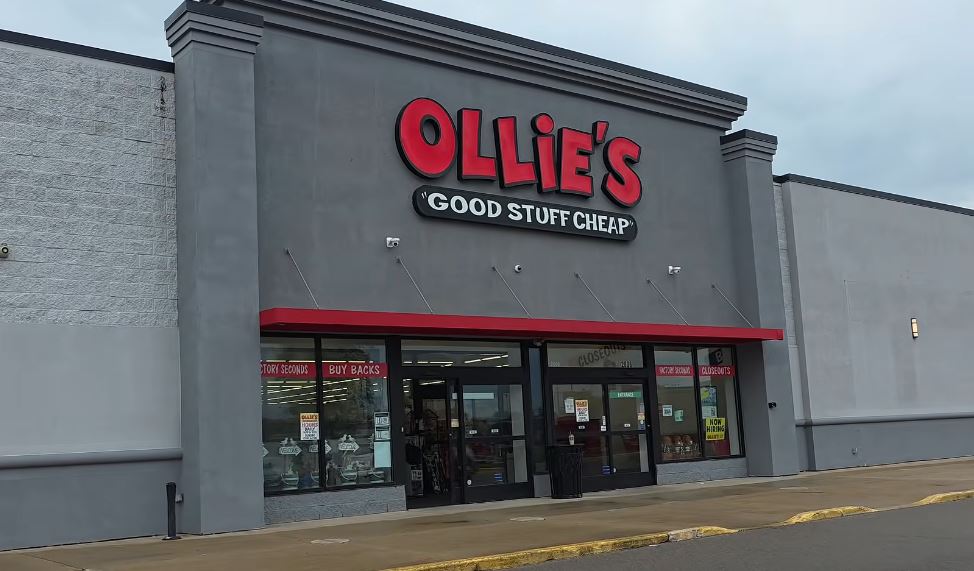
Over 80% of net sales are generated by the 18.1 million members of Ollie’s Army, a loyalty program that has grown by almost 13% annually. Even in situations where consumer sentiment is generally low, there is some predictability due to the significant concentration of purchasing behavior in a specific group. Observing these figures gives the impression that Ollie’s main clientele is staying. They are simply purchasing slightly smaller baskets on each trip, which is precisely what you would anticipate from consumers with more constrained household budgets.
Despite the earnings growth, the stock, which was trading at about $72 as of mid-September, is down about 45% over the previous year, which some analysts believe is a disruption that warrants attention. Executives referred to 2026 as a “weird year” and pointed to a return to normal in 2027, so it’s really unclear if the comp sales weakness is transient or the start of something more enduring.
In that regard, the Ollie’s Bargain Outlet low prices investment is both a competitive move and a statement of conviction: the company thinks its model works, the year has been exceptional, and the solution is to lean into what initially attracted 18 million devoted customers.
