

The Iran Hormuz oil demand outlook is now driving crude markets as much as the conflict itself, with Brent holding near $87 per barrel after Tehran’s cultural deputy of the Islamic Revolutionary Guard Corps signalled the regime could deliberately prolong the US-Iran war.
Mohammad Reza Naghdi, identified by Iran International as cultural deputy of the IRGC, said dragging out the conflict would send a message to future US administrations that ‘there is a cost’ to hostile advances against Iran. ‘We have to attain deterrence so that the enemy never dares to attack us, so we can live with security,’ he said in an appearance on PBS NewsHour.
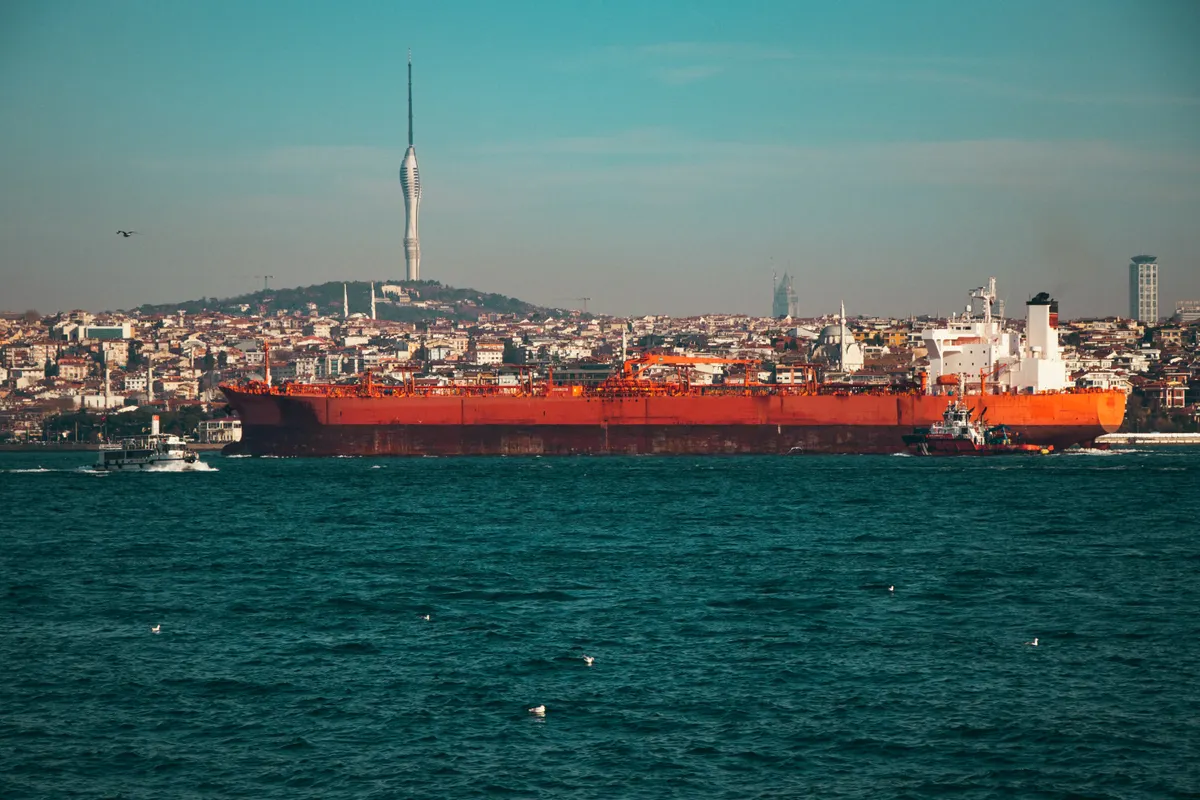
The remarks deepen the diplomatic impasse. President Trump has claimed the US has ‘total control over the Strait of Hormuz,’ while Tehran insists the strait is ‘blocked’ and will not reopen until Iran’s conditions are met.
Iran Hormuz Oil Demand: The Scale of the Supply Shock
The physical damage to oil markets since the conflict began is without precedent. Global oil supply plummeted by 10.1 million barrels per day (mb/d) to 97 mb/d in March 2026, with OPEC+ production falling 9.4 mb/d month-on-month to 42.4 mb/d, according to the IEA’s April 2026 Oil Market Report. The IEA described it as the largest supply disruption in the history of the global oil market.
Supply has continued to deteriorate. The IEA’s May 2026 Oil Market Report shows global output fell a further 1.8 mb/d in April to 95.1 mb/d, taking total supply losses since February 2026 to 12.8 mb/d. Output from Gulf producers affected by the closure is running 14.4 mb/d below pre-war levels.
Crude flows through the strait have collapsed. Petroleum liquids transiting the waterway averaged 4.9 million b/d in the second quarter of 2026, down from 21.6 million b/d in the fourth quarter of 2025 before the conflict began, according to the US Energy Information Administration’s Short-Term Energy Outlook.
The strait’s importance is structural, not incidental. Around 25% of the world’s seaborne oil trade transited it in 2025, and over 110 billion cubic metres of LNG passed through, representing almost one-fifth of global LNG trade, according to the IEA’s Middle East and global energy markets analysis. Only Saudi Arabia and the UAE hold operational bypass pipeline capacity, estimated at 3.5 to 5.5 million b/d combined. Iran, Iraq, Kuwait, Qatar and Bahrain have no alternative routes for the bulk of their exports.
Inventories Draining as Traders Weigh Demand Destruction
David Morrison, senior market analyst at Trade Nation, said the market’s attention has shifted: ‘While US-Iran peace efforts remained stalled and disruption around the Strait of Hormuz persisted, the focus for oil traders has shifted towards talk of slowing demand growth.’
The inventory picture explains why. Global observed oil stocks drew by 129 mb in March 2026 and by a further 117 mb in April 2026 on preliminary data, with OECD on-land stocks falling 146 mb (4.9 mb/d) in April alone, according to the May Oil Market Report. Since the start of the conflict, cumulative inventory losses have reached 410 million barrels, according to gCaptain reporting on IEA data, with global stocks falling below 7.9 billion barrels for the first time since April 2025 by end-July 2026.
The demand side is now bending. The IEA cut its forecast for global oil demand in the second half of 2026 by roughly 550,000 bpd from its prior month’s estimate, citing supply-chain disruptions, reduced product availability and elevated fuel prices. For 2026 as a whole, global supply is now projected to decline by 4.3 mb/d to around 102 mb/d, gCaptain reported.
The EIA projects Brent will average around $85/b in the third quarter of 2026 and forecasts global oil inventories will fall a further 3.8 mb/d on average over that period. The EIA has revised its 2026 annual Brent forecast to $87 per barrel, according to Yahoo Finance reporting on EIA data, with US commercial crude stocks projected to remain below five-year historical lows through year-end.
The IEA’s May report assumes Hormuz flows will gradually resume from the third quarter of 2026. Whether Naghdi’s comments represent Iranian negotiating posture or a genuine strategic commitment will determine if that assumption holds.
