
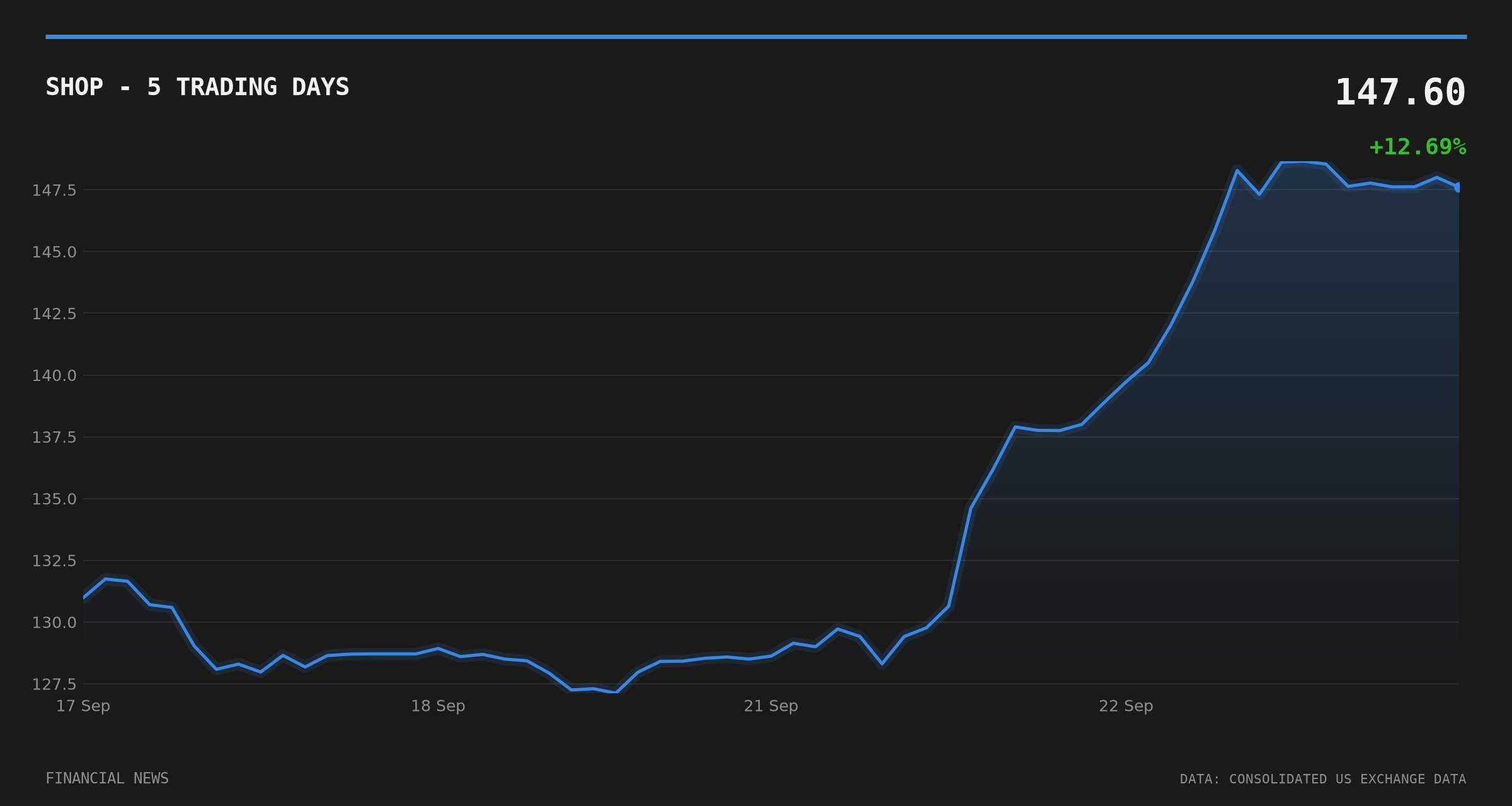

Shopify (NYSE: SHOP) shares rose roughly 8% on 22 September 2026 after Meta’s Muse AI agent gained the ability to complete purchases through Shop Pay on Shopify-powered stores. The move extended a rally that began the previous session when the partnership was first announced.
Shopify stock closed at $148.63 on Tuesday, up 7.89% on the day, having climbed 7.33% to $137.92 on Monday when the deal was unveiled, according to ad-hoc-news. The two-day advance amounts to close to 15%.
What the Shopify Meta Muse checkout deal covers
Shopify chief executive Tobi Lütke said on X that Shopify is partnering with Muse to enable agentic checkout with Shop Pay across all Shopify stores, as first reported by PYMNTS. Meta chief executive Mark Zuckerberg posted that ‘Shoppers find more. Shops sell more. More partnerships like this coming soon,’ according to Quartz.
The integration lets Muse browse Shopify-powered stores and complete purchases directly through Shop Pay, rather than simply recommending products for a shopper to buy elsewhere. Neither company has disclosed a revenue-sharing arrangement or a rollout timetable, and no filing detailing commercial terms has surfaced on EDGAR.
Amazon has taken a different stance. It blocked Muse from completing purchases on its own site, according to The Paypers, leaving Shopify as the more visible partner for Meta’s push into agentic commerce.
Rally comes with rising short interest
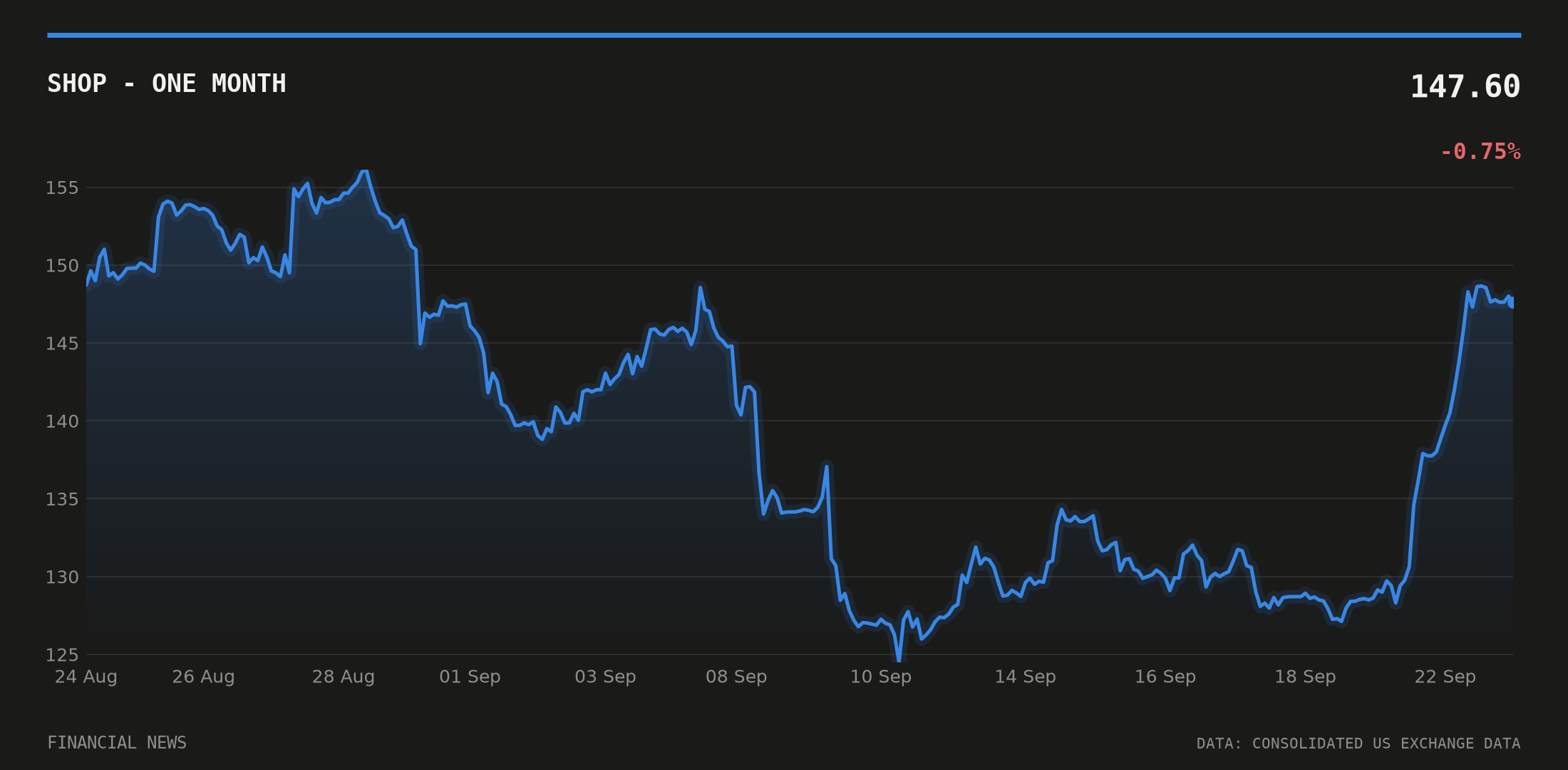
The FINRA short-volume ratio for Shopify climbed from 0.141 on 11 September to 0.588 on 22 September, according to FINRA daily short sale data, indicating a growing share of trading volume tied to short positions even as the stock rallied. Total volume on 22 September ran more than double the prior 20-day average, exchange data show, with the shares trading in a $124.50-to-$148.66 range over that period before the announcement pushed the stock to fresh highs.
Deutsche Bank analysts said the deal signals that major AI platforms are defaulting to Shopify’s commerce infrastructure rather than building checkout systems of their own, pushing back against fears that AI agents could disintermediate Shopify’s merchants, according to 24/7 Wall St. Muse itself became the top free app on the US iOS App Store within around two weeks of its early-September launch, overtaking ChatGPT, according to TradingKey.
Valuation and the numbers behind the rally
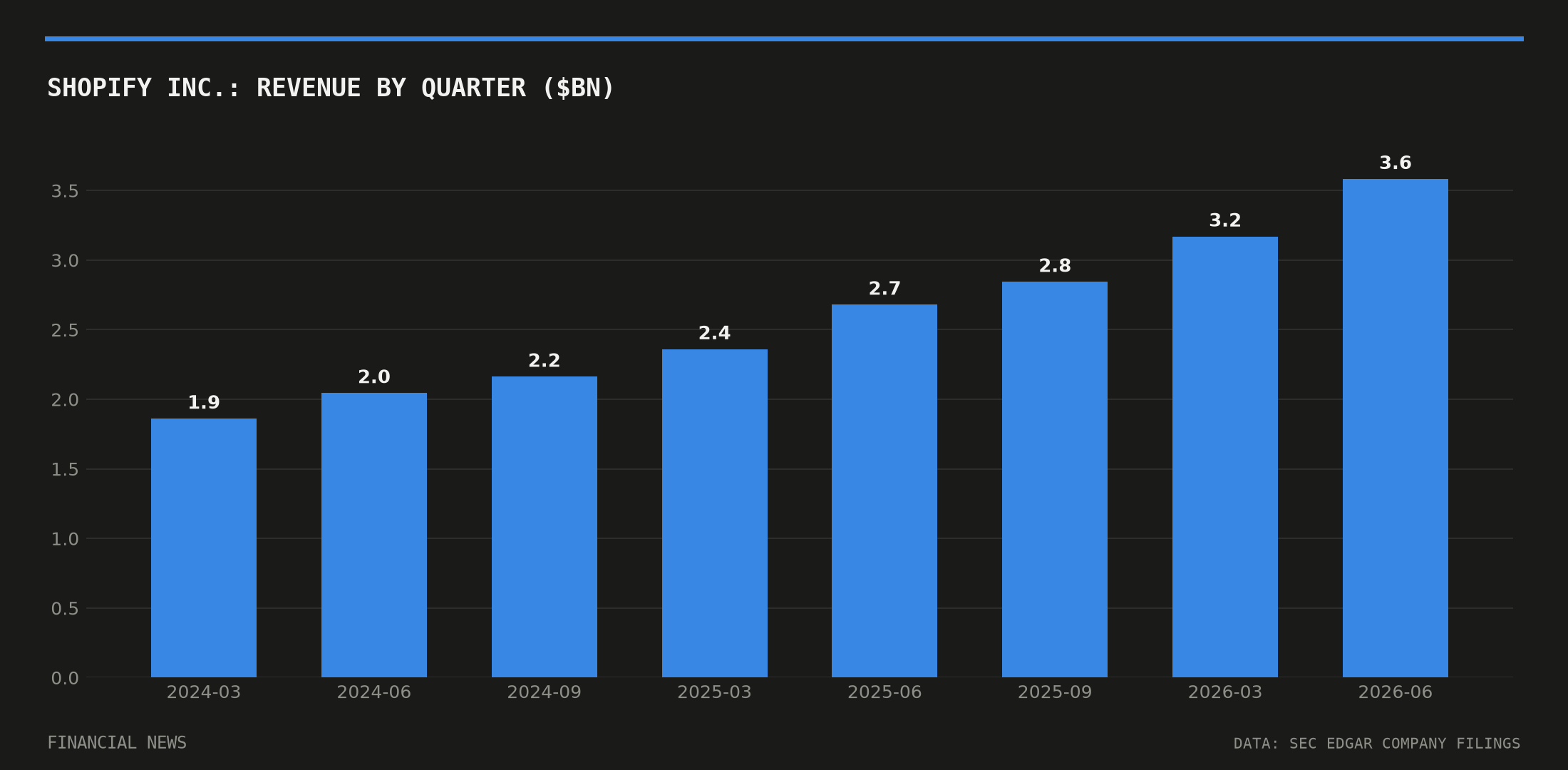
Zacks noted that Shopify’s business was already accelerating before the Muse announcement. Revenue in the second quarter of 2026 reached $3.58bn, up 33% year on year, and the stock traded above 70 times forward earnings even before this week’s surge pushed that multiple above 90, a caution flagged for a stock Zacks rates Hold, according to Zacks.
Shopify’s quarterly filings show that growth trajectory building over several periods. Revenue rose from $2.36bn in the first quarter of 2025 to $2.68bn in the second and $2.84bn in the third, before climbing further to $3.17bn in the first quarter of 2026 and $3.58bn in the second, according to Shopify’s 10-Q filings on EDGAR. Net income has been volatile across that stretch: the company reported a net loss of $682m in the first quarter of 2025, followed by profits of $906m and $264m in the following two quarters, then another loss of $581m in the first quarter of 2026, before net income jumped to $1.5bn in the second quarter of 2026. Diluted earnings per share followed the same pattern, moving from a loss of $0.53 a share to $1.16 a share over that period, filings show.
The broader rate backdrop has been steady rather than a driver of the move. The 10-year US Treasury yield stood at 4.96% on 21 September, little changed from 5.01% previously, while the 2-year yield held flat at 4.76%, according to FRED data from the Federal Reserve Bank of St. Louis. US unemployment held at 4.1% in August, with consumer prices continuing a gradual climb, FRED figures show, suggesting the Shopify rally was driven by the Meta partnership rather than a shift in the macro outlook for consumer spending.
Investors will be watching for any formal disclosure of commercial terms between Shopify and Meta, and for signs of how quickly merchants adopt Muse as a sales channel, before the next scheduled earnings update clarifies whether the integration is moving revenue.
This article is for information only and is not investment advice or a recommendation to buy or sell any asset. Markets move quickly; figures are correct as sourced at the time of writing. Always do your own research before making financial decisions.
