Meta Platforms (NASDAQ: META), Google and TikTok filed lawsuits on 4 November 2026 to block a California social media law aimed at platform features used by children.
The law, Assembly Bill 1709, bars platforms from offering users under 16 features the state classifies as ‘psychologically exploitative’, including personalised recommendations and autoplay video, according to mediaweek.com.au.
Three companies, three courts
The companies filed separate suits in federal courts in San Francisco, Los Angeles and San Jose, as first reported by Audacy. Each argues the California social media law breaches the First Amendment, overrides parental authority, and conflicts with the liability shield in Section 230 of the Communications Decency Act.
Meta’s complaint states that ‘the state cannot, consistent with the First Amendment, override Meta’s editoria[l judgment]…’ regarding how it curates and displays third-party content, according to Yahoo News, which cited the filing directly.
Reuters, via Yahoo Finance Canada, reported the suits target enforcement of a law intended to limit the risk of addictive design practices for users under 16. Deadline separately confirmed the age threshold and the companies’ framing of the targeted features as compulsive-use drivers rather than ordinary content tools.
Part of a wider legislative push
AB 1709 forms part of a broader online child-safety package signed into law by Governor Gavin Newsom, according to NBC News. The approach mirrors moves elsewhere, including New York’s SAFE for Kids Act and Australia’s under-16 social media restrictions, noted law firm Davis+Gilbert in a client briefing on the legislative package.
Industry challenges to state-level content rules have become routine as US states move faster than Washington on platform regulation for minors. The Section 230 argument has featured in several previous challenges to state social media statutes, though courts have reached mixed conclusions on its scope when applied to design features rather than third-party speech itself.
The filing lands as Meta’s shares slide
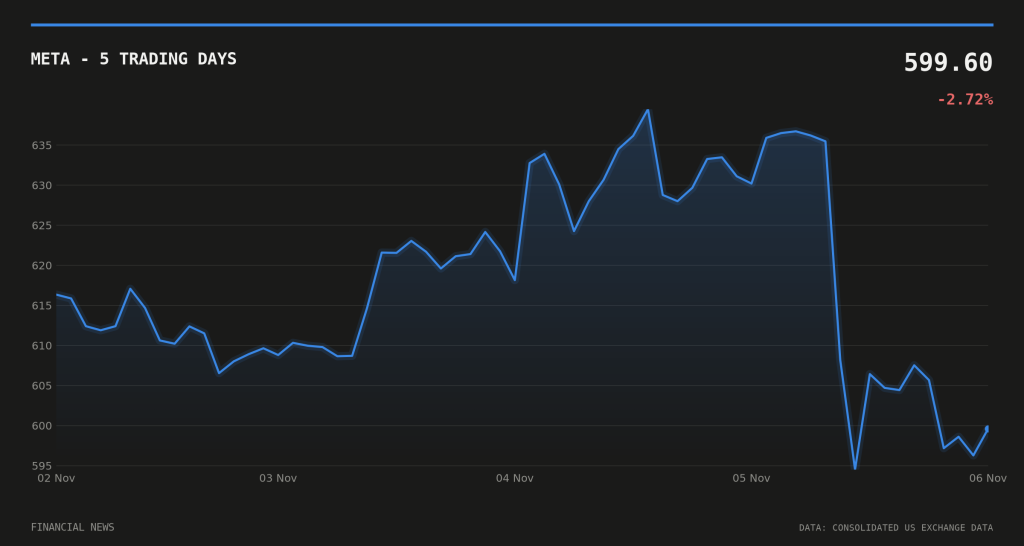
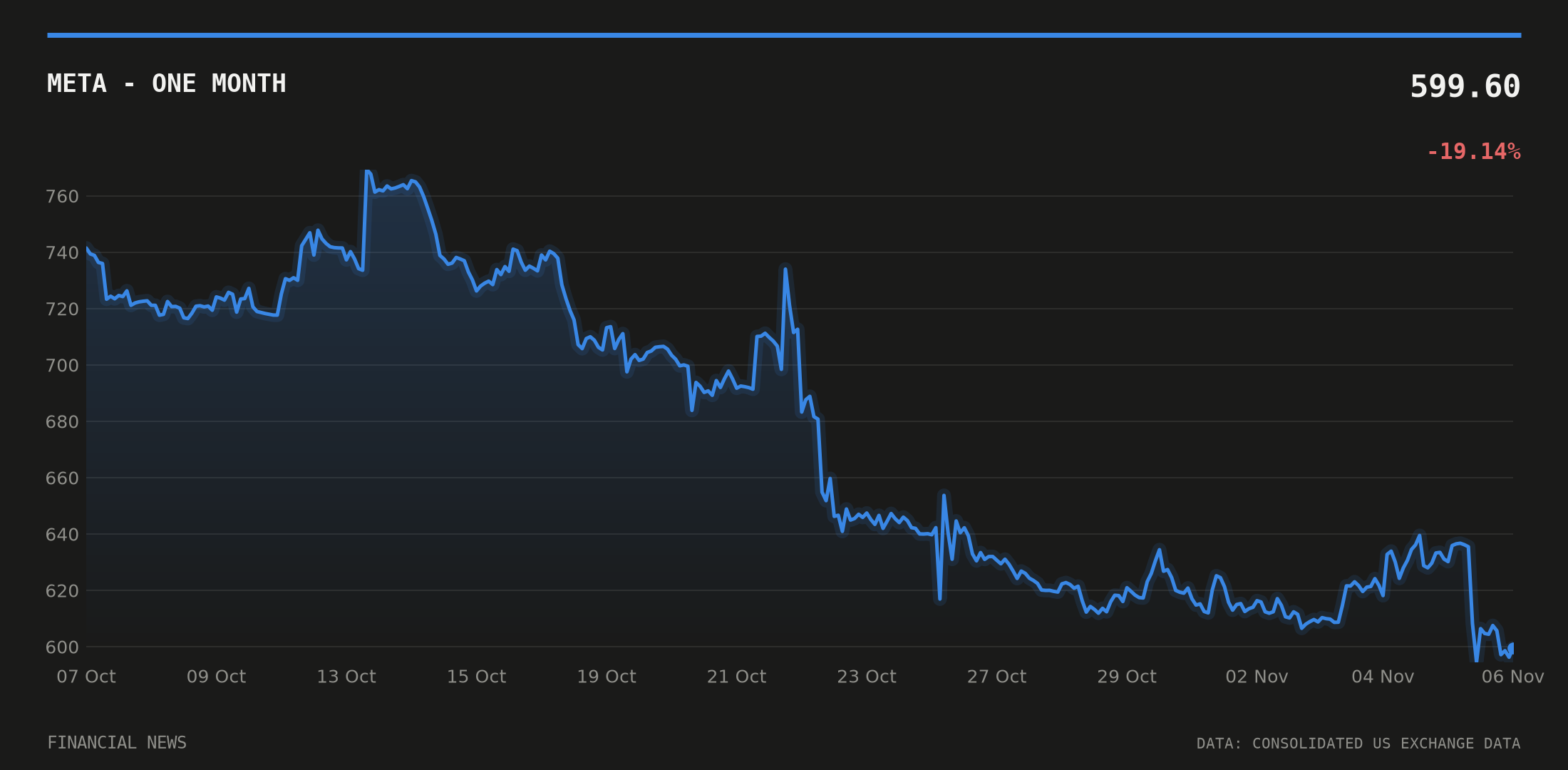
The lawsuits arrive as Meta’s stock comes under separate pressure unrelated to the litigation. Shares closed at $597.81 on 5 November 2026, down 19.11% over the preceding 20 trading days, against a 20-day high of $740.35, according to consolidated US exchange data.
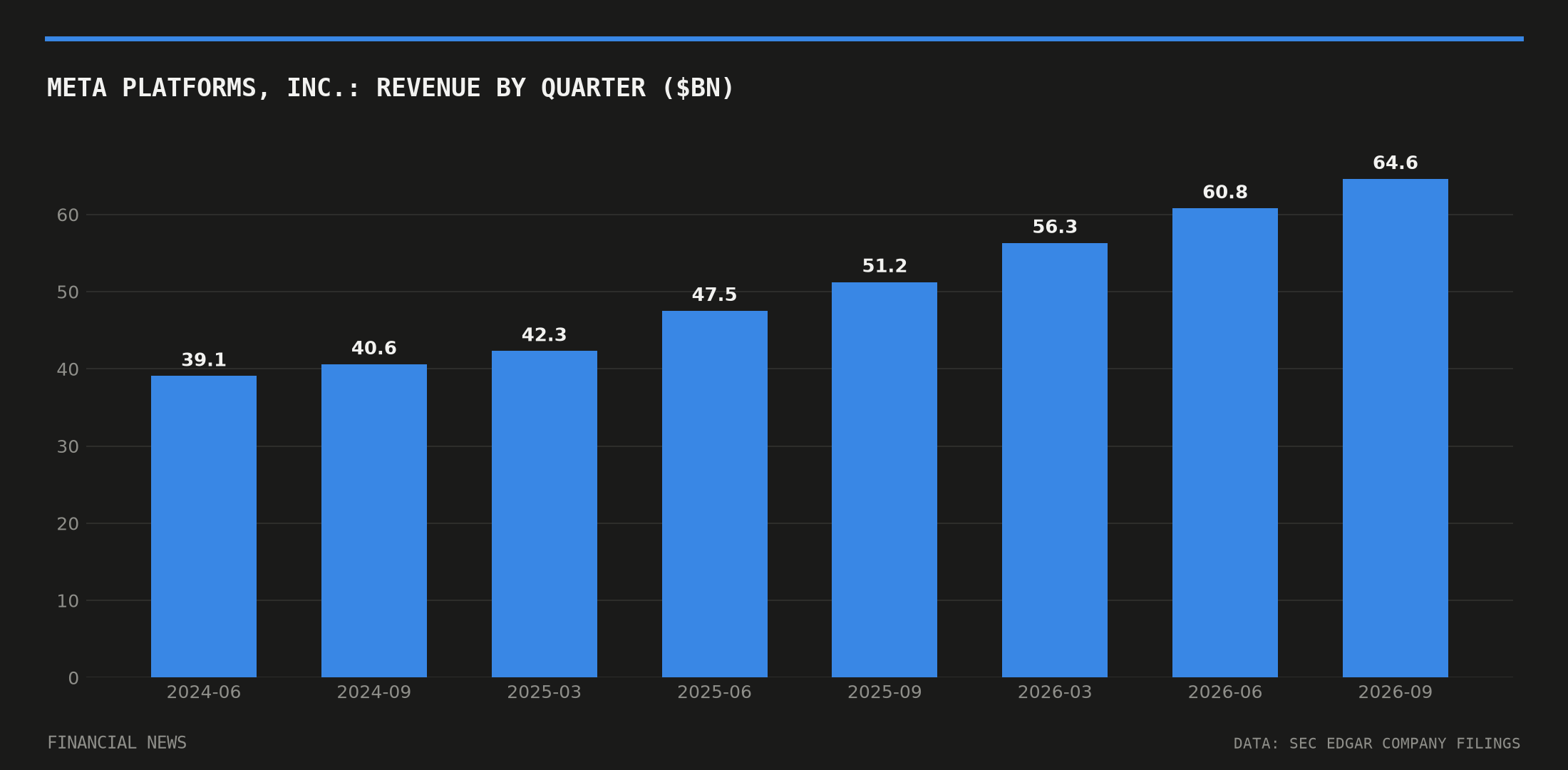
That decline sits alongside continued growth in the underlying business. Meta reported third-quarter revenue of $64.6bn for the three months to 30 September 2026, up from $51.2bn a year earlier, and net income of $9.86bn on diluted earnings per share of $3.83, according to its 10-Q filed with the SEC on 22 October 2026. The engagement-driven advertising model underpinning that revenue is precisely what AB 1709 targets by restricting the recommendation and autoplay features regulators link to compulsive use among younger users.
Two Form 4 filings from Meta’s insider-reporting system posted on the same day as the lawsuits – one from executive Olivan Javier and one from the company as issuer – are routine disclosures unconnected to the litigation, records at SEC EDGAR show.
No sign of unusual positioning around the filing
Trading data shows no spike in bearish positioning tied to the lawsuit news. FINRA’s daily short-sale ratio for Meta held in a narrow 0.30 to 0.44 band through the ten sessions from 23 October to 5 November, data from the FINRA short-sale volume series shows, with trading volume on 6 November running close to its 20-day average.
Treasury markets were similarly quiet around the filing date. The 10-year yield stood at 4.90% on 4 November, barely changed from 4.95% the prior session, according to FRED data from the Federal Reserve Bank of St Louis, suggesting no broader macro shock coincided with the legal action.
The cases now move to the three federal districts where they were filed, with no court dates yet set. California’s attorney general has not publicly detailed a response strategy to the suits.
This article is for information only and is not investment advice or a recommendation to buy or sell any asset. Markets move quickly; figures are correct as sourced at the time of writing. Always do your own research before making financial decisions.