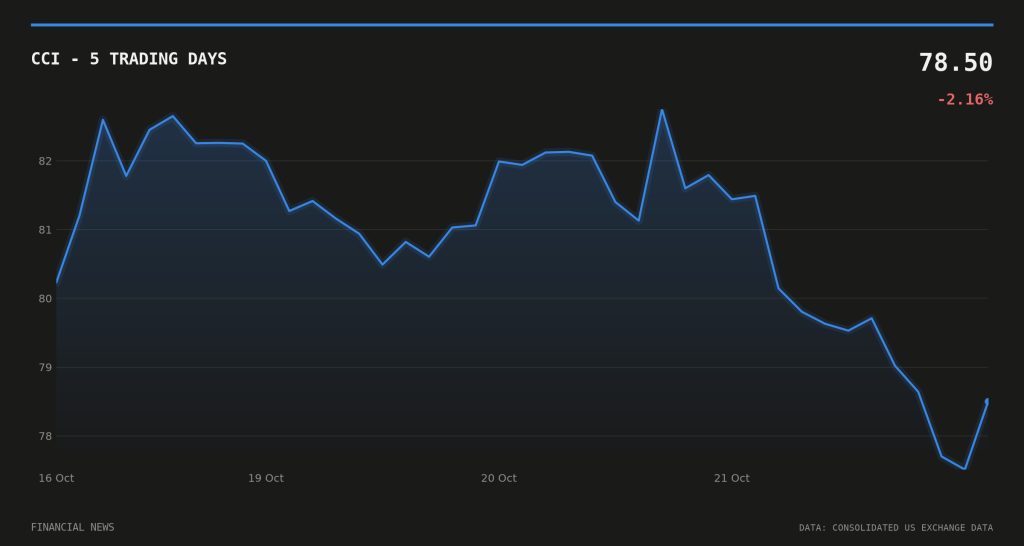
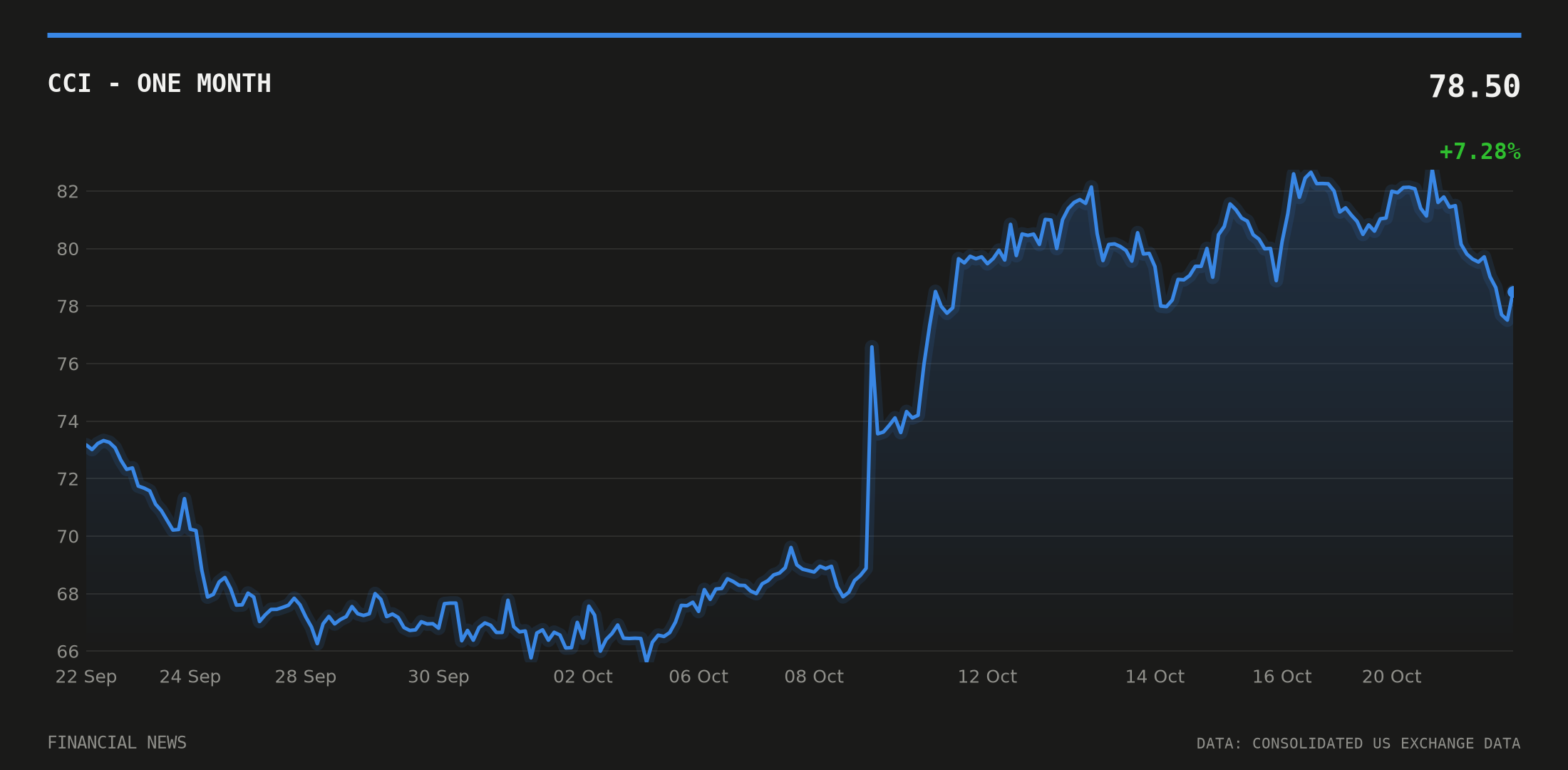
Crown Castle (CCI) shares closed 1.42% lower at $78.50 on 21 October 2026, the day trade outlets reported the cell-tower landlord had topped Wall Street’s Q3 funds-from-operations estimates, as first reported by Zacks.
The fall followed a 17.74% run-up in the stock over the prior 20 trading days, leaving a gap between the reported Crown Castle Q3 FFO beat and how the market actually priced it on the day.
A beat with no filing to check it against
Zacks’ headline framed the quarter as a clean beat on FFO, a non-GAAP metric REITs favour over net income, and a companion Zacks piece walked through the key metrics against consensus. MarketBeat and two other outlets separately covered the earnings call itself, with MarketBeat summarising management’s remarks and full transcripts carried independently by Nasdaq and Seeking Alpha.
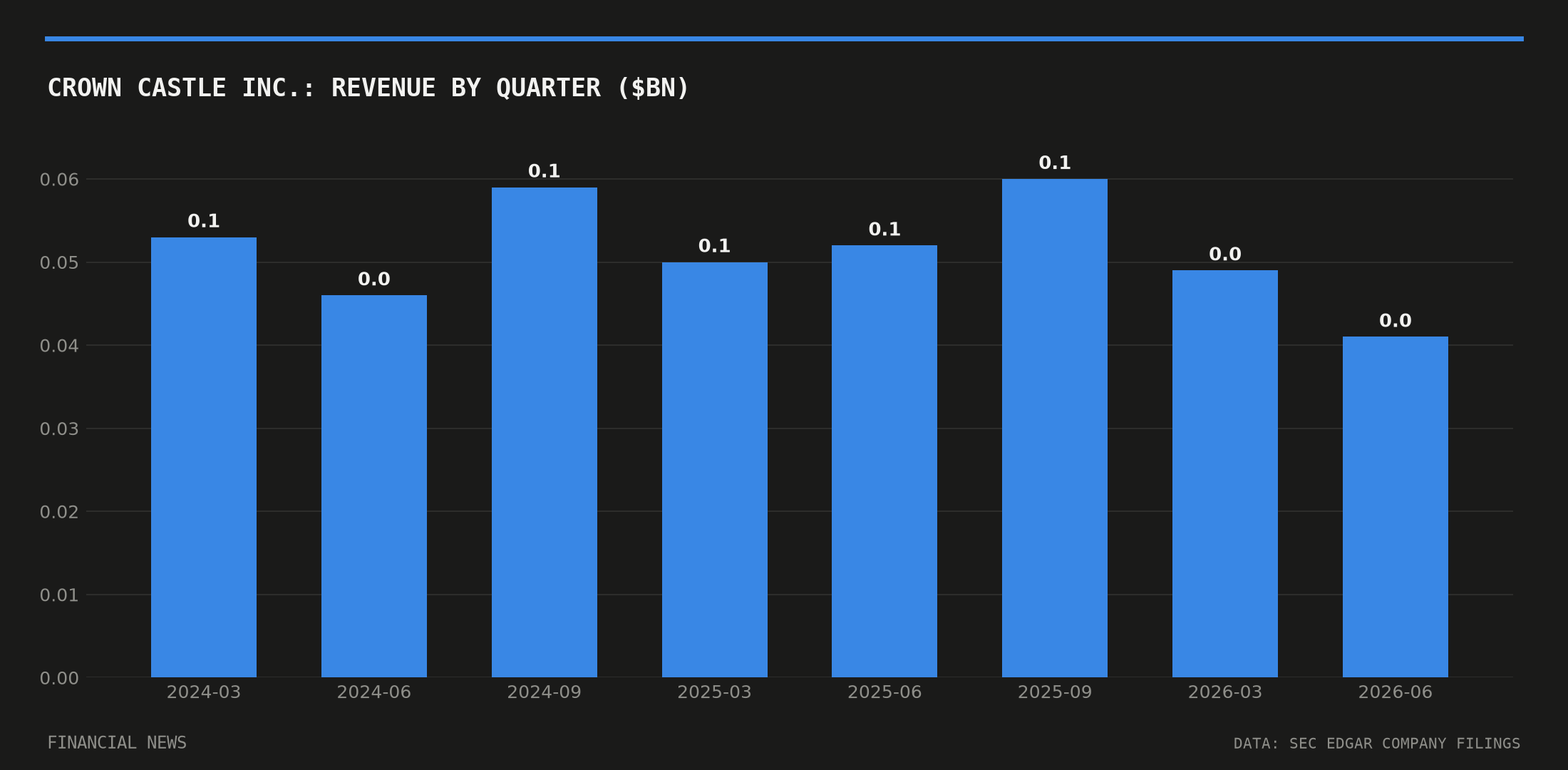
What none of that coverage replaces is the primary filing. Crown Castle’s most recent 10-Q on record covers the second quarter of 2026, filed on 5 August 2026, not the third. That filing showed net income of $94m and diluted earnings per share of $0.22, down from $151m and $0.34 in the first quarter of 2026. That is a sequential decline in GAAP profitability running into the quarter now being described as a beat on the non-GAAP measure.
Crown Castle’s GAAP results have swung before. The company posted a net loss of $464m and diluted EPS of -$1.07 in the first quarter of 2025, before returning to profit with $291m in the second quarter and $323m in the third. Investors reading an FFO beat against that backdrop have reason to want the underlying net-income trend alongside it, not instead of it.
The market’s response looked more cautious than a beat implies
A stock that gains nearly 18% in a month and then slips on the day its results are reported is not behaving like a market simply relieved by good news. Crown Castle traded at 1.43 times its 20-day average volume on the day of the print, within a 20-day range of $65.615 to $82.75, suggesting the move was not a thin-volume blip.
Positioning data add a wrinkle. FINRA’s daily short-sale figures show the short-volume ratio for Crown Castle falling from 0.588 on 12 October to 0.227 on 19 October, just ahead of the print, before climbing back to 0.404 on 21 October, the day of the earnings call. That pattern is consistent with traders covering short positions into the run-up and then rebuilding them once the numbers landed, though the FINRA data don’t say why.
What’s actually verifiable right now
The honest summary is narrower than the headlines suggest. Multiple outlets agree Crown Castle held a Q3 2026 earnings call and that the company’s own framing was positive on FFO. What isn’t available yet is a filed 10-Q with the specific Q3 FFO figure and the consensus estimate it beat, so the size of that beat can’t be checked against the primary record. The most recent GAAP numbers on file, for the second quarter, point the other way, with profitability down from the first quarter of the same year.
Crown Castle’s results land against a less forgiving rate backdrop for REITs generally. The 10-year Treasury yield stood at 5.15% as of 19 October 2026, up from 5.09% at the prior reading, while the 10-year/2-year spread narrowed to 0.33 from 0.38, according to Federal Reserve data. Higher long-end yields raise the discount rate applied to REIT cash flows and tend to make non-GAAP metrics like FFO a tougher sell to income-focused investors than they would be in a lower-rate environment.
The next test is the company’s third-quarter 10-Q itself, once filed with the SEC, which will carry the GAAP net income and EPS figures investors can set directly against the FFO narrative now in circulation. Until then, the beat exists in press coverage and on the earnings call transcript, not yet in the primary filing that would let the numbers be checked line by line.
This article is for information only and is not investment advice or a recommendation to buy or sell any asset. Markets move quickly; figures are correct as sourced at the time of writing. Always do your own research before making financial decisions.