
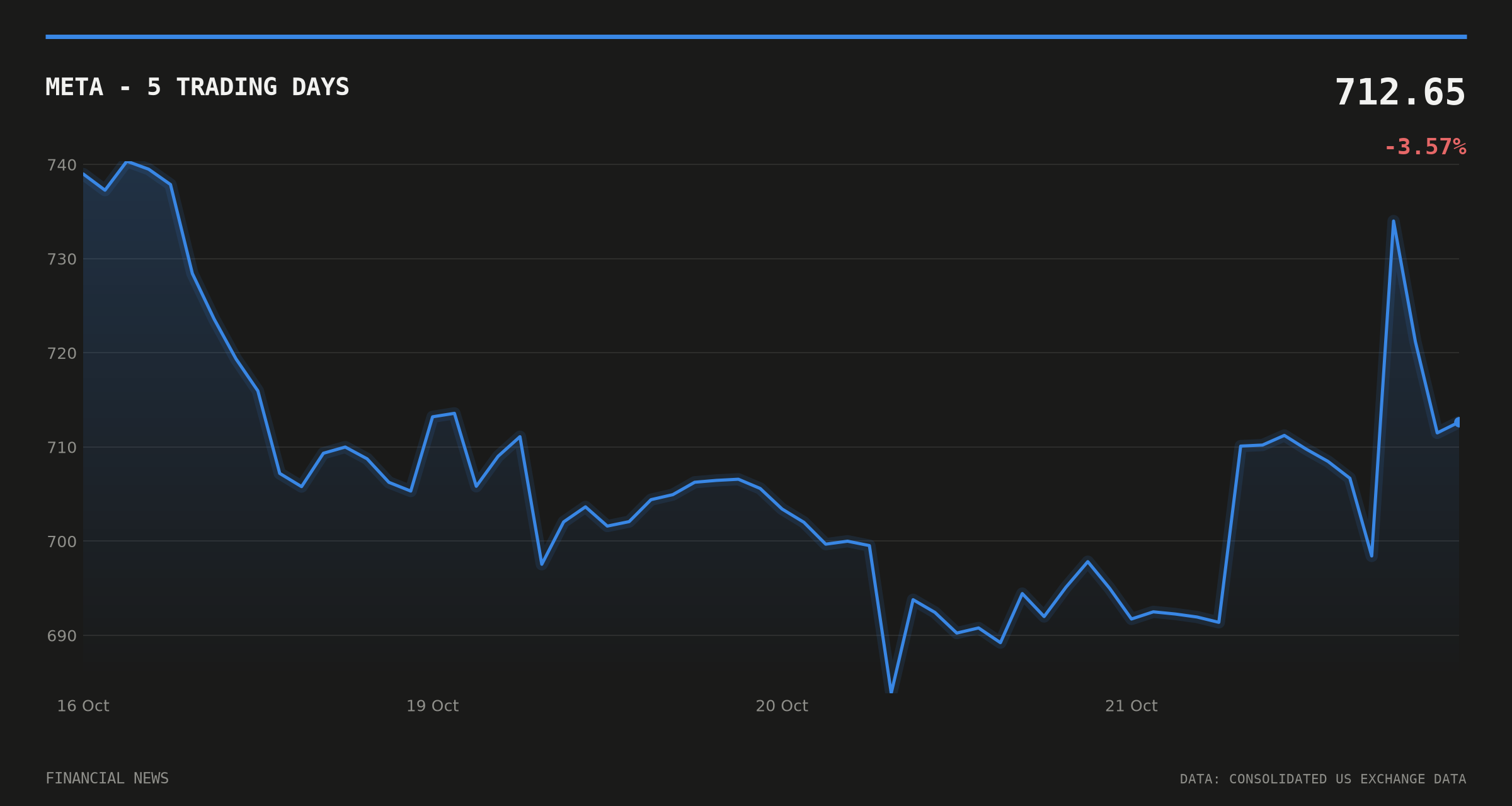

Meta Platforms (NASDAQ: META) will create a new class of non-voting stock to help pay for its artificial intelligence build-out, the company said alongside third-quarter results on 21 October 2026.
Meta raised the lower end of its 2026 capital expenditure guidance to a range of $135bn-$145bn, up from $130bn-$145bn previously, according to a Reuters wire report.
What the new Meta stock class does
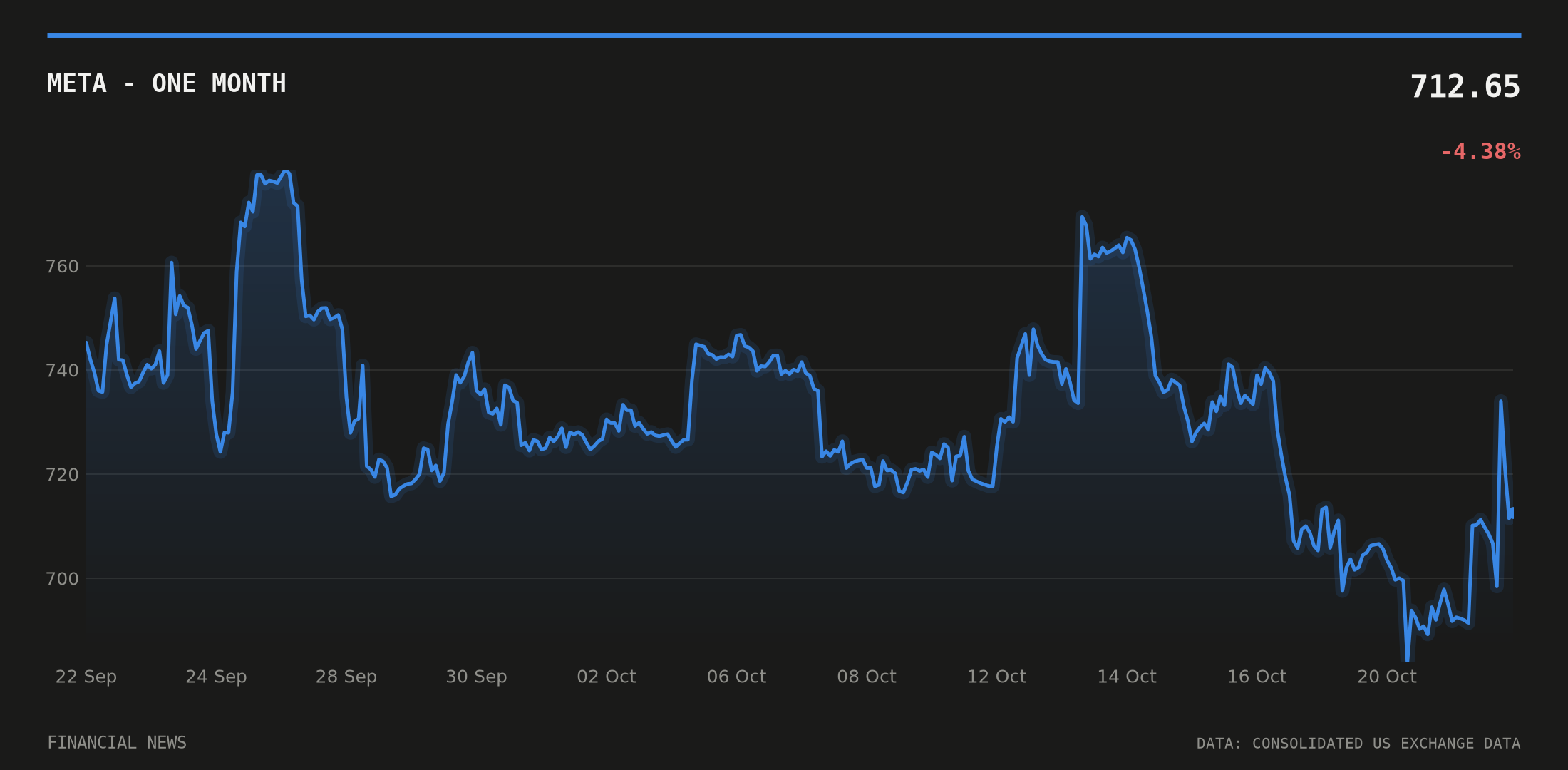
The new Class C shares will be distributed as a one-time dividend of one new share for every existing share, an effect equivalent to a two-for-one stock split, Bloomberg reported. Meta disclosed the plan in an exhibit to its third-quarter 8-K, titled to announce the “Establishment of New Class C Common Stock,” filed with the SEC on the same day as earnings.
Crucially, the Class C shares carry no votes. That leaves chief executive Mark Zuckerberg’s voting control over the company unchanged even as Meta’s total share count effectively doubles. The company’s special board committee concluded that preserving the founder-led voting structure was essential while giving Meta more financial flexibility for acquisitions and talent retention, according to one account of the board’s deliberations.
Chief financial officer Susan Li described the move on the earnings call as a way to “expand our funding tools” for AI infrastructure, mergers and acquisitions, and employee compensation, according to a transcript cited by Techbuzz. Meta’s board approved the plan on 19 October, shareholders signed off the following day, and the company lodged the Delaware filing on 21 October, the same day it reported earnings.
Spending is outrunning cash generation
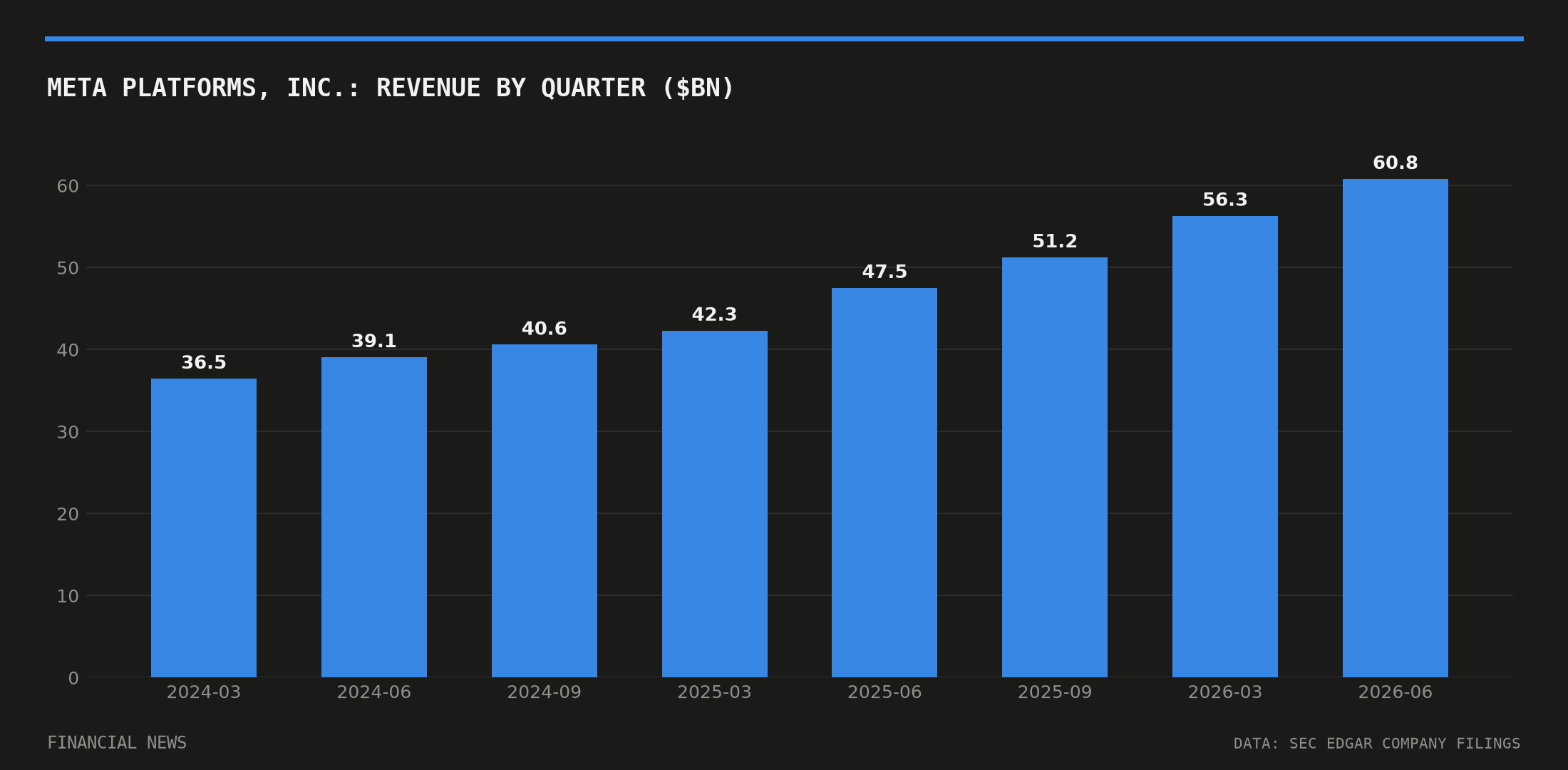
The timing points to why Meta wants a new financing lever. The company reported a free cash flow deficit of $2.12bn in the third quarter, versus positive free cash flow of $10.63bn in the same period a year earlier, Reuters reported. Quarterly revenue reached $64.60bn, ahead of the $63.37bn analysts had expected on LSEG estimates, and Meta guided fourth-quarter revenue to $73bn-$76bn against a $73.73bn consensus.
Net income has swung sharply over the past two years as capital spending has ramped up. Meta’s 10-Q filing for the third quarter of 2025 showed net income of $2.709bn and diluted earnings per share of $1.05, dragged down by a one-off $15.93bn non-cash tax charge tied to the “One Big Beautiful Bill Act.” By contrast, the first quarter of 2026 produced net income of $26.77bn on diluted EPS of $10.44, underlining how volatile Meta’s reported earnings have become even as revenue has climbed in each of the past eight quarters.
A borrowed playbook
The structure echoes one Alphabet used in 2014, when it created a non-voting Class C share to let founders retain control while expanding the share base. Meta’s version arrives as financing conditions tighten elsewhere: the 10-year US Treasury yield stood at 5.15% on 19 October, up from 5.09% the prior session, according to Federal Reserve data. Higher benchmark yields raise the cost of debt financing, making an equity-based funding tool for AI capex more attractive to a company already running a cash flow deficit.
Meta shares closed at $712.65 on 21 October, up 0.41% on the session but still down 1.66% over the prior 20 trading days, within a 20-day range of $683.87 to $769.39. Trading volume ran 2.59 times the 20-day average, reflecting the scale of investor reaction to the earnings and stock-class announcement together.
Confirmation of the plan followed hours after TechCrunch reported that Semafor had first flagged the possibility earlier the same day, before Meta set it out formally on the earnings call. A routine Form 4 filed by Meta reporting person Javier Olivan on 21 October, the same day as the announcement, is unrelated to the new share class.
Meta has set an effective date in January 2027 for the share distribution. Investors will be watching the formal Delaware corporate filing and subsequent SEC disclosures for the precise record date and mechanics of the dividend, as well as whether the enlarged, non-voting share base changes how index providers and large shareholders approach the stock.
This article is for information only and is not investment advice or a recommendation to buy or sell any asset. Markets move quickly; figures are correct as sourced at the time of writing. Always do your own research before making financial decisions.
