
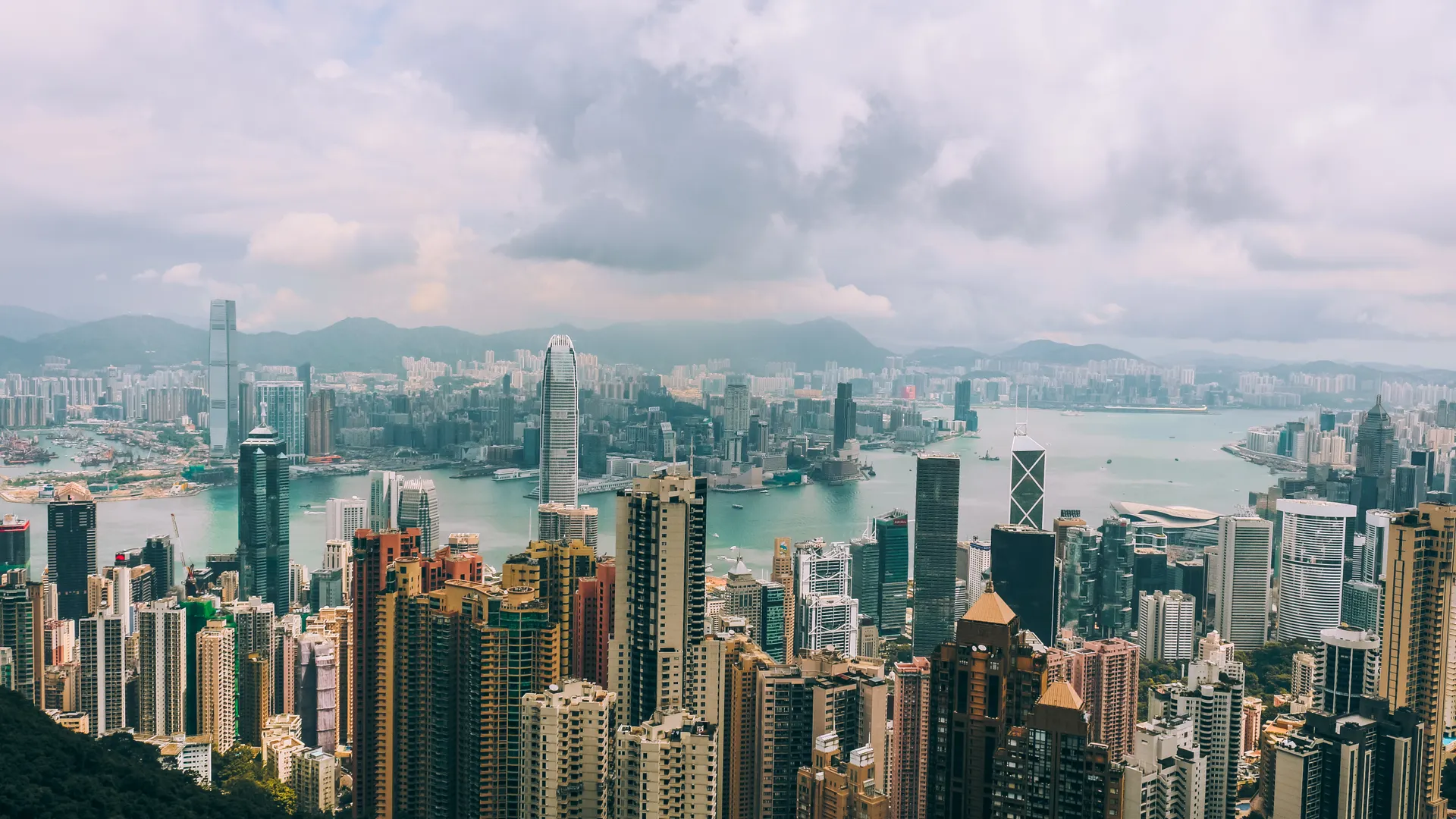

The Hong Kong Monetary Authority lifted its base rate to 4.25 percent on 17 September, its first increase in more than three years. The move landed a day after the Federal Reserve raised its target range to 3-3/4 to 4 percent, and about a month after Hong Kong reported real growth of 5.1 percent for the first half of 2026, its strongest half-year in nearly five years. Hong Kong’s decision was a response to Washington.
Under the Linked Exchange Rate System, the Hong Kong dollar trades within a band against the US dollar and the city’s monetary policy shadows the Fed’s. A sustained divergence invites pressure on the currency, so the HKMA follows. The arrangement has held since 1983, and four decades of exchange-rate stability have been bought with it. The bill arrives in moments like this one, when the imported setting and the domestic cycle point in different directions.
An imported decision
The Fed’s reasoning had little to do with Hong Kong. Kevin Warsh pointed to inflation categories still running above 3 percent and promised a timelier return to the 2 percent target. The vote was unanimous. The median member of the policy committee expects one more increase before the year is out, and investors are pricing three in total by the middle of 2027.
Hong Kong’s own figures describe a different economy. Real GDP grew 4.3 percent year on year in the second quarter. Goods exports rose 28.9 per cent in real terms. In its August release the government raised the full-year growth forecast to between 3.5 and 4.5 percent, up from 2.5 to 3.5 percent in May. An economy running at that pace can absorb a quarter point. What it absorbs after that is the open question.
What the peg costs
Eddie Yue, the HKMA’s chief executive, acknowledged the direction of travel on the day of the move. A wider gap between Hong Kong and US rates, he said, could push the local dollar softer within its convertibility band, though he described foreign-exchange and financial markets as orderly. He also noted that a widening differential encourages carry trades, the movement of money out of a lower-yielding currency into a higher-yielding one. If that pressure pushes the Hong Kong dollar to the weak end of its band, the HKMA buys the currency and drains liquidity from the banking system. HIBOR rises. The tightening arrives twice.
Commercial banks, meanwhile, were left to set prime lending rates on commercial grounds, weighing the supply and demand for local funds against interbank rates.
For most borrowers the base rate is less consequential than what the banks do next. The base rate is a signal, while HIBOR is the price. The interbank benchmark that sets corporate facilities and mortgages does not move in lockstep with the official rate, because it reflects the working supply of Hong Kong dollars in the banking system, and that supply has at times been drained by the HKMA in defence of the peg. Borrowers therefore watch two variables: the imported policy rate, and the local liquidity that decides how much of it reaches their loan.
Credit beyond the banks
Hong Kong businesses have spent the year planning around a rate path that kept changing. Owners who fixed their funding costs late in 2025, while the Fed was still cutting, did better than those who held out for cheaper money that never arrived. Then the forecasts turned. The lesson holds in reverse now: a borrower who assumes just one more increase and no more is making the same bet in the opposite direction, and the cost of being wrong is paid over the life of the facility rather than on the day the rate changes.
Bank credit in Hong Kong is priced off benchmarks that answer to Washington and to local liquidity. A business controls neither. Its own share register is a different matter: founders, families and major shareholders in the city hold large listed positions, and those positions can support credit of their own. Financing raised against listed equity is priced off the value of the shares themselves, which takes the imported rate path out of at least one part of the calculation.
The gap ahead
The immediate question is how far the Fed goes. If the committee’s own projection holds and another increase lands before the year is out, Hong Kong will import that one as well, into an economy whose official forecast was upgraded just weeks ago. The peg does not bend for good news. It offers no discount for an export boom, no allowance for a government revising its numbers upward, and no vote to the people paying the bill.
Hong Kong’s businesses have no vote on the rate they pay. What they can decide is how much of their funding is exposed to a decision made in Washington, and how quickly they can raise capital when that decision arrives.
Contributed content: this article was written by a third-party contributor and does not necessarily reflect the views of Financial News. Editorial and Advertising Policy
