

Elena Vasquez spent months asking vineyard managers the same question: what keeps you awake at night? The answer came back the same every time. It had nothing to do with weather or pests or labour shortages. It was compliance. Precise spray timing. The fear that one mistake could destroy relationships with wineries or strip organic certifications. Or pull an entire harvest from the market. So Vasquez built VitisScribe in Los Angeles to fix all three at once.
The risks behind that fear are real and specific. A missed pre-harvest interval is the required waiting period between applying a spray and picking fruit. Miss it, and the produce leaves the market, wiping out a full season’s earnings. A wrong re-entry interval exposes workers to restricted chemicals, creating serious legal risk. Incomplete records can threaten sustainability certifications, organic status and winery relationships that require a full paper trail. In most vineyards today, the main defence against all of this is still a clipboard and human memory.
When an inspector arrives during harvest and asks for spray records, that gap shows up fast. A binder of mismatched papers. Scattered spreadsheets. Handwritten logs in various hands. A promise to pull the full records together by the end of the week. VitisScribe removes that problem by generating a complete, formatted, audit-ready report in seconds. That report draws from spray logs that capture applicator name, equipment, wind speed, temperature, humidity, application rate and GPS coordinates. Start and end times record automatically at the point of entry.
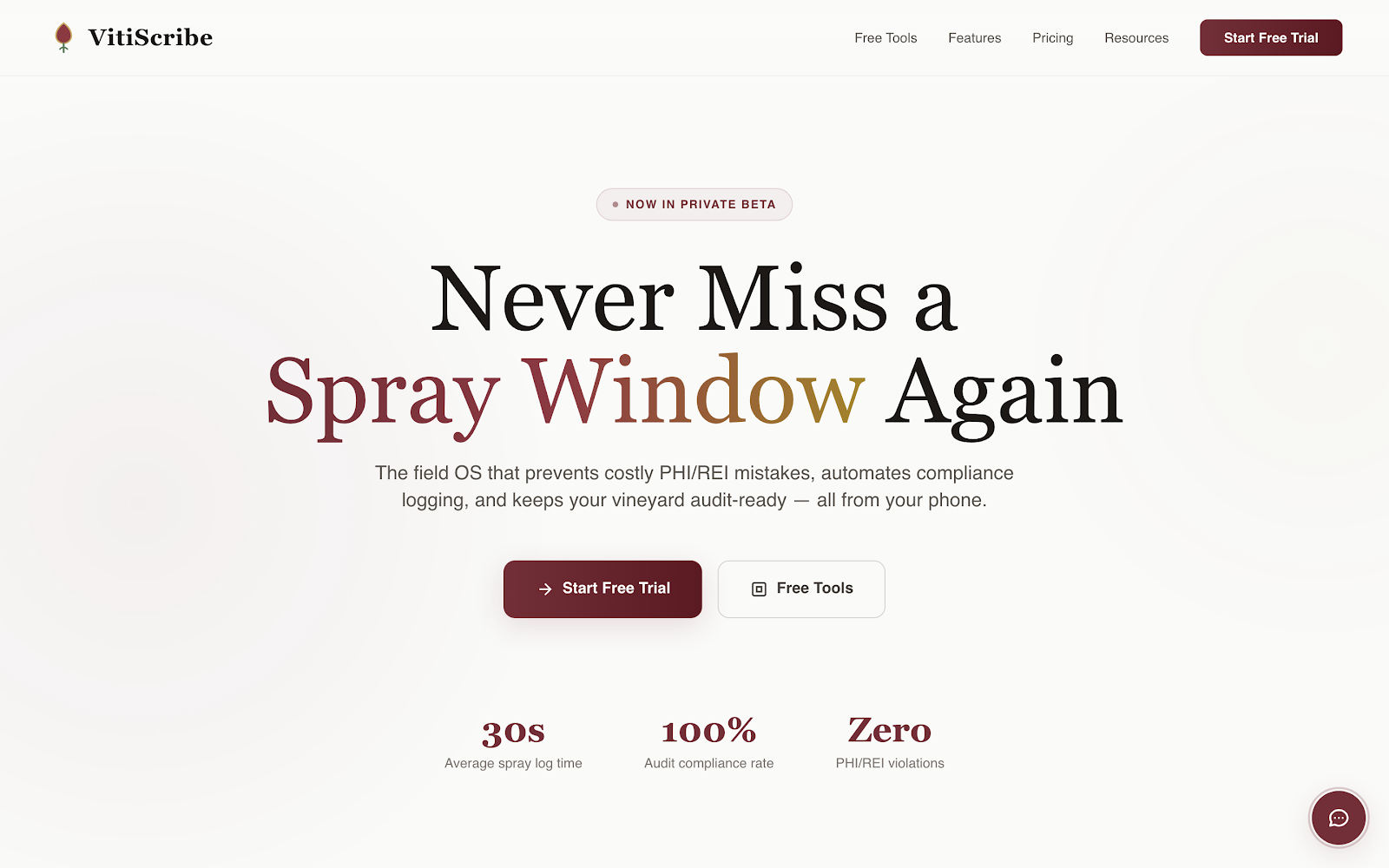
PHI and REI tracking runs in real time rather than after the fact. When a grower logs a spray event, VitisScribe calculates PHI and REI for every product across every treated block. If a harvest crew plans to enter a block before the REI clears, the system flags the problem right away. If growers set fruit for picking before the PHI runs out, the system flags that too. As a result, these checks stop violations before they happen — not after the damage is done.
Meanwhile, growing degree day build-up tracks continuously by block. In turn, that data feeds pest and disease models that give managers an early warning. A rising powdery mildew risk on a warm, humid day triggers an alert before infection spreads. Managers can then act early rather than spray reactively after damage already shows. That matters a great deal in wine grape growing, where disease pressure hits both yield and quality hard.
Even before the sprayer leaves the barn, VitisScribe’s tank mix calculator deals with a different kind of risk. Mixing problems can cancel out active ingredients, damage equipment or cause dangerous reactions. Yet neither handwritten records nor basic spreadsheets catch those problems before application. By contrast, the calculator checks every proposed mix against safety data first, protecting both the crop and the crew.
Together, those tools reflect a clear and narrow focus. VitisScribe targets wine grape operations only. General farm tools stretched to cover vineyards do not meet the same legal, farming and day-to-day demands. Basic apps with a vineyard layer added fall short for the same reason. In short, generic tools fall short.
Vasquez explained the thinking directly. “We did not build another farm management tool that happens to work for vineyards,” she said. “We spoke directly with vineyard managers about what keeps them awake at night. The consistent answer was compliance, precise spray timing, and the fear that one error could destroy everything they have built. VitisScribe solves exactly those problems.”
VitisScribe serves individual wine grape growers, vineyard managers, organic and sustainable operations, and multi-vineyard estates. The latter manage compliance across dozens of blocks and hundreds of spray events each year. At the same time, the platform sits within a wider range of vertical trade software. Alongside tools for commercial beekeepers, insect farms and reptile hatcheries, it meets needs that broad, general tools never quite covered.
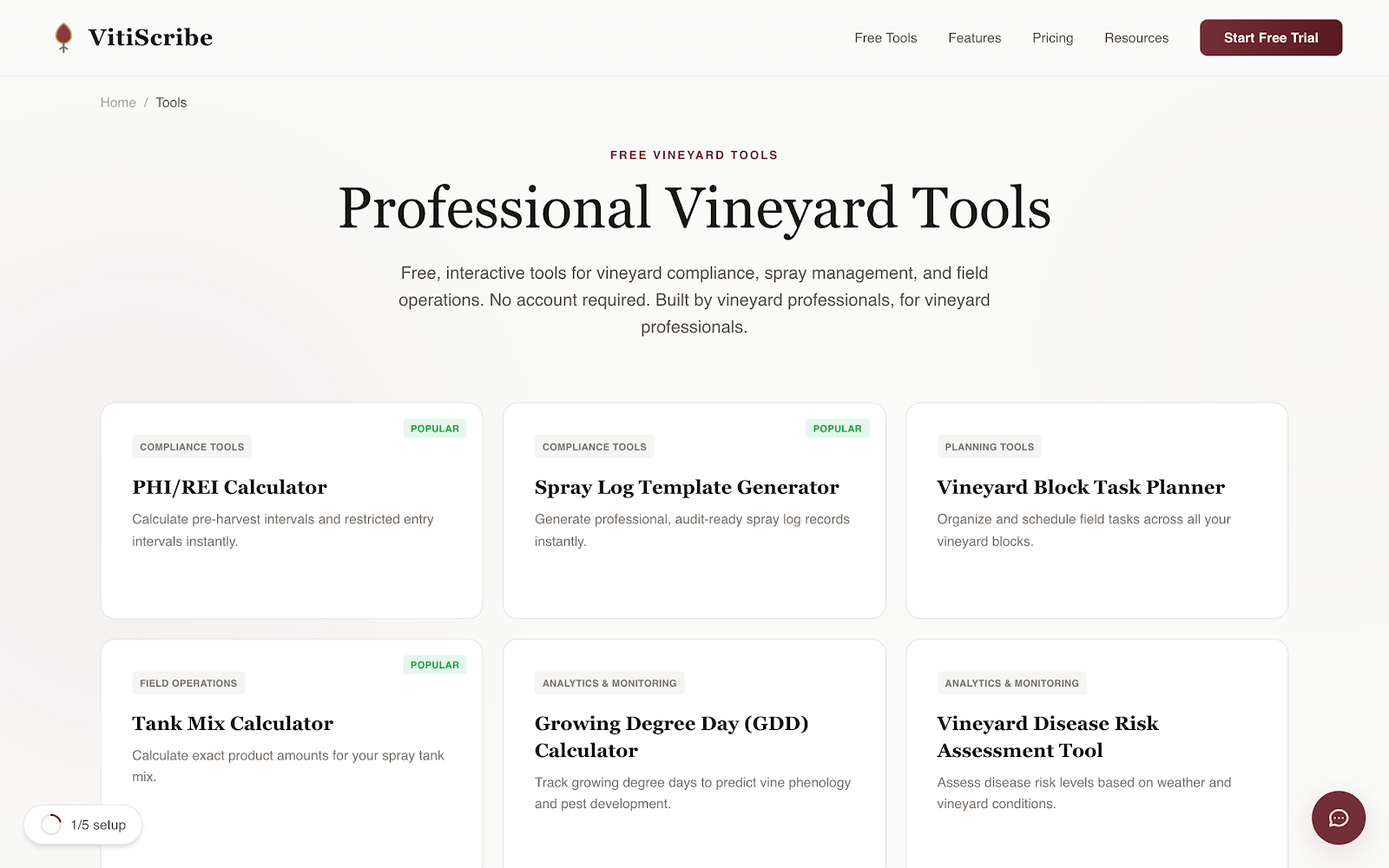
Free tools sit alongside the platform without needing an account. They include a spray schedule calendar, disease risk calculator, GDD tracker and tank mix checker. On top of that, a varieties database covers spray sensitivities, disease risks and care notes. It includes every major wine grape variety grown in North America. That gives vineyard teams a practical, up-to-date reference through each growing season.
The binder still sits on a shelf in most vineyard offices. Full of mismatched papers, waiting for the next inspector. For operations running VitisScribe, though, that particular shelf no longer matters.
