

A monument dealer in Pennsylvania noticed a single digit out of place: 1948 instead of 1949. On screen, it looked like a small thing. Carved into granite, it would have become a permanent wound. A grieving family would have stood at the graveside and read the wrong year. TributeIQ caught it before the proof ever left the system.
That kind of catch matters because the alternative is irreversible. In the normal flow of memorial work, errors pass through multiple checking stages, reach production and ship to the cemetery. They stay undiscovered until a family member finds them. At that point, the granite already holds the mistake. There is no quiet correction. No reprint. There is only the conversation no dealer wants to have.
Nathan Cross built TributeIQ in Los Angeles because he understood exactly where those errors come from. A family provides details amid shock and grief. The dealer writes down what they hear. A designer builds a layout from those notes. Each step in that chain creates a fresh chance for something to shift. From spoken word to handwritten record to digital proof, the risk compounds. A name gains a letter. Dates lose numbers. Birth and death years swap. Most of the time, no single person in the process notices. Each person only sees one version of the information.
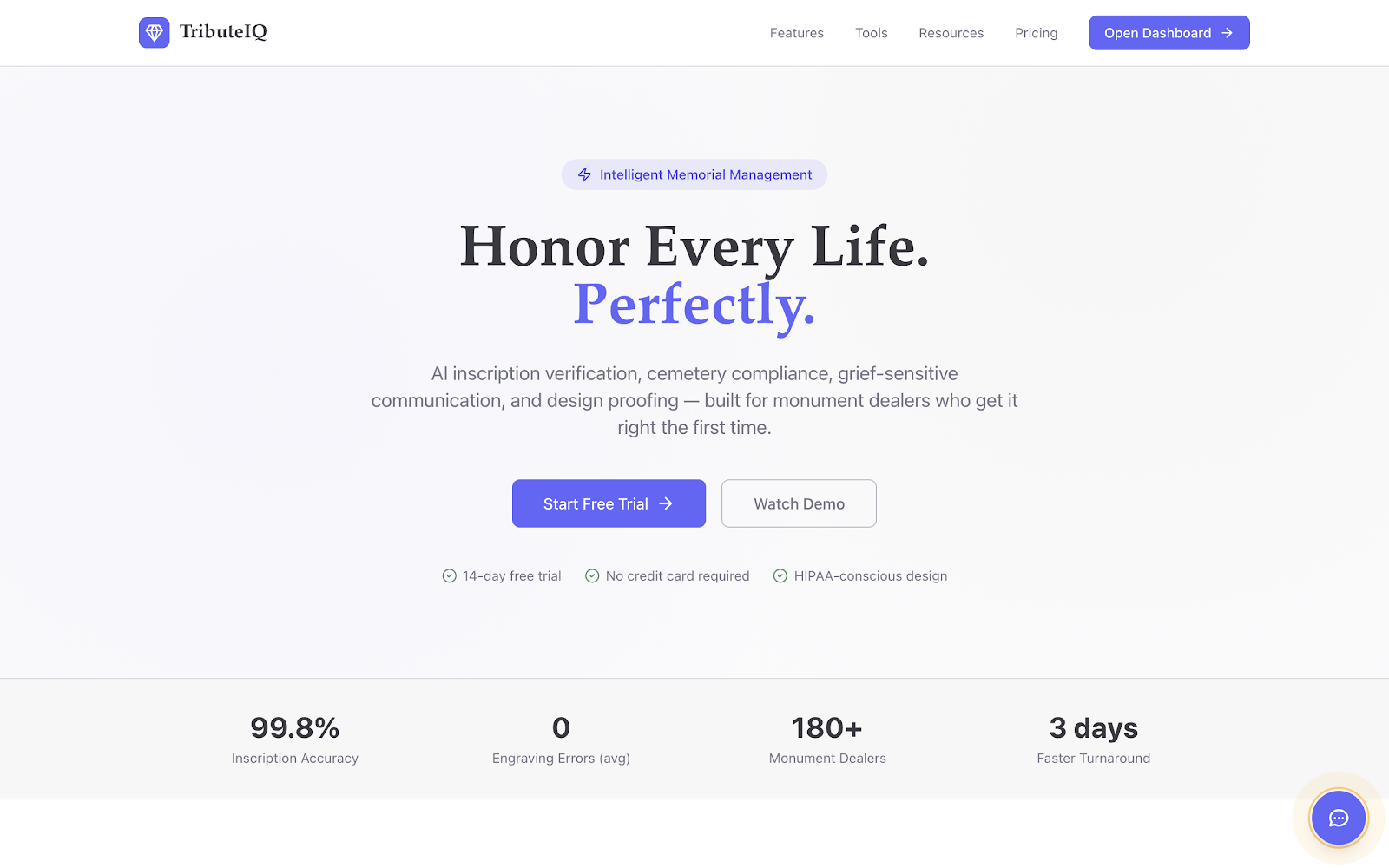
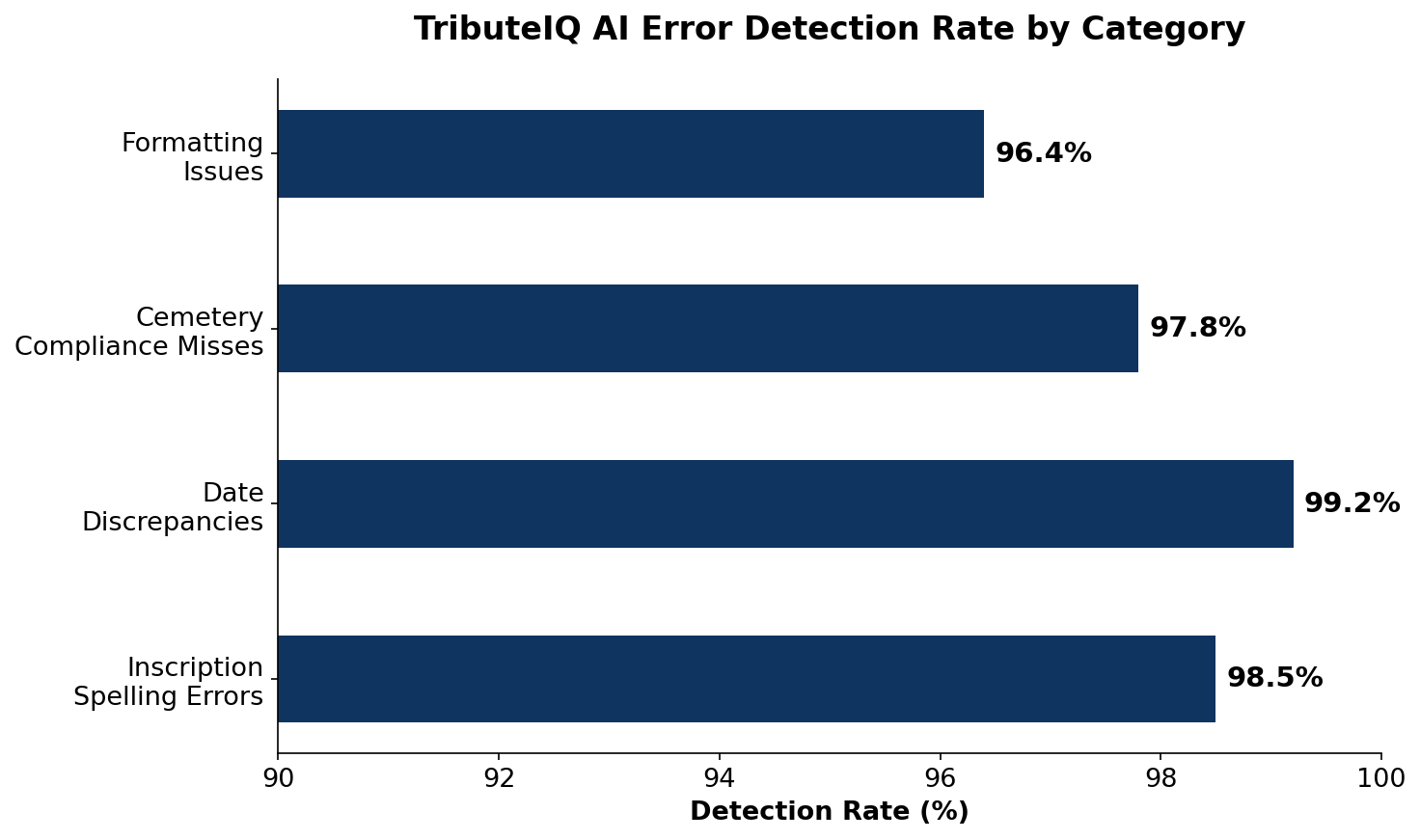
TributeIQ’s inscription engine sees all of them at once. It cross-checks the original intake record against every later version of the text and flags anything that changed. Changed names. Mismatched dates. Reversed birth and death years. Non-standard military abbreviations. Any gap between what the family first gave and what the proof now shows. As a result, the system catches the kind of error that tired human eyes miss — not because anyone was careless, but because grief and process make a difficult combination.
Beyond inscription checking, the platform also handles cemetery compliance. Every cemetery in the United States sets its own rules for monuments. Those cover size, material, foundation design, placement, direction the stone faces and sometimes even the colour of the granite. Get any of those wrong and the cemetery rejects the monument on delivery. That forces a remake and pushes the family through weeks more of waiting. TributeIQ holds current specification data for cemeteries and checks every order against those requirements before production starts. Dimensions, materials and foundation details all go through automatic checks. In turn, the finished monument arrives ready to place.
Meanwhile, the feature dealers mention most is the grief-sensitive communication engine. Every message the platform sends uses language written with full awareness of what the family is going through. That covers order confirmations, status updates, reminders and follow-ups. The tone stays warm and human. There are no cheerful phrases. No casual attempts to sell extras. Language that treats a memorial the way a retailer treats a parcel has no place here. At the same time, communication stays consistent and timely. Families always know where things stand without having to chase anyone for an update.
Cross put the weight of the work plainly. “This industry carries a weight that no other business does,” he said. “When you create a memorial, you produce the last physical object a family will have for the person they lost, the last thing they will touch, the last thing they will read. TributeIQ exists because getting that wrong is not an option.”
TributeIQ serves monument dealers, gravestone engravers, bronze plaque manufacturers, memorial design studios and cemetery monument suppliers. The platform covers every project type: custom headstones, veteran memorials, infant markers and mausoleum plaques. Those same checks and that same care apply across all of them. In that respect, it joins the wider pattern of vertical trade software built for industries where general tools consistently fall short. Yet few industries carry the consequence of failure that memorial work does. Anyone can fix a wrong date in a sales ledger. A wrong date cut into granite stays wrong.
Free tools sit alongside the platform without needing an account. They include inscription layout planners, monument dimension calculators and cemetery compliance checkers. On top of that, a stones reference library covers granite, marble and bronze in detail. It includes colour consistency, regional weathering behaviour and practical notes that help dealers guide families through material choices.
In Pennsylvania, the right year now sits on the right stone. The family never knew there was a problem. That is precisely the point.
