

A parasitic mite the size of a pinhead arrived in the United States in 1987 and has since killed more managed honey bee colonies than pesticides, habitat loss and climate change combined. Brett Holloway built VarroaVault in Los Angeles to help beekeepers track the damage — and stop it.
Varroa destructor attaches to honey bees, feeds on their fat bodies, weakens their immune systems and transmits multiple viruses capable of collapsing entire colonies. The damage compounds across seasons if treatment programmes carry gaps. Yet most beekeeping operations still manage Varroa with handwritten logs, calendar reminders and informal treatment plans assembled from online discussions or personal experience. That approach leaves critical blind spots. Holloway watched the consequences play out firsthand.
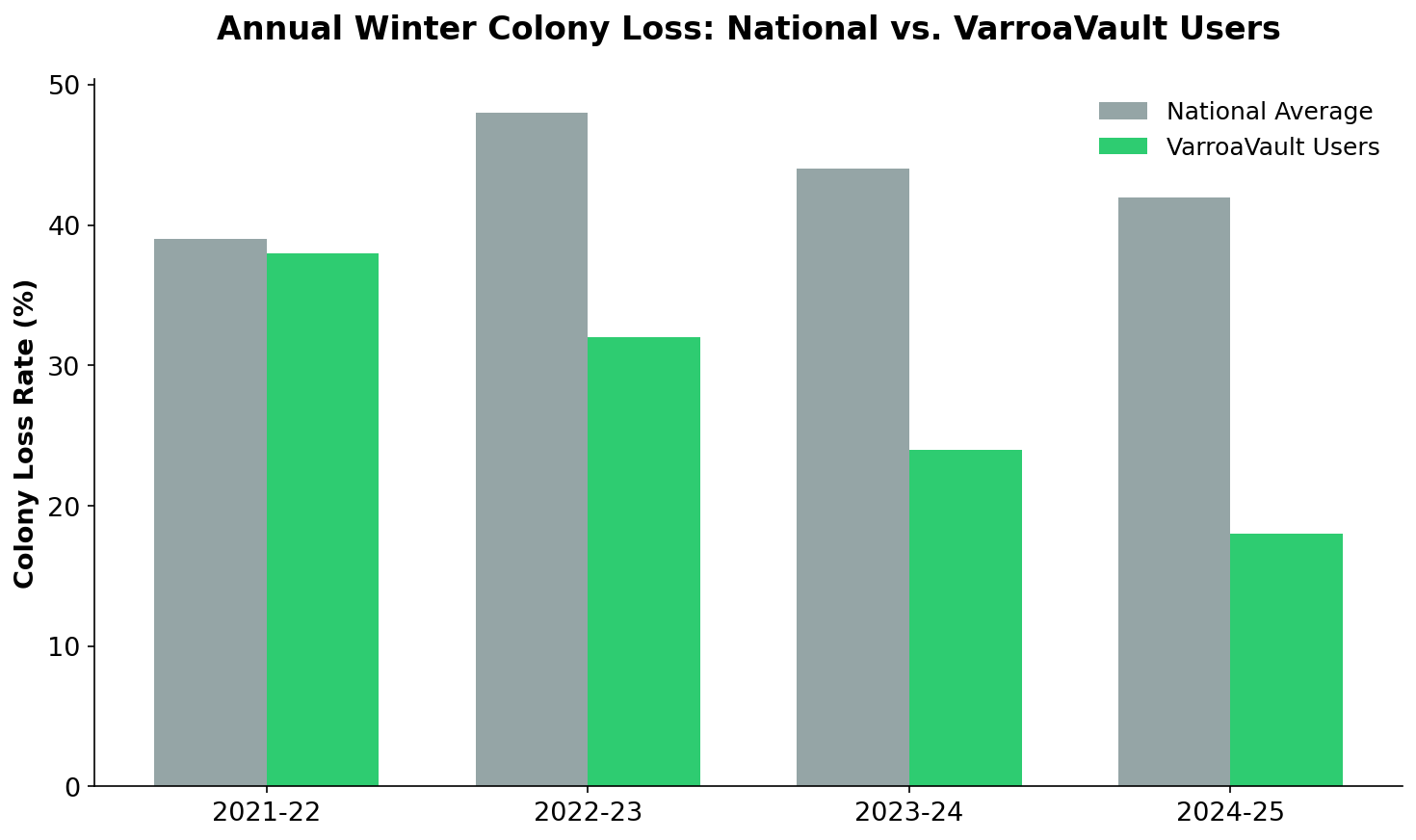
“Varroa management is the difference between a thriving operation and a dead one,” he said. “I’ve watched beekeepers lose 40, 50, or even 60 percent of their colonies in a single winter because their treatment programs had gaps they couldn’t see. We built VarroaVault because the stakes are too high for spreadsheets and the science is too complex for memory.”
At the core of the platform sits a treatment calendar builder. VarroaVault provides ten free tools in total, all accessible without an account. Timing determines whether a Varroa treatment works at all. Applying oxalic acid while brood remains present, for instance, misses the large proportion of mites sheltering inside capped brood cells. Proximity to honey supers, meanwhile, risks contaminating harvestable honey. Extreme temperatures can make certain treatments dangerous to queens. The calendar builder schedules treatments within windows that account for honey flows, brood cycles and ambient temperature ranges. Regulatory withdrawal periods factor in simultaneously.
Beyond scheduling, the mite efficacy calculator addresses a gap that costs beekeepers colonies every year. Determining whether a treatment actually worked requires comparing mite counts before and after application. Many beekeepers skip those measurements, so declining effectiveness goes undetected until the infestation overwhelms the colony. VarroaVault records pre-treatment and post-treatment counts and compares them against expected efficacy ranges for specific products. Over time, the platform tracks treatment performance by product, season and apiary location. In turn, it surfaces the early signals of emerging resistance that routine observation would likely miss.
That resistance problem is serious. Varroa mites have already developed resistance to several chemical treatments across three primary families: pyrethroids, organophosphates and formamidines. Repeated use of the same chemical class over multiple seasons accelerates resistance development within a local mite population. VarroaVault’s rotation planner tracks treatment history by chemical family. It then recommends switching strategies to reduce the likelihood of resistance taking hold in a given operation. By rotating across families rather than defaulting to a familiar product, beekeepers preserve the effectiveness of each class over time.
Queen management connects directly to mite pressure in ways that many beekeepers fail to account for. Colony loss frequently traces back to queen failure. Yet it occurs disproportionately in colonies carrying heavy Varroa loads. VarroaVault’s queen tracking tools record age, genetics, origin and performance for each hive. Alongside mite data, those records let beekeepers identify whether colonies losing queens also carry elevated mite counts. That pattern, once visible, changes how and when interventions happen.
Further operational tools address the planning demands of large apiaries. Yard planning features help organise layouts for accessibility, sun exposure, wind protection and treatment logistics. Seasonal protocols provide winter preparation and spring buildup guidance calibrated to regional climate zones. Harvest planning coordinates honey super removal with treatment schedules, so honey production and mite control do not compete for timing. Inspection checklist generators produce printable field sheets. Automated weekly reports, meanwhile, summarise hive health, treatment schedules and mite pressure across multiple yards.
VarroaVault serves commercial honey producers, migratory pollination operations, queen breeding programmes, sideline beekeepers and apiary management companies. The platform sits naturally alongside PollenOps, which addresses the broader logistics of commercial beekeeping. VarroaVault, by contrast, focuses on the biological threat that determines whether a colony survives the season. Together, the two tools address different layers of the same operation. PollenOps manages movement and contracts; VarroaVault manages the health of what moves.
A treatments database covers major Varroa control products in detail. Each profile includes application methods, temperature requirements, efficacy data, resistance considerations and withdrawal periods. Any beekeeper can access the ten free tools without creating an account.
The mite arrived in 1987. It has not lost ground since. Holloway’s argument is simple. Beekeepers who track treatment performance rigorously and rotate chemical families systematically fare better than those who do not. Connecting mite data to queen health completes the picture. VarroaVault gives them the infrastructure to do all three at once.
