

An ammonia reading of 0.25 parts per million in a koi pond can mean two entirely different things. The same number represents either a stable system or the start of a lethal spike. David Tanaka built KoiQuanta in Los Angeles to tell the difference.
Beneath the surface of any koi pond, chemistry operates in constant flux. Fish waste and decomposing food produce ammonia continuously. Beneficial bacteria convert that ammonia first into nitrite — equally toxic — then into nitrate, completing the nitrogen cycle. Meanwhile, pH shifts with rainfall, plant activity and water supply changes. Dissolved oxygen fluctuates with temperature. KH buffers deplete without warning, and when they do, a sudden pH crash can follow. Each of these processes runs in parallel, interacting with the others in ways that a single test reading cannot capture.
Yet that single reading is what most koi keepers work from. Test kits, strips and digital meters produce a snapshot — a number at a moment in time. A snapshot of 0.25ppm ammonia neither confirms safety nor signals danger on its own. Only the trend behind the number reveals what the pond is actually doing. Without that context, keepers take their results to online forums. There, strangers who have never seen the pond, the fish load or the filtration system offer advice.
Tanaka identified that gap directly. “Koi keepers were testing their water and then going to online forums to ask strangers what to do about the results,” he said. “Those strangers don’t know your pond. They don’t know your fish load, your volume, your filter system, or your water source. KoiQuanta does. It replaces anonymous advice with real science, personalized to the pond you actually have.”
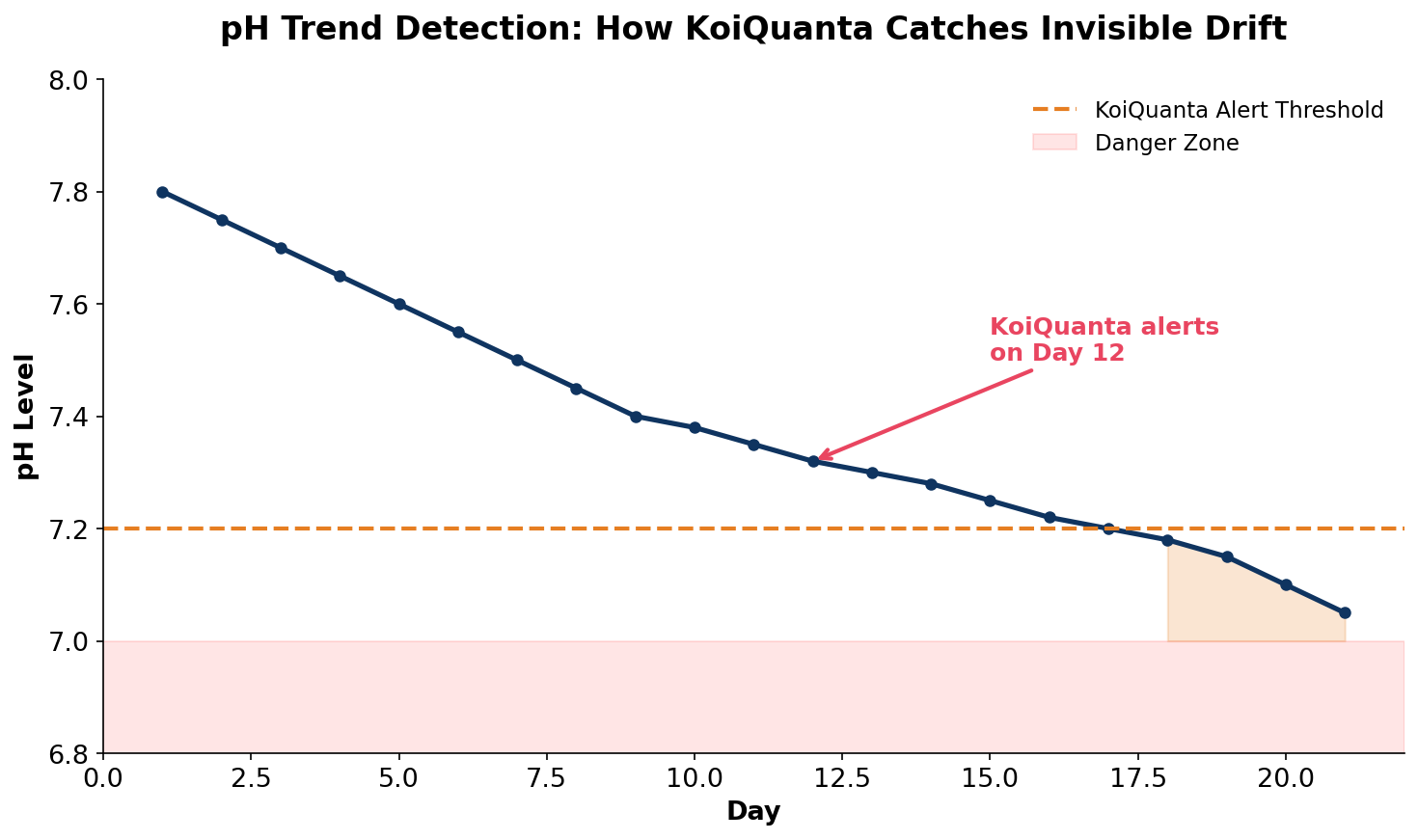
At the centre of the platform sits an AI pond advisor. It tracks ammonia, nitrite, nitrate, pH, KH, GH, dissolved oxygen and temperature over time. The system analyses how those values move and how they interact. Consider pH as an example. A gradual decline across several weeks may look unremarkable as a sequence of individual readings. In trend terms, however, it often signals that KH buffers deplete faster than replenishment restores them. Left unchecked, that pattern triggers a sudden pH crash that places fish under severe stress. KoiQuanta detects the trajectory early and recommends specific corrective action. That means a measured buffer addition calculated against the pond’s volume and current chemistry, delivered before the crash occurs.
Treatment dosing presents a similar challenge. Online advice frequently suggests salt, potassium permanganate or Praziquantel for common conditions. The appropriate dosage, though, depends on pond volume, water chemistry, temperature and fish population simultaneously. A dose calibrated for one pond may under-treat or over-treat another — and both outcomes harm fish. KoiQuanta calculates precise dosing recommendations from the pond’s measured volume, current water chemistry and fish load. The specific treatment product factors in too, removing the guesswork that forum advice cannot eliminate.
Beyond chemistry management, the platform provides quarantine workflows for introducing new fish. New koi carry parasites, bacteria and diseases that can spread through an entire pond population. KoiQuanta guides keepers through each stage: tank setup, water parameter matching, observation periods and preventative treatments. Specific criteria indicate when a fish is ready for the main pond. The process is systematic rather than instinctive, which matters when the resident fish have taken years to establish.
Seasonal management adds another layer. Spring demands careful monitoring as fish resume feeding and biological filtration restarts after winter dormancy. Summer brings rising water temperatures, oxygen depletion and algae pressure. Autumn calls for adjusted feeding routines and equipment preparation. Winter requires sustained attention to gas exchange while fish slow to near-inactivity. KoiQuanta provides seasonal workflows with checklists and target parameters calibrated to each keeper’s climate zone. As a result, transitions happen deliberately rather than reactively.
Individual fish health tracking addresses the stakes at the upper end of the hobby. Some koi carry valuations in the tens of thousands of dollars. For keepers managing fish at that level, systematic records matter as much for insurance documentation as for care decisions. KoiQuanta lets keepers photograph individual fish and document changes in skin condition, colouration, fin damage and ulcers. Behavioural patterns over time factor in too. Each record links to an individual fish profile, building a longitudinal health history that a forum post cannot replicate.
KoiQuanta serves hobbyist koi keepers, dedicated pond enthusiasts, breeders, water garden owners and professional pond maintenance companies. The latter manage multiple client ponds simultaneously. KoiQuanta extends the vertical AI pattern now appearing across niche specialist communities. From commercial beekeeping to insect farming, domain-specific knowledge has long outpaced the software available to apply it. In each case, the same gap exists: practitioners with genuine expertise and no infrastructure to support it systematically.
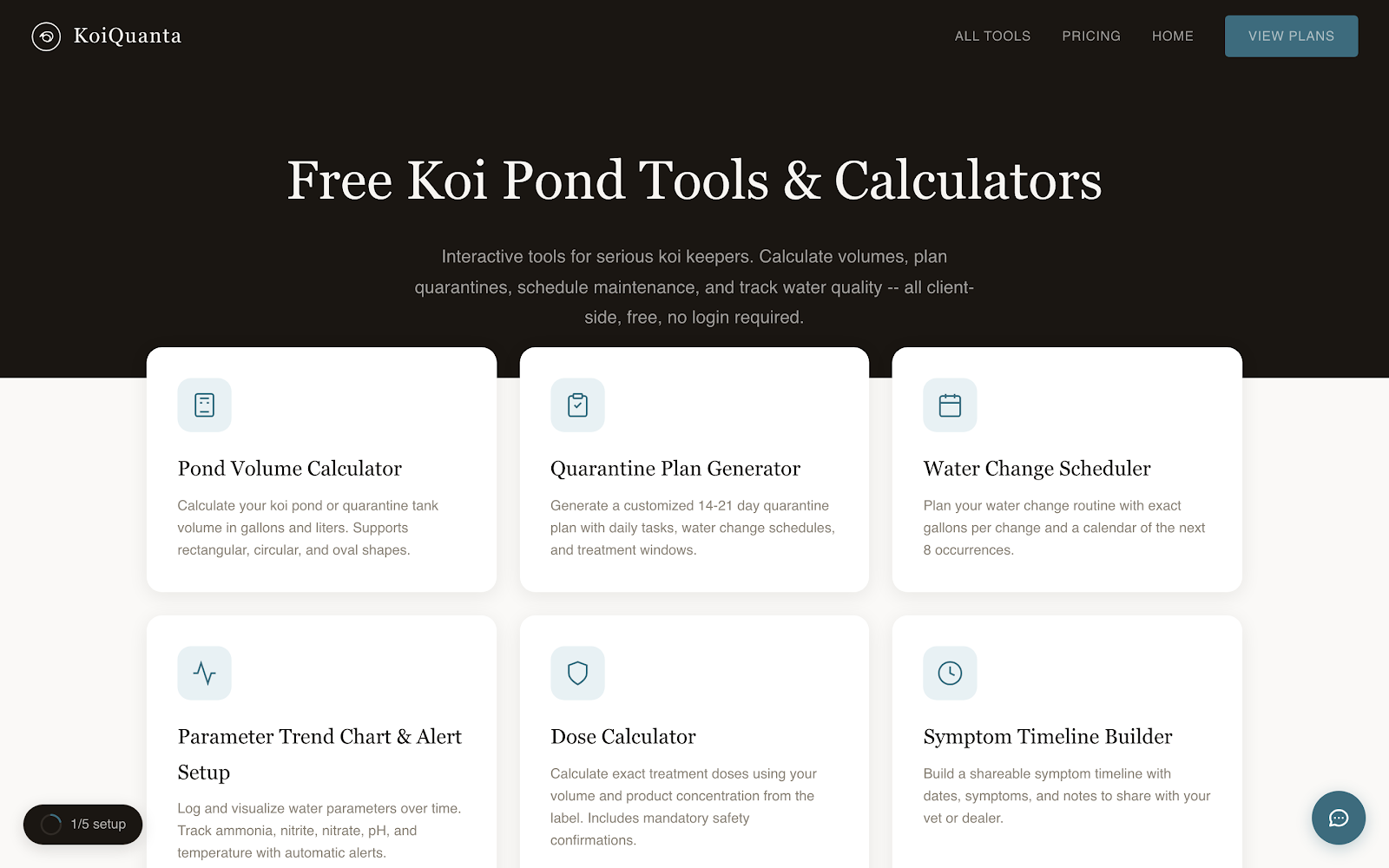
A koi varieties database covers Kohaku, Sanke, Showa, Shiro Utsuri and numerous others. Each entry includes identification guides, colour development information and variety-specific care notes. Free tools sit alongside the platform without requiring an account. They include pond volume calculators, salt dosing calculators, water change planners and seasonal checklists.
The strangers on the forum will still answer. They always do. The difference is that KoiQuanta already knows the pond.
