

A granite slab costs up to $120 per square foot. In most fabrication shops, someone lays cardboard templates on it by hand to plan the cuts. Alex Rinaldi built SlabWise in Los Angeles to replace that process with AI — and to stop the waste that manual planning routinely produces.
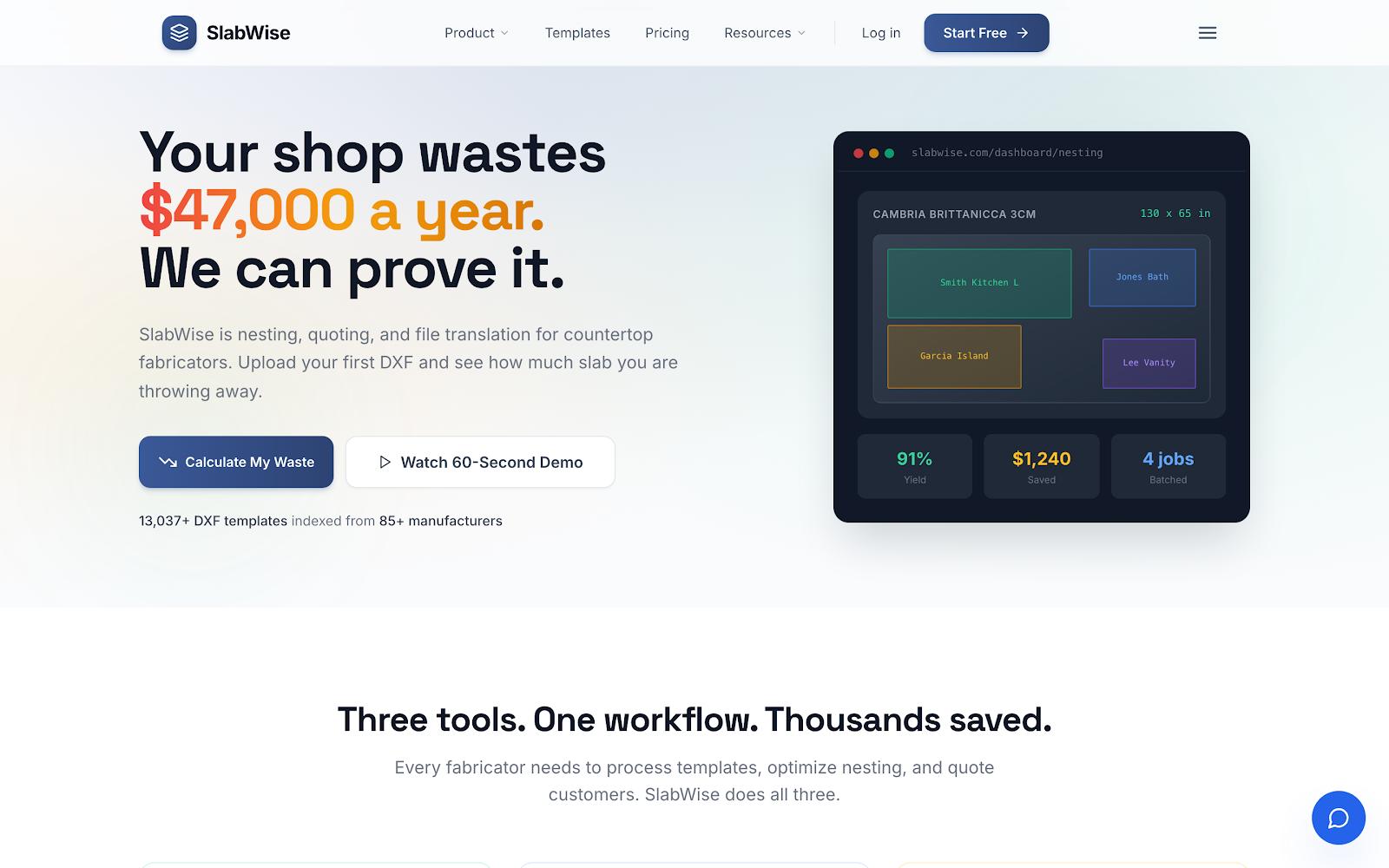
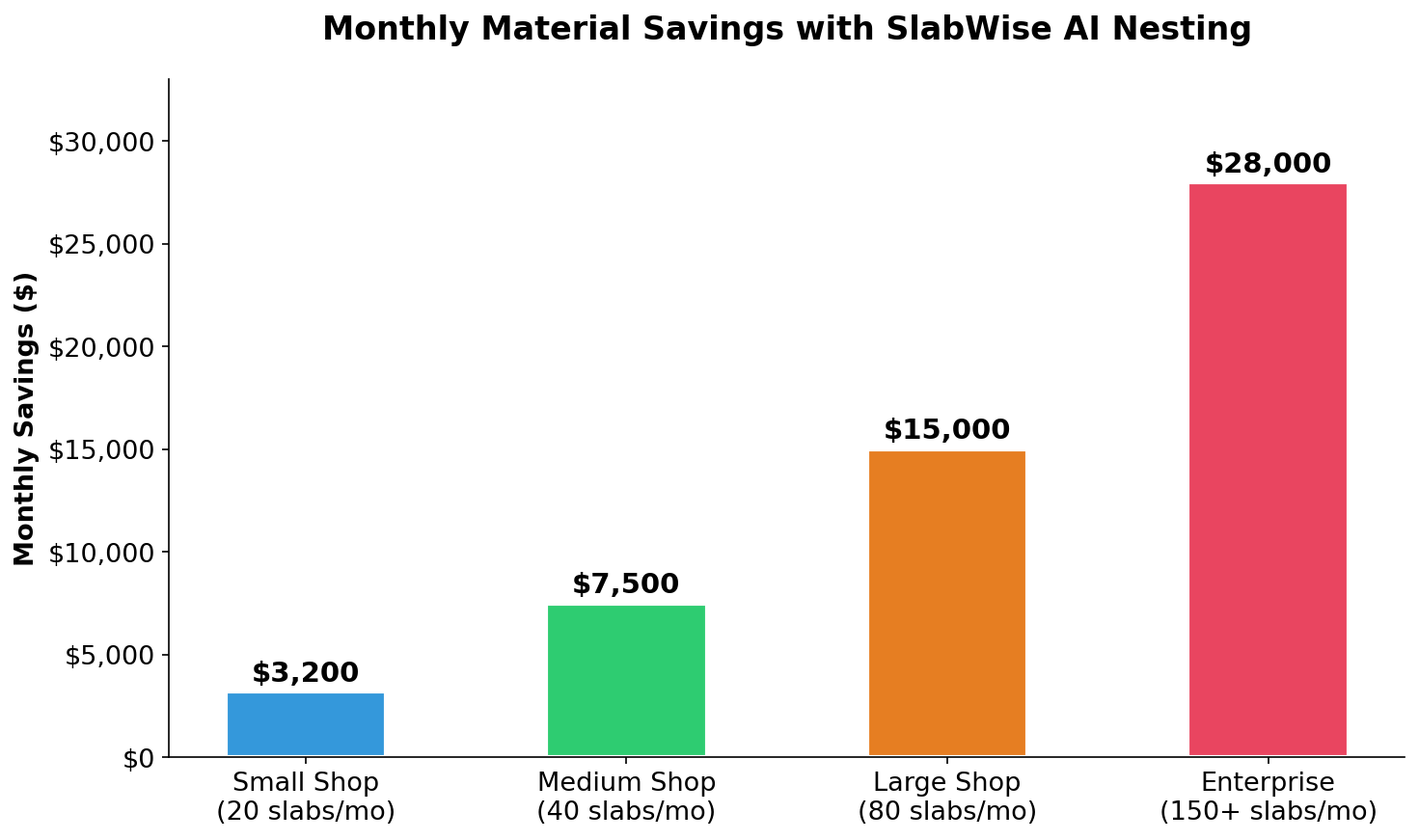
The waste problem is specific and quantifiable. Inefficient nesting leaves remnants that pile up in storage, representing material the shop paid for and cannot recover. Natural stone — granite, quartzite, marble — runs between $40 and $120 per square foot, so even marginal improvements in utilisation compound quickly. Shops using SlabWise report material waste reductions between 12 and 22 per cent, with monthly savings ranging from $3,000 to $15,000 depending on production volume. Both figures come from operator self-reporting rather than independent audit, but the arithmetic behind them is straightforward.
At the centre of the platform sits an AI nesting optimiser. It analyses slab dimensions against the geometry of each countertop piece for a given job, then generates a layout that extracts maximum yield from the slab. That kind of optimisation already exists in manufacturing software for simpler materials. Stone fabrication, however, adds a complication most generic tools ignore: the veins matter.
In natural stone, vein patterns run across the surface in ways that fabricators must respect. A countertop where veins align across a seam looks intentional. One where they do not looks like a mistake — regardless of how structurally sound the installation is. Yet most nesting software treats stone as though it were MDF. SlabWise, by contrast, integrates grain direction and vein continuity directly into its layout calculations. As a result, the AI optimises for yield and visual coherence simultaneously. Fabricators no longer choose between efficiency and aesthetics.
Rinaldi framed the craft dimension carefully. “Stone fabrication is a craft,” he said. “Fabricators are highly skilled artisans who shape and install countertops that become the centerpiece of a home. But many shops still rely on manual processes for nesting layouts, quoting jobs, and converting files between systems. SlabWise was built to bring more efficiency and consistency to the operational side of the business.”
Beyond nesting, file conversion sits alongside as a persistent operational problem. Most templating systems export DXF files. CNC programming environments, meanwhile, rarely read those files cleanly — layer mismatches and format inconsistencies require manual correction before fabrication can start. In busy shops running multiple jobs per day, that correction work accumulates into hours. SlabWise’s DXF middleware processes incoming files and prepares them for CNC environments automatically. No manual layer adjustments. Zero file corrections. The file arrives ready to cut.
Quoting gets the same treatment. Preparing a countertop quote manually means calculating square footage, accounting for cutouts and edge profiles, and pricing materials. Assembling the final figure takes time. SlabWise’s automated quote generator compiles all of that information and produces a formatted estimate within seconds. Faster response times matter in a market where homeowners typically request quotes from several fabricators simultaneously — and the first professional proposal often wins the job.
In addition to the core tools, SlabWise’s template library holds more than 25,000 configurations for granite, quartz, marble and quartzite countertops. These cover kitchens, bathrooms, islands, bars and other common installations. Meanwhile, slab inventory management and remnant tracking run alongside the nesting and quoting tools, giving shops a live record of what material they hold and which cut-offs remain usable.
SlabWise serves granite fabricators, quartz fabrication shops, marble and quartzite specialists, stone restoration companies and countertop installers. The platform extends the vertical AI pattern visible across other trade industries. That gap is familiar: skilled trade, manual administrative layer, no software worth switching to. In each case, the craft itself is skilled. The administrative layer around it, though, is not.
Still, free tools sit alongside the platform for fabricators and homeowners who want to run numbers without committing to a subscription. They include a material waste calculator, countertop cost estimator, edge profile selector and material comparison utilities.
The cardboard template on the $120 slab is not an image of an industry frozen in time. Rather, it is an image of a skilled trade that never had software worth switching to. Rinaldi’s argument is that it does now.
