Uber Eats drone delivery arrived commercially for the first time on 17 November 2026, with orders now flying over Spring, Texas, under a partnership with Zipline, as first reported by TechCrunch.
Zipline’s drones carry orders of up to eight pounds at speeds of up to 70 miles per hour, cruising roughly 300 feet above ground before lowering a tethered pod rather than landing, according to TechCrunch.
How the Uber Eats drone delivery service works
Customers in Spring select a dedicated ‘Drone’ icon inside the Uber Eats app to browse participating restaurants, place an order and confirm a drop-off point, according to Good Morning America/ABC News.
The service runs from 8am to 10pm initially, with restaurants including Jersey Mike’s, Zaxby’s, Urban Bird and Abu Omar Halal taking part, ABC News reported.
Uber Technologies (NYSE: UBER) and Zipline plan to expand next to Dallas, then to dozens of further US cities, the companies said, according to ABC News.
A target that dwarfs Zipline’s current volumes
Uber and Zipline have set a goal of one million drone deliveries a day by the end of 2029, a figure confirmed in Uber’s original investor relations announcement of the partnership.
Zipline currently completes roughly one delivery every 20 seconds worldwide, equivalent to about 4,300 a day, according to BigGo Finance. Reaching one million a day by 2029 would require scaling that pace by more than 200 times inside three years.
Zipline chief executive Keller Cliffton framed the ambition in consumer terms rather than logistics terms, telling ABC News the plan is to deliver ‘basically anything you need in less than 10 minutes’ to ordinary families, per ABC News.
Uber is also making an investment in Zipline alongside the operational tie-up, though the companies have not disclosed the amount, according to Zipline’s newsroom statement.
Zipline itself has drawn fresh capital on the back of growing drone-delivery demand: the company recently raised $1.5bn at a $21.5bn valuation, around the same period that Walmart added 300 drone delivery sites with Zipline, according to mlq.ai.
Uber shares and the financial backdrop
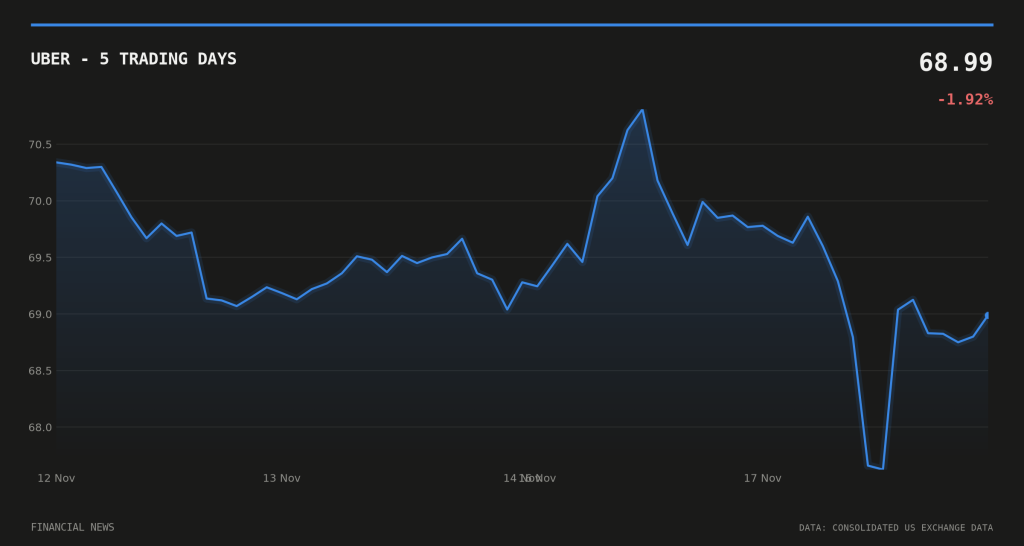
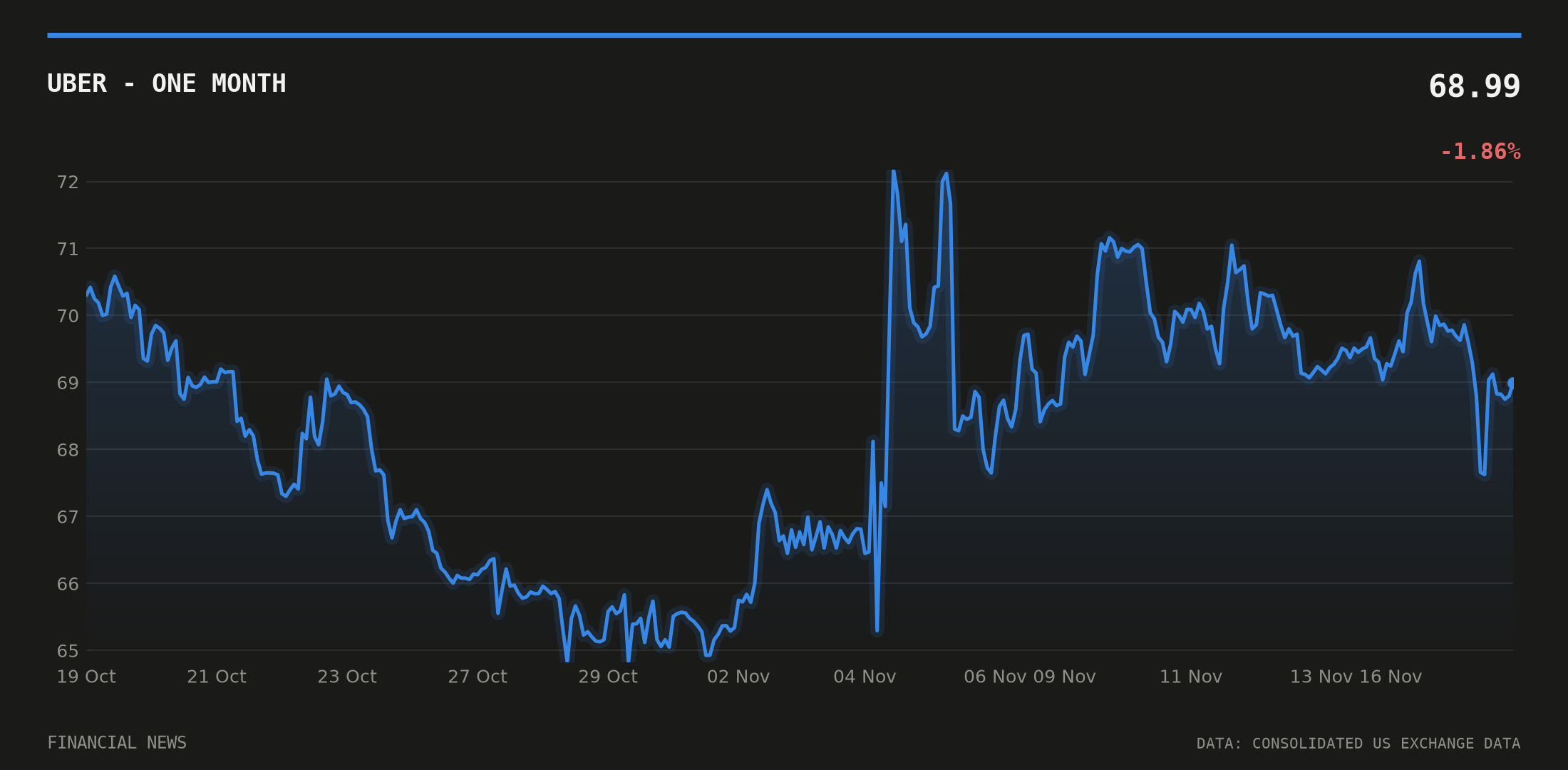
UBER shares closed at $68.99 on 17 November, up 2.02% over 24 hours and 4.59% over 20 days, according to consolidated US exchange data. Trading volume ran at 1.84 times the 20-day average as the launch news spread.
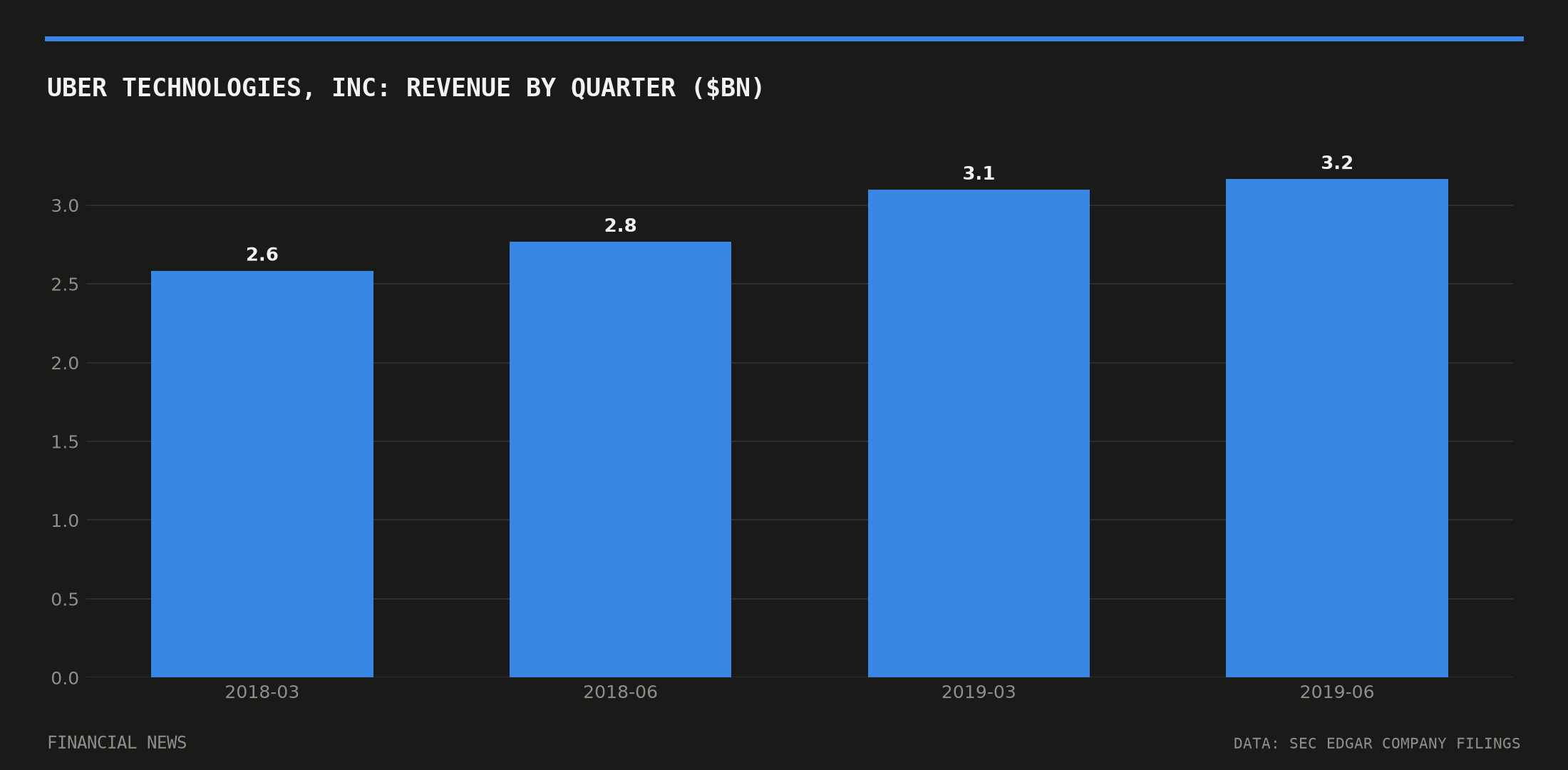
The drone rollout lands days after Uber reported net income of $512m for the third quarter of 2026, the period ended 30 September, down from $6.63bn a year earlier, according to a filing with the SEC. Uber has not linked the drone partnership’s costs or revenue contribution to that figure, and the filing predates the Texas launch.
The broader macro backdrop remains mixed for growth-sensitive consumer names. The 10-year US Treasury yield stood at 5.12% as of 16 November, against 4.83% on the 2-year note, while the unemployment rate held at 4.1% in October, according to FRED data from the Federal Reserve Bank of St. Louis.
What happens next
Dallas is the next market slated for Uber Eats drone delivery, with Uber and Zipline pointing to “dozens” of additional US cities beyond that, per their joint plans reported by ABC News. Investors and delivery-sector rivals will be watching how quickly Uber scales beyond a single Houston suburb, and whether early operating hours and restaurant counts in Spring expand as a signal of demand.
The companies’ own 2029 deadline gives the market a fixed point to judge progress against. Whether the venture reaches anywhere near one million daily deliveries, or settles for a smaller slice of the US food-delivery market, should become clearer as Dallas and subsequent cities come online over the next several quarters.
This article is for information only and is not investment advice or a recommendation to buy or sell any asset. Markets move quickly; figures are correct as sourced at the time of writing. Always do your own research before making financial decisions.