
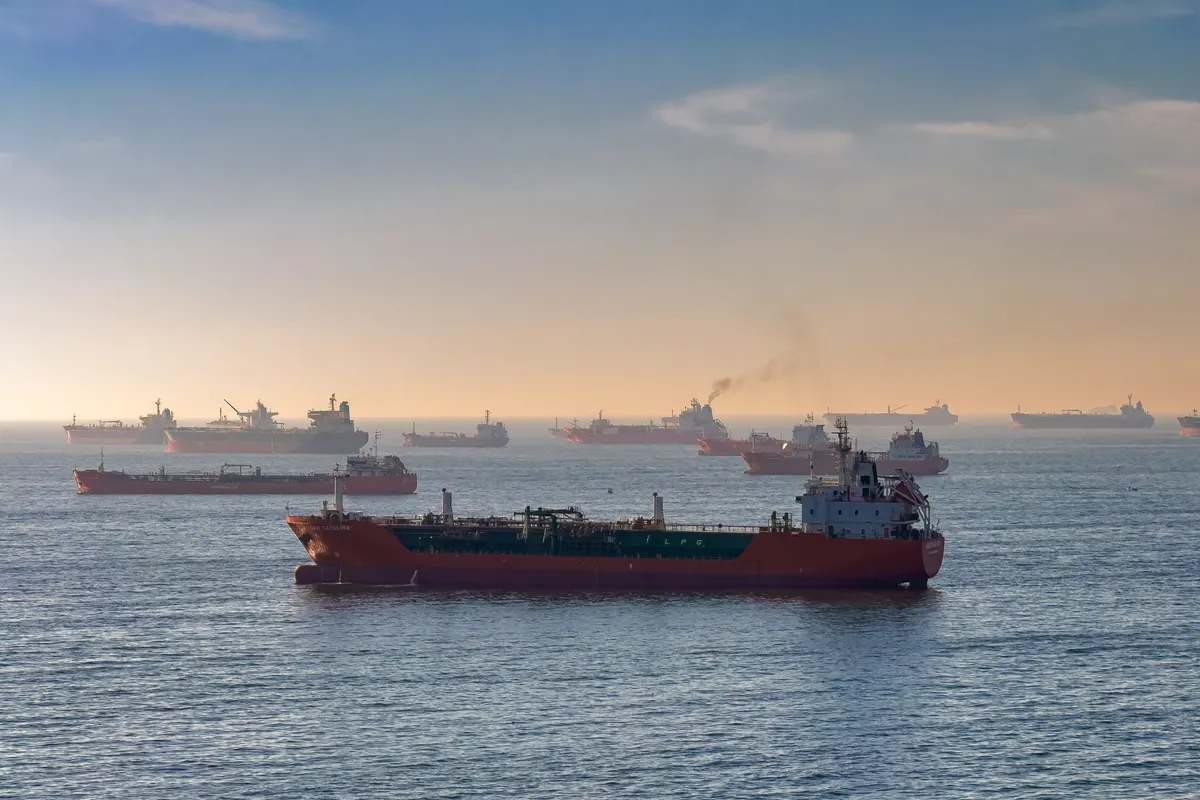

Strait of Hormuz talks between the US and Iran rattled global markets on Monday after both sides agreed to halt recent hostilities but left the underlying dispute unresolved. Brent crude edged back above $72 per barrel, recovering from four-month lows, as traders assessed the risk of the waterway closing again.
Japan’s Nikkei led declines across Asian equities, falling around 1 per cent overnight. European stocks opened in cautious territory, with energy names in focus.
Brent Crude Retreats as Strait of Hormuz Talks Resume
Brent had already touched a six-month high of $74 per barrel when tensions over the strait were at their most acute, the International Energy Agency (IEA) reported. Monday’s retreat to $72 came as diplomats confirmed talks would resume on Tuesday, though markets treated the ceasefire as fragile.
The strait is one of the world’s most critical oil supply routes. Iran produces around 4.8 million barrels per day, according to the IEA, and any sustained disruption to its export capacity would feed quickly into European refining margins and UK pump prices.
Iran’s chief negotiator Mohammad Bagher Ghalibaf gave little ground. It is ‘not possible to reopen the Strait of Hormuz considering all the blatant violations of the ceasefire,’ he said, according to BBC News. President Masoud Pezeshkian separately characterised a US blockade of Iranian ports, threats, and what he called a breach of commitments as the main obstacles to the Strait of Hormuz talks progressing.
That position is consistent with the stance Tehran has held since its new Supreme Leader took office. Mojtaba Khamenei said in his first statement on 12 March that the ‘lever of blocking the Strait of Hormuz must continue to be used,’ according to a UK Parliament research briefing on the conflict. A planned US military strike on Iran on 19 May was paused after Arab Gulf states objected, the same briefing noted.
Forward price forecasts reflect an extended period of supply-side risk. The US Energy Information Administration (EIA) forecast Brent to average $69 per barrel across 2025, a figure $3 per barrel higher than its prior monthly estimate, and around $58 per barrel in 2026. The EIA cited Middle East unrest as a key source of price uncertainty in both periods. A 2026 average of $58 per barrel would sit well below current spot levels, a scenario that would weigh on UK-listed energy producers.
Burnham Wins Makerfield, Sets Out Devolution Blueprint
Andy Burnham delivered his first major set-piece speech on Monday after winning the Makerfield by-election on 18 June 2026. The contest was triggered by the resignation of Labour MP Josh Simons and drew 14 candidates.
Burnham increased Labour’s vote share by 10 percentage points on the party’s 2024 general election result in the constituency, according to the Institute for Government.
The speech set out a 10-year programme built around devolution, reindustrialisation, and housebuilding to lift living standards. Burnham said decision-making would be pushed to regions and local communities, replacing what he called the ‘centralised, top-down model’ with locally driven economic growth. The language drew comparisons to Boris Johnson’s levelling-up agenda, though Burnham placed reindustrialisation and housing supply at the centre rather than infrastructure spending.
For City trading floors and Westminster advisers, the speech provides political backdrop. The question with direct market relevance is who Burnham picks as Chancellor and what tax and spending plans follow. Neither has been signalled.
Elsewhere, City desks were tracking a pipeline of weekend stories: the London Stock Exchange drawing up a worst-case scenario on US listing flight risk, Volkswagen weighing 100,000 job cuts as its China business contracts, Apple looking to a blacklisted Chinese supplier to ease a chip shortage, and the Financial Conduct Authority moving to review investment trust board governance following the Saba uproar.
With Strait of Hormuz talks due back on Tuesday, the direction of crude prices will hinge on whether either side softens the ceasefire conditions Ghalibaf has said Tehran considers already violated.
