

Cisco Systems (NASDAQ: CSCO) chief executive Chuck Robbins told investors on 12 August that accelerating AI adoption is fuelling a networking supercycle in infrastructure spending, according to Network World‘s account of the post-earnings call.
Cisco put a figure on it: the company expects its hyperscale business to generate $7.5bn in AI infrastructure revenue in fiscal 2027, as first reported by TradingView. That builds on more than $1bn in AI infrastructure orders already booked from neocloud, sovereign and enterprise customers during fiscal 2026, Yahoo Finance reported.
A checkable number behind the networking supercycle claim
Cisco’s fourth-quarter and fiscal-year 2026 results, filed as an exhibit to an 8-K with the SEC, underpin the guidance. Non-GAAP earnings per share came in at $1.22 on revenue of $17.3bn, beating Street estimates of $1.17 and $16.83bn, TradingView reported. For fiscal 2027, Cisco guided non-GAAP EPS of $5.05 to $5.11, above the $4.80 consensus, according to Cisco’s investor relations release.
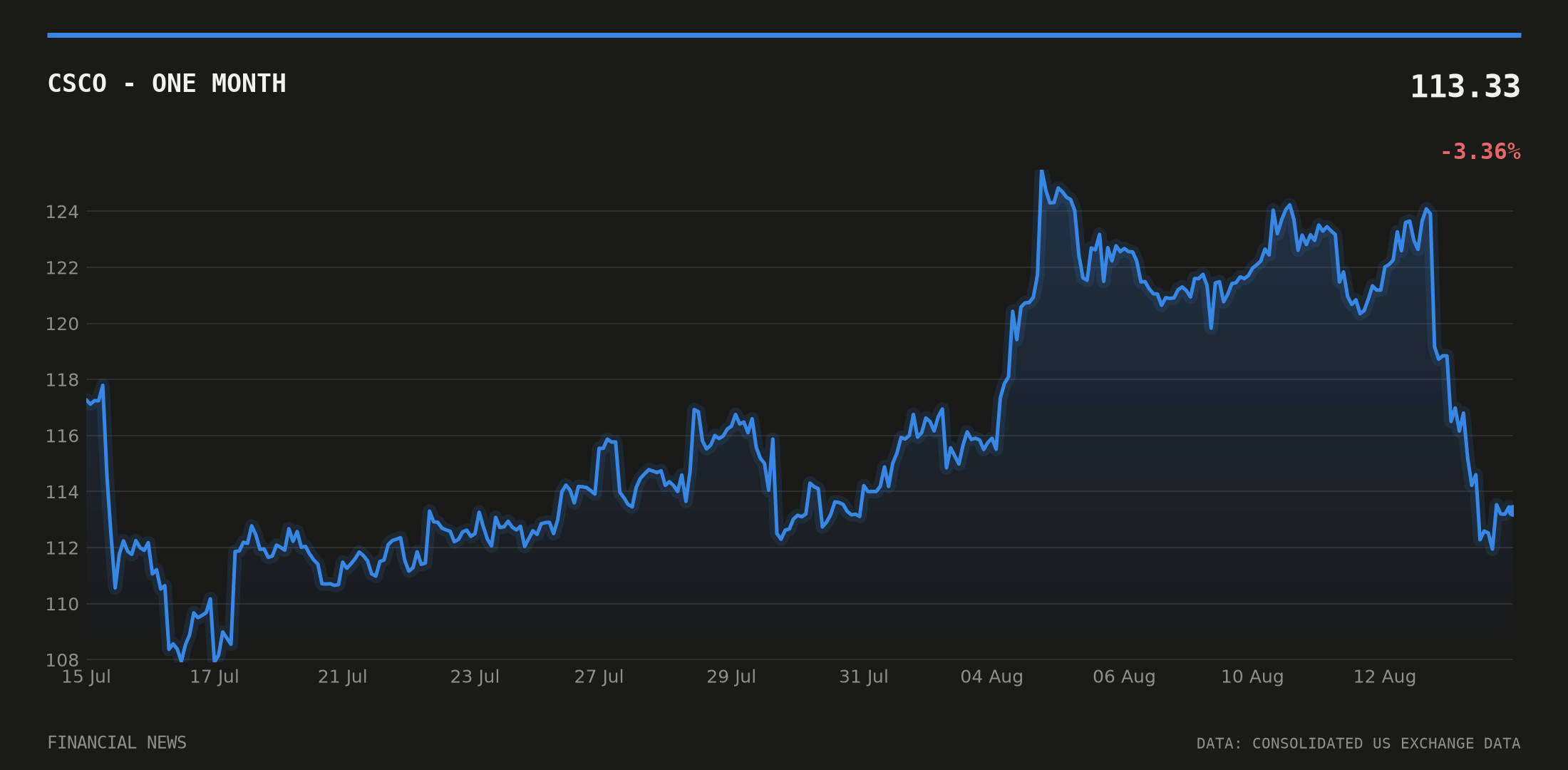
The evidence in Cisco’s own quarterly filings is directionally consistent with the acceleration Robbins described, even though the company’s most recent 10-Q covers only the third quarter. Revenue rose sequentially through the fiscal year: $14.88bn in Q1, $15.35bn in Q2 and $15.84bn in Q3, according to Cisco’s Q3 FY2026 10-Q. Full-year revenue reached a reported record of roughly $63bn, Yahoo Finance said.
Insiders filed the same day
Six Cisco executives, including Robbins, filed Form 4 disclosures with the SEC on 12 August, the same day as the earnings release. Robbins’ filing was one of several lodged within minutes of each other that evening, alongside those of chief financial roles and other senior officers named in the filings.
Short-sale activity also moved around the print. FINRA’s daily short-volume ratio for CSCO climbed from 0.336 on 24 July to 0.533 on 12 August, earnings day, before easing to 0.472 on 13 August, according to FINRA data.
Mixed reaction to the print
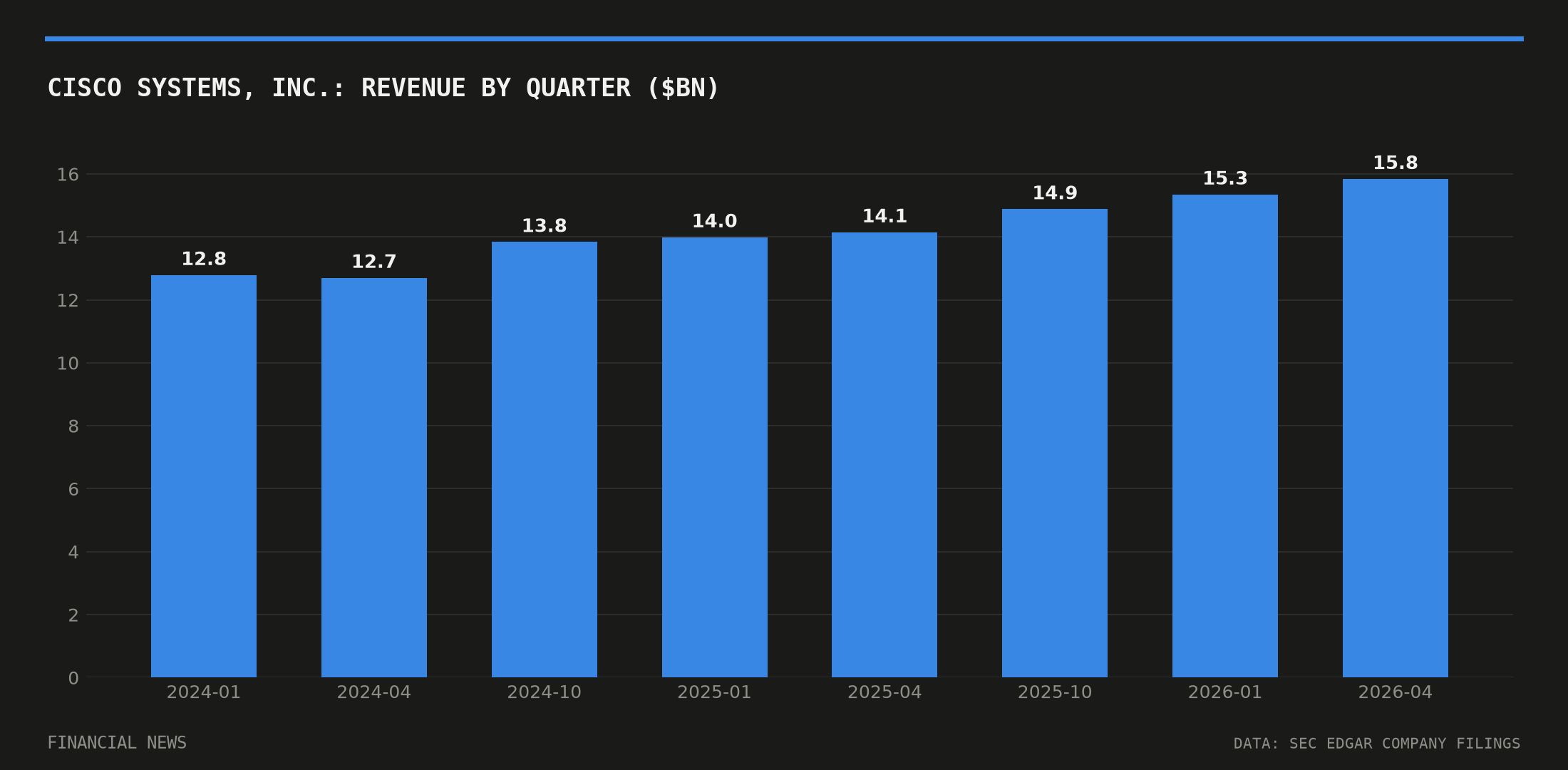
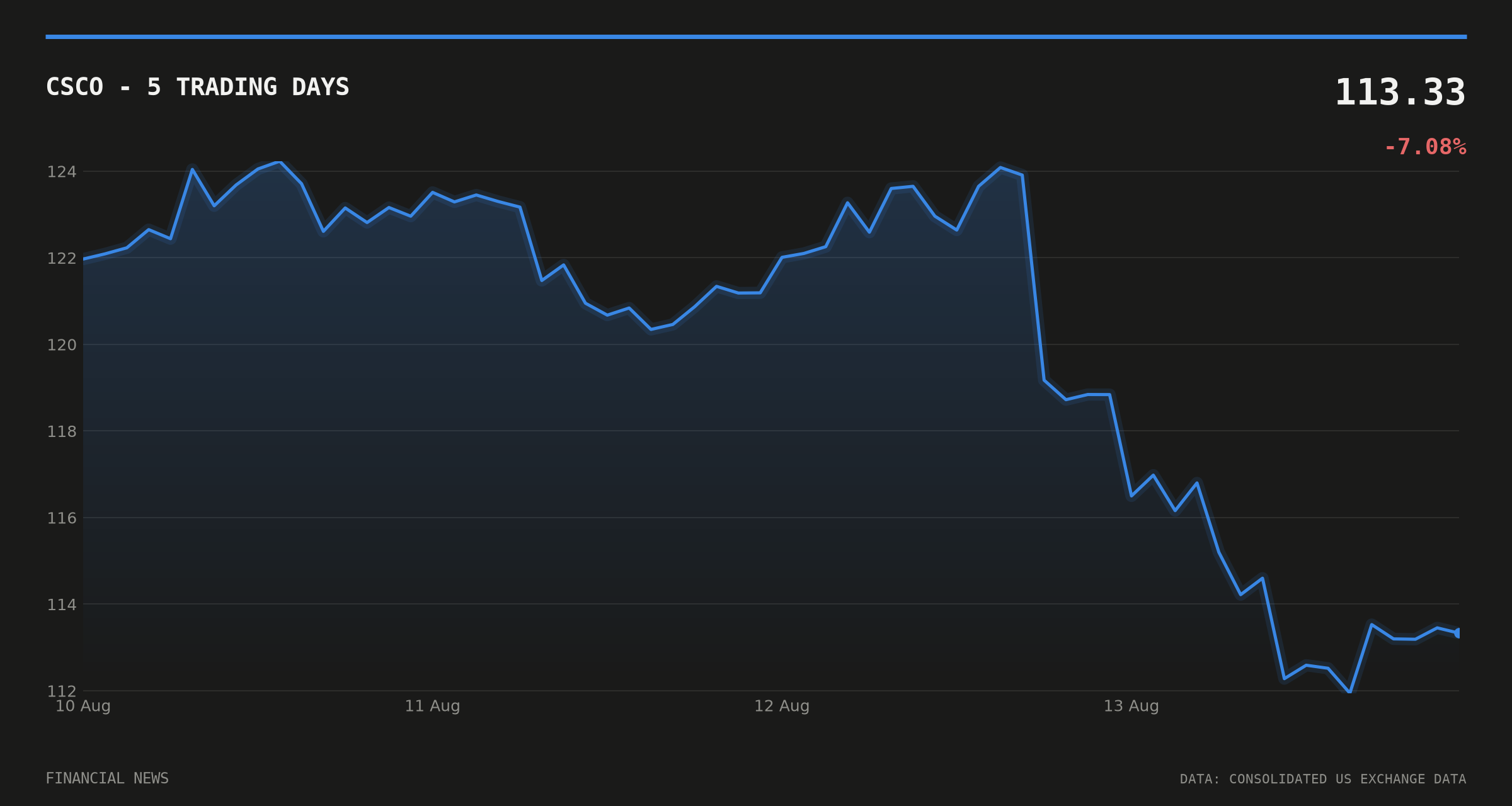
The market’s response has been muted rather than emphatic. Shares initially fell after hours following the results before steadying, according to reporting cited by qz.com, even as the headline numbers beat forecasts. By 13 August the stock closed at $113.33, up 0.66% on the day, but still well below its 20-day high of $125.49, against a 20-day low of 111.95. Trading volume ran 2.53 times the 20-day average, consistent with a stock digesting a large information event rather than moving decisively in one direction.
The macro backdrop offers little explanation for the muted move. The 10-year Treasury yield stood at 4.68% on 12 August, barely changed from 4.70% previously, according to FRED data. US unemployment ticked down to 4.1% in July from 4.2%, a still-solid labour market backdrop against which enterprises continue funding AI infrastructure builds, per Bureau of Labor Statistics data compiled by FRED.
What to watch
Morningstar’s post-earnings note, cited by Yahoo Finance, projects Cisco’s AI revenue could climb toward $20bn – roughly 20% of total sales – by the end of the decade, up from about $1bn, or 2% of sales, in fiscal 2025. That framing makes the $7.5bn FY2027 hyperscale figure an early marker rather than a ceiling.
Investors will get their next read on progress toward that target when Cisco reports first-quarter fiscal 2027 results, the first full quarter measured against the new guidance. Until then, the FY2027 EPS range of $5.05 to $5.11 and the hyperscale revenue figure are the two numbers market participants are most likely to track against Cisco’s actual bookings data.
This article is for information only and is not investment advice or a recommendation to buy or sell any asset. Markets move quickly; figures are correct as sourced at the time of writing. Always do your own research before making financial decisions.
