
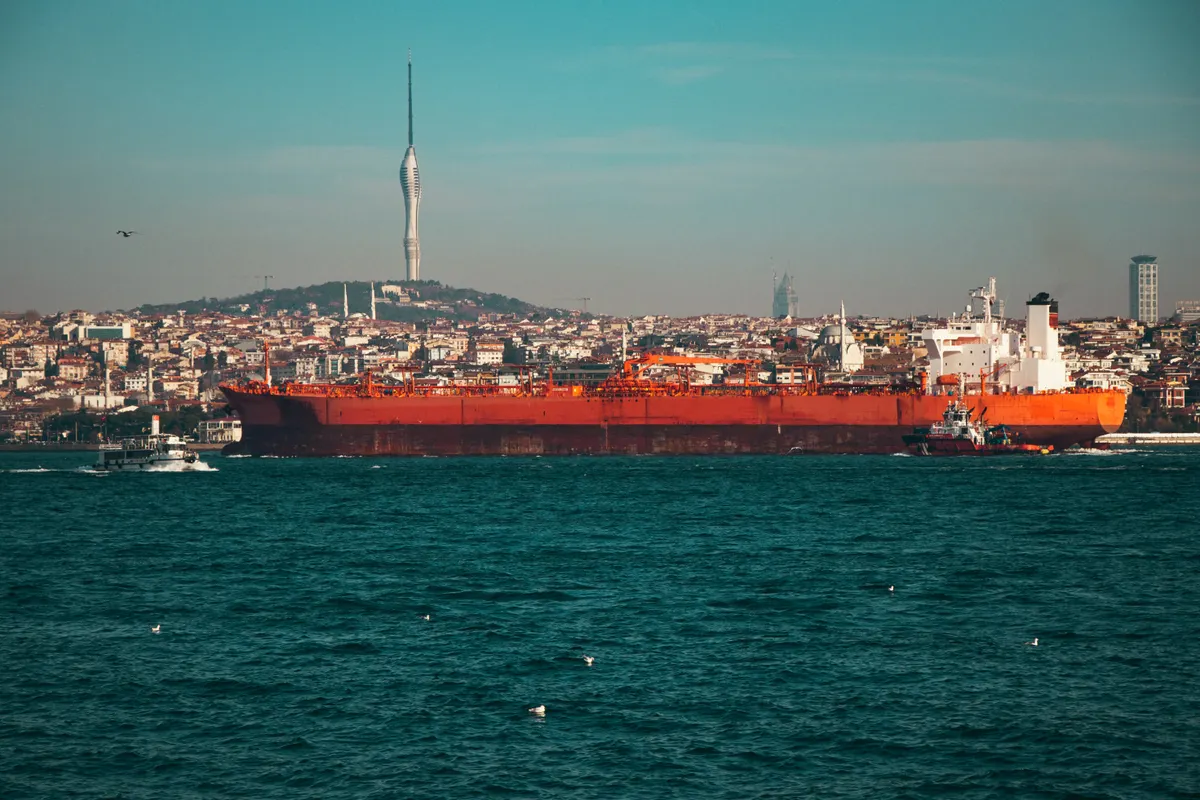

The Strait of Hormuz oil crisis deepened on Thursday as fresh US military strikes, Iran’s renewed closure threats, and a surge in crude prices pushed the FTSE 100 to a weekly loss of more than one per cent.
Brent crude breached $95 a barrel on Wednesday 22 July 2026 for the first time in six weeks, The Guardian reported, marking the fastest price rise since US and Israeli attacks on Tehran first disrupted Gulf exports earlier in the year. Houthi threats to target vessels carrying Saudi oil through the Bab el-Mandeb strait added further pressure.
Strait of Hormuz Oil Flows and the Military Backdrop
US Central Command carried out a further round of strikes on 7 July 2026, hitting more than 80 targets with precision munitions after Iran attacked commercial vessels transiting the strait. US Central Command described Iran’s actions as ‘a clear and dangerous violation of the ceasefire.’
The snippet referenced 180 targets struck over the prior 48 hours, and a separate, later CENTCOM update covering an 11th night of strikes puts the cumulative facilitation figure at approximately 900 commercial vessels and 450 million barrels of crude transited through the strait since early May, superseding the earlier count of 800 vessels and 380 million barrels.
Iran has threatened once more to close the Strait of Hormuz following the strikes. Around a fifth of global oil supply moves through the narrow waterway, and any sustained closure would remove a critical artery for energy shipments.
US Central Command pushed back directly, stating: ‘Iran does not control the Strait of Hormuz.’
Markets and the Energy Sector Feel the Pressure
The FTSE 100 shed more than one per cent over the week. The index closed at 10,524.76 on 20 July 2026, according to Yahoo Finance data, against a 52-week range of 8,995.10 to 10,934.90.
Higher oil prices have produced sharp gains for energy producers. Norway’s Equinor said on Wednesday 22 July 2026 that its profits had almost doubled to $11.5 billion in the three months to the end of June, lifted by the jump in oil and gas prices caused by the conflict, The Guardian reported.
Donald Trump, boarding Air Force One on Thursday, said Iranian officials had made contact. ‘They called a little while ago. They want to make a deal so badly,’ he said. Earlier in the week he had called the Iranian leadership ‘scum’ and ‘cuckoo.’
Iran’s willingness to negotiate, if genuine, would be the clearest de-escalation signal since hostilities resumed. But Tehran’s simultaneous threat to seal the strait suggests any talks remain fragile.
The next 48 hours will test whether Trump’s account of Iranian outreach translates into formal contact, or whether further strikes trigger the closure Iran has threatened repeatedly but not yet enacted.
