

Rocket Lab (NASDAQ: RKLB) confirmed a Neutron launch deal with satellite operator Kepler Communications on 10 August 2026. But a claim circulating that this marks Rocket Lab’s first-ever commercial sale of a full Neutron flight overstates what either company actually said.
The mission is set for no earlier than 2028, flying from Rocket Lab’s Wallops Island Launch Complex 3. Neutron has not yet flown.
What the companies actually said
Kepler’s own account frames the “first” differently. Its chief revenue officer described the booking as the company’s first dedicated, non-rideshare launch purchase, after its first 33 satellites flew as rideshare payloads, some on SpaceX’s Falcon 9. That is a milestone for Kepler’s procurement strategy, not a claim from Rocket Lab that this is its inaugural Neutron sale.
Trade coverage backs that reading. SpaceNews reported the deal as one of several Neutron missions Kepler has slated for 2028, rather than a debut sale. A separate financial-news aggregator went further, describing the Kepler booking as adding to Rocket Lab’s already “growing list” of commercial Neutron missions, according to Quiver Quantitative. Rocket Lab’s own press material still refers to Neutron as an “upcoming” vehicle, underscoring that no Neutron mission, Kepler’s or anyone else’s, has actually flown yet.
A bet on a rocket that hasn’t flown
What the Kepler agreement does confirm is a customer prepared to commit to a medium-lift vehicle still in development, for a launch two years out. That is closer to the real story than any claim about “firsts”: a marquee satellite operator underwriting Neutron’s development timeline rather than reacting to a finished product, ahead of any direct commercial contest with SpaceX’s Falcon 9.
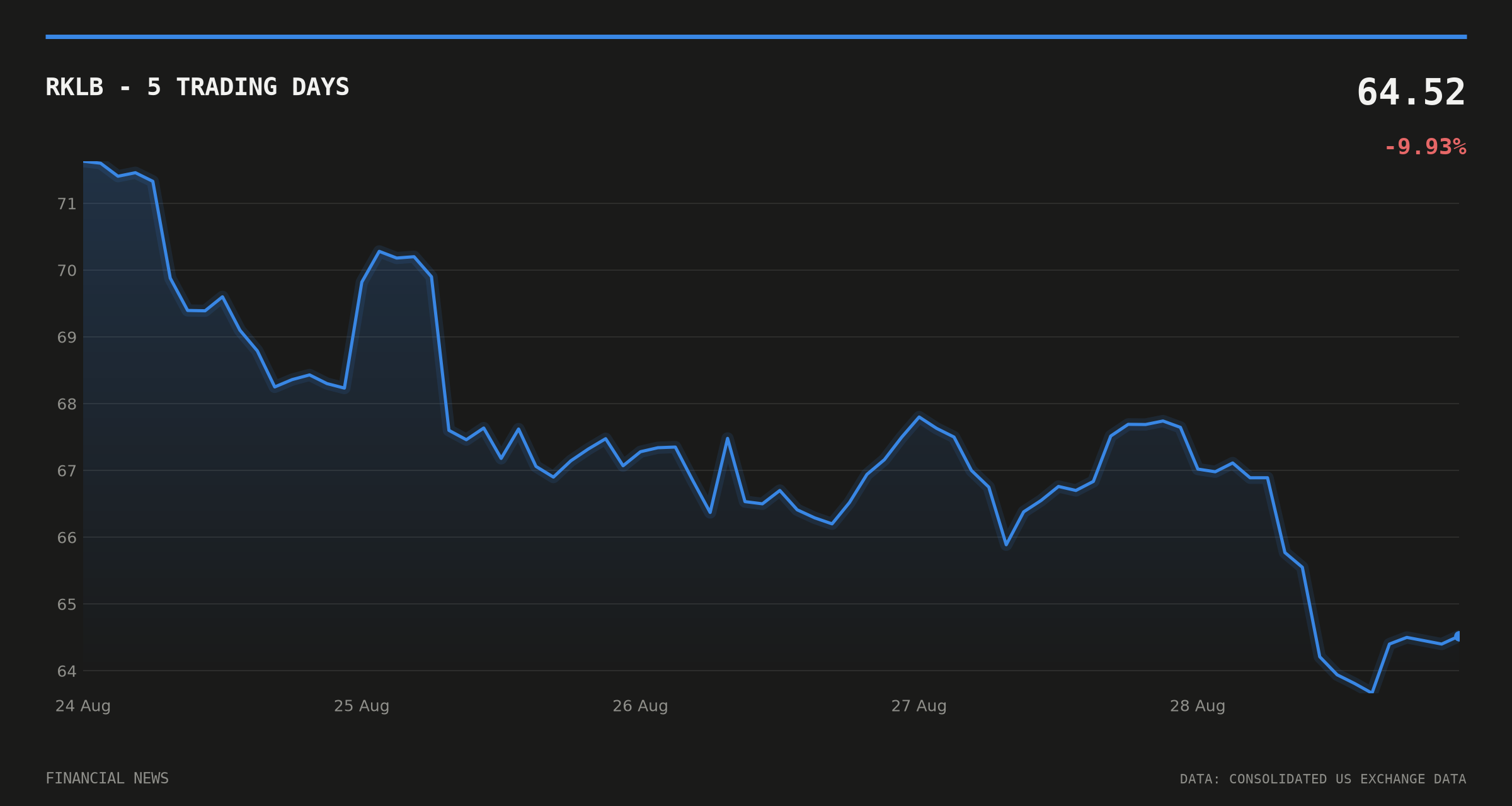
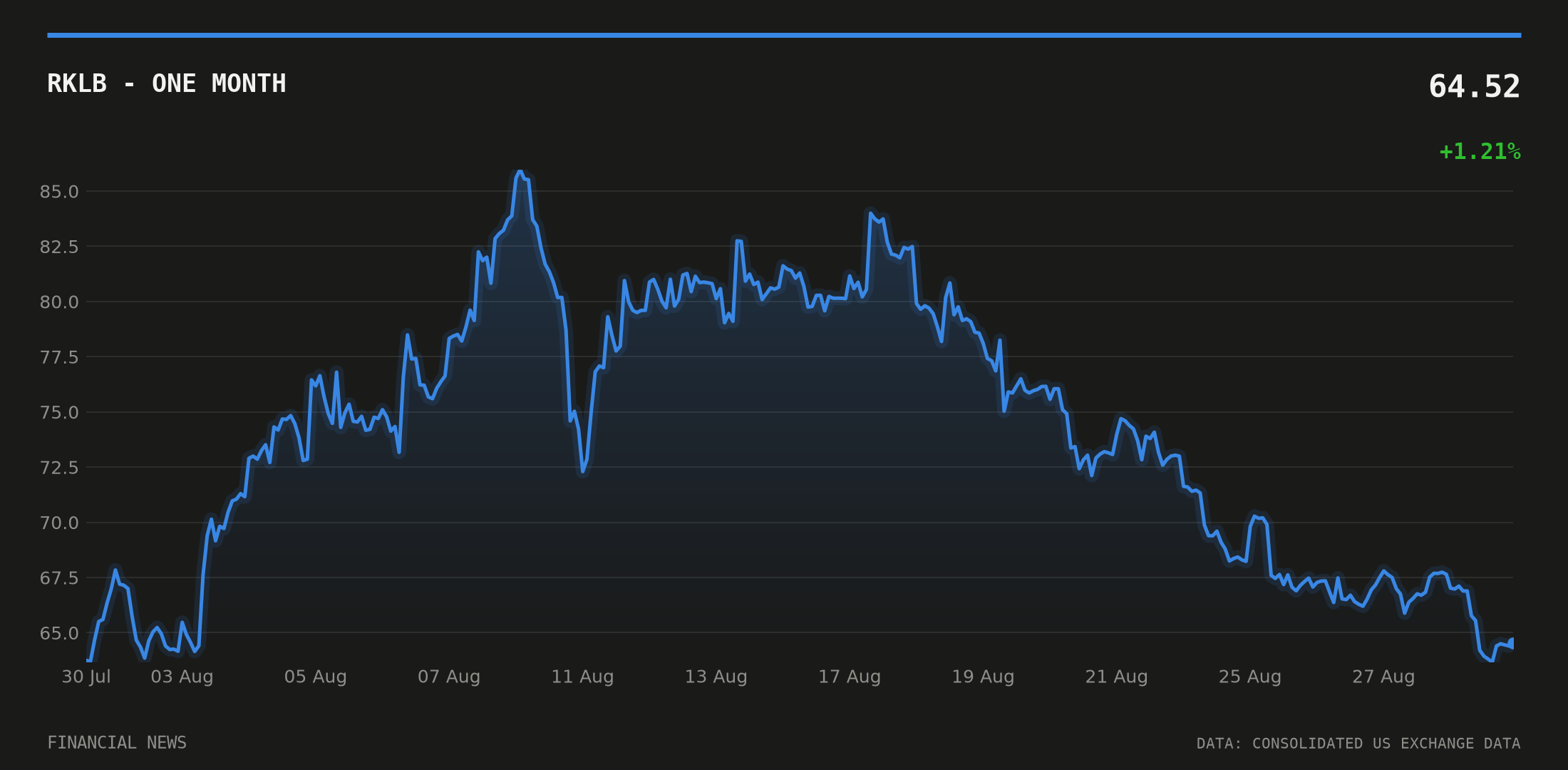
Rocket Lab shares closed at $64.52 on 28 August 2026, up 0.91% on the session but down 24.62% over the preceding 20 trading days, according to consolidated exchange data. FINRA’s daily short-sale volume ratio for the stock ran between 0.436 and 0.511 of traded volume across the fortnight before the Kepler story broke, per FINRA data, indicating heavy two-way positioning rather than a one-directional bet.
The revenue backdrop
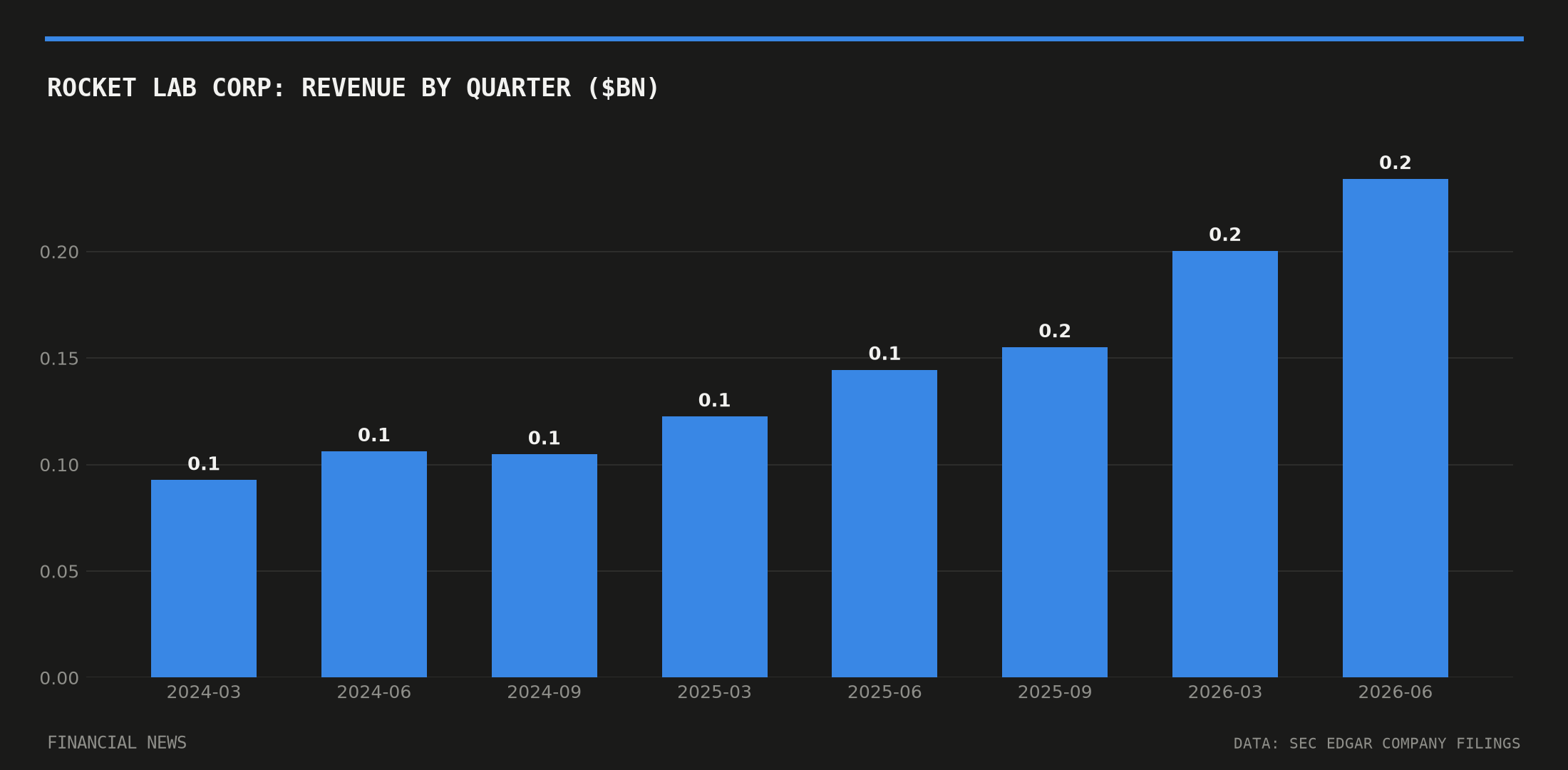
The Neutron pipeline sits against a company still burning cash even as sales scale. Rocket Lab’s quarterly revenue rose from $92.8m in the first quarter of 2024 to $234.1m in the second quarter of 2026, according to SEC filings. Net losses have persisted throughout that stretch, including a $49.3m loss in the most recent quarter, continuing a run of quarterly deficits stretching back at least to early 2024.
That combination, rising top line, continued losses, is the context in which any Neutron order book matters to investors. A dedicated launch contract adds backlog and validates demand for a vehicle central to Rocket Lab’s medium-lift ambitions, but it converts to revenue only once Neutron actually flies, and only from 2028 in Kepler’s case.
Rocket Lab has also filed a string of Form 4 disclosures in recent days, including insider transactions dated 26 and 28 August 2026, filed with the SEC covering both issuer and reporting-person activity. None of those filings alter the Neutron order picture; they sit alongside the Kepler announcement as routine disclosure rather than material corporate news.
What to watch
Neutron’s maiden flight remains the pivotal date for the programme, and until it happens, every commercial booking, Kepler’s included, is a wager on Rocket Lab hitting a development schedule it has previously called ambitious. Investors watching the stock’s next moves are likely to weigh Neutron’s actual test-flight progress more heavily than any individual launch contract, dedicated or otherwise.
This article is for information only and is not investment advice or a recommendation to buy or sell any asset. Markets move quickly; figures are correct as sourced at the time of writing. Always do your own research before making financial decisions.
