
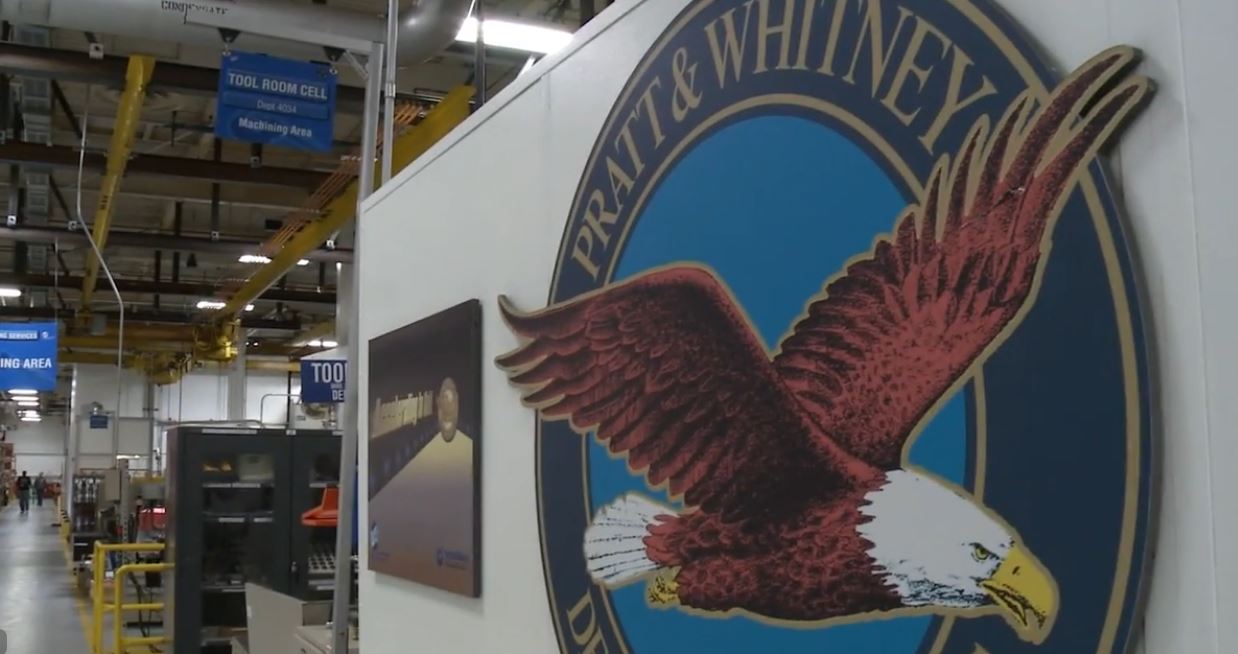

Nestled in the shadow of a royal forest that Polish kings once used for hunting, Niepołomice is a small town located approximately twenty kilometers southeast of Kraków. Few travel guides mention it. However, you can locate it if you follow the aerospace supply chain for the Pratt & Whitney GTF commercial engine or the F-35 fighter jet. In order to ensure that it remains on that list for a very long time, Pratt & Whitney is investing an additional $25 million as of September 2026.
The roughly PLN 95 million investment from Pratt & Whitney Niepołomice will expand an existing manufacturing facility that already produces precision components and complex tubular assemblies for some of the most demanding aviation engine programs. The site currently supplies parts for three different programs: the F135, which powers all Lockheed Martin F-35 Lightning II variants, the PW800, which powers business jets, and the GTF engine, which powers commercial passenger aircraft for airlines worldwide. Although it has a relatively small footprint, the work done there is located deep in the supply chain and involves precision fabrication that is difficult to replace or move lightly.
More than 120 jobs will be added to the local workforce when the expanded facility opens for business in 2028. Even though those figures are small in comparison to significant aerospace announcements in the US, they become more significant when you consider the larger picture. With over 9,500 employees spread across Pratt & Whitney, Collins Aerospace, and Raytheon operations, Poland is already RTX’s largest employment and investment base outside of the US. Niepołomice is a small part of a much greater presence that has been quietly growing for many years.
In 2026, the $25 million Niepołomice project is not the only one. A $100 million expansion of Pratt & Whitney’s operations in Rzeszów, a city in southeast Poland that has long been a hub for aerospace manufacturing, was announced earlier in April. Together with a concurrent expansion in Georgia, this investment, which focuses on adding isothermal forging capabilities for GTF, F135, and F100 engine components, is anticipated to drive a 30% increase in output of crucial rotating engine parts. With the two announcements from Poland, RTX has committed to investing $125 million in Polish aerospace facilities by 2026. It’s not a small line item.
Observing these investments build up over a number of years gives the impression that Poland has evolved beyond a practical low-cost manufacturing site. Initial commitments are undoubtedly aided by the Polish government’s support through the Polish Investment Zone Program, which provides income tax exemptions for eligible investments. However, Pratt & Whitney’s work in Niepołomice and Rzeszów goes beyond tax breaks. It takes years to develop institutional knowledge and a skilled workforce in order to build out isothermal forging capacity and complex tubular assembly capability. Businesses don’t make this kind of investment unless they plan to stay there for a long time.
Timing is also important. There is a lot of pressure on the defense and commercial aviation industries to boost production. As airlines strive to update fleets and increase fuel efficiency, GTF engines are in great demand. The F135 program has ongoing production commitments related to F-35 deliveries to several allied countries.
Construction schedules, equipment delivery, and hiring in an area where RTX is already using a limited pool of skilled workers will determine whether the 2028 operational target is met. These are genuine limitations that are worth observing. However, the direction of travel is sufficiently obvious.
