

A founder who sees his company’s share price drop by 86% and reacts by purchasing more stock has something subtly illuminating about him. The majority of executives in that role are negotiating their exit packages in private. When CTM shares finally resumed trading after a 12-month suspension, Jamie Pherous, the man who turned Corporate Travel Management from a Brisbane startup in 1994 into one of Australia’s most well-known travel companies, reportedly decided it was a better idea to increase his ownership, increasing it to 13.68 percent.
That move might be an indication of true conviction. It might also indicate something more difficult to interpret: a founder who isn’t quite prepared to let go of a business that, by all accounts, went horribly wrong while he was in charge.
It is worthwhile to carefully trace the series of events that led to CTM’s arrival because they happened gradually at first, then all at once. Following the discovery of accounting irregularities in its European operations by an internal audit, the company voluntarily suspended its shares from the Australian Securities Exchange in August 2025.
At that point, management characterized the problem as minor, with no financial ramifications and nothing to unnecessarily worry investors. That description was inaccurate. By November, CTM had disclosed that its UK division had overcharged customers by approximately $162 million, including contracts with the UK government. Financial statements dating back to 2023 were being restated. The governments of Australia and the United Kingdom both started investigations.
In February 2026, Pherous left his position as managing director and board member to take a six-month “strategic advisory role” that the company described. The wording used to frame the announcement was mutual, which tends to make things more confusing than clear. Former BCD Travel CEO John Snyder joined as a special advisor, and chief commercial officer Ana Pedersen was named acting CEO. Both the reorganization and the uncertainty surrounding Pherous’s departure were genuine. Bonus clawbacks were not disclosed. no clear system of accountability. He kept his shares, moved sideways, and continued to be a well-paid advisor.
It’s difficult to ignore how recognizable the pattern is as you watch this unfold. Over the course of decades, a charismatic founder creates something remarkable, cultivates a board that works under him, and the institutional checks and balances that are supposed to identify issues early fail to do so.
Some of these stories can be found in Australian corporate history, such as Richard White at Wisetech and Chris Ellison at Mineral Resources, and they often have similar plots. Although the founder’s stake isn’t big enough to have legal control, it is big enough to exert some gravitational pull. Unhappy institutional investors expressed their displeasure. According to reports, some had written down all of their CTM holdings to zero. However, the departure was still referred to as a transition rather than a termination.
To be clear, this does not negate what CTM truly created. At the age of 24, Pherous started the business, expanded it through acquisitions in North America, Europe, and Asia, and guided it through the near-complete collapse of corporate travel during the pandemic, when the entire sector was on life support. Even as the accounting issues were emerging, CTM’s 98 percent client retention rate and over AU$1.72 billion in new customer wins reported in late 2025 suggest the operational business wasn’t collapsing. The company’s fundamental relationships were not undermined by the particular and severe issues.
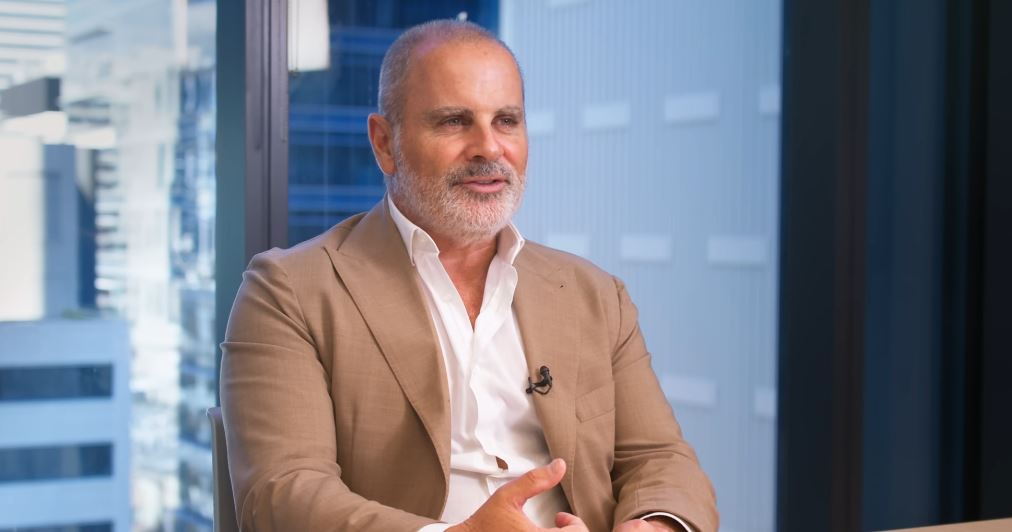
Regardless of his motivation, Pherous’s share purchase keeps him in the narrative. He is currently listed on LinkedIn as a “Business Management Consultant” for the CTM Group, a title that is somewhat ambiguous. Compared to before the suspension, he now owns a larger portion of the business. He’s still there. It’s still unclear if that ongoing presence will aid CTM in stabilizing and regaining credibility or if it will make the clean break that new leadership typically requires more difficult. After a significant governance failure, a company trying to win back investor trust usually benefits from being removed from the previous situation. That distance isn’t really created by Pherous purchasing shares while working as a consultant.
The UK contracts are still being worked on by the KPMG teams. The accounts for FY25 are still pending. The shares of CTM are trading once more, but at a much lower price than before. One could argue that the company has survived worse. Even though Pherous isn’t quite ready to leave, the chapter that started when he founded it in Brisbane and lasted for 32 years is officially over.
