

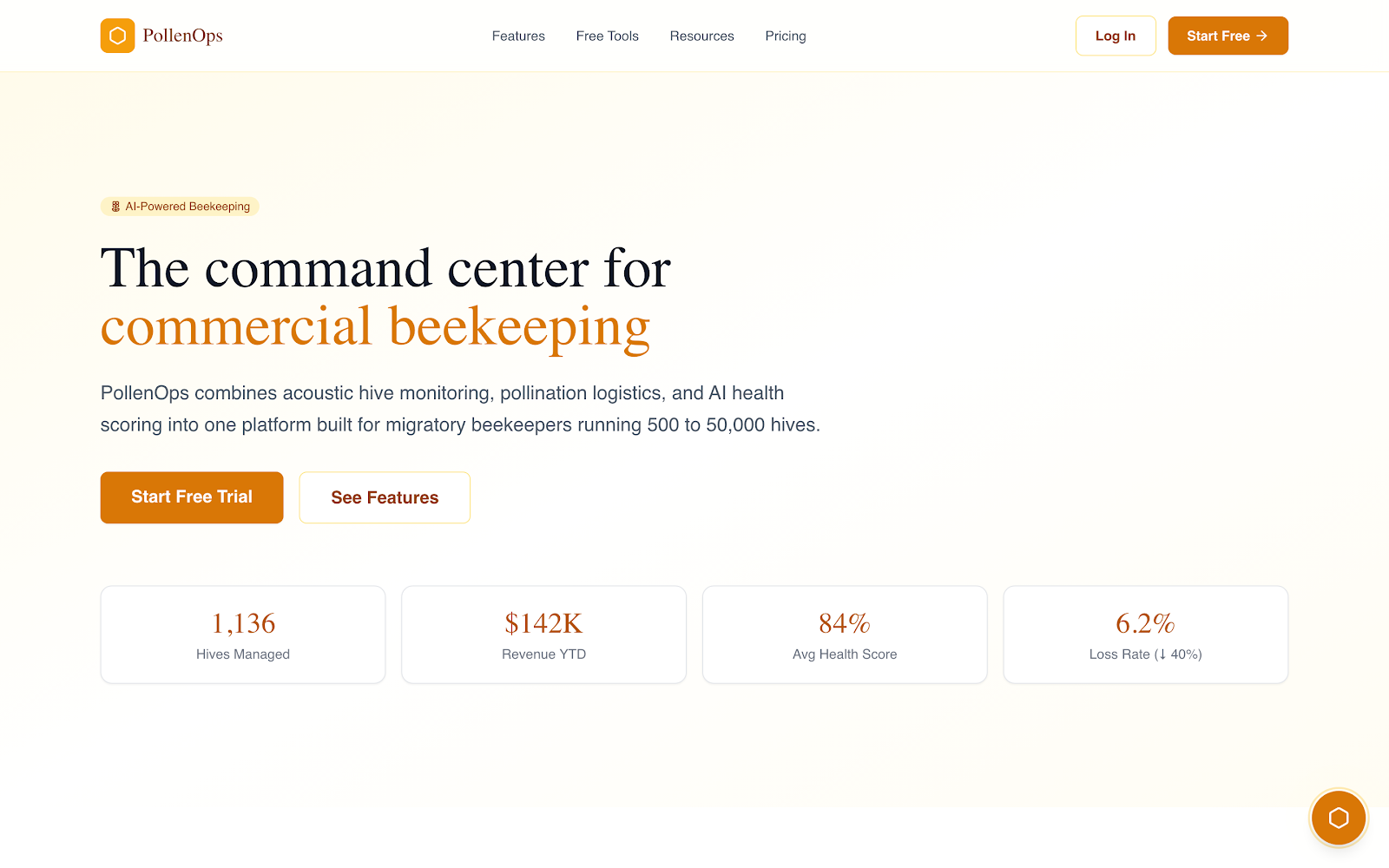
Three acoustic signatures. That’s how PollenOps distinguishes between a healthy colony, a queenless hive, and one preparing to swarm — all without opening the box. Jake Thornton built the platform in Los Angeles around that insight. Then he built an entire commercial beekeeping operations system around the same listening technology.
The scale of commercial beekeeping surprises most people encountering it for the first time. Large migratory operations manage thousands of hives that travel across multiple states throughout the year, following seasonal bloom cycles for almonds in California, apples in the north-east, blueberries in Maine and cranberry bogs further along the coast. A single operation’s hives might cover thousands of miles in a year. Each location brings new environmental conditions, disease risks and contractual obligations with growers whose harvests depend entirely on the colonies arriving healthy and on time.
Despite that complexity, most commercial beekeepers still run their operations on paper records, spreadsheets and manual tracking. The gap between the logistical sophistication required and the tools available to manage it is, by most measures, substantial.
Thornton framed the problem in terms that span three industries simultaneously. “Commercial beekeepers are managing a business that combines agriculture, logistics, and large-scale livestock management,” he said. “They are moving living colonies across thousands of miles each season while meeting pollination contracts and maintaining hive health. PollenOps was designed to give those operations a centralized system that reflects the complexity of what they do every day.”
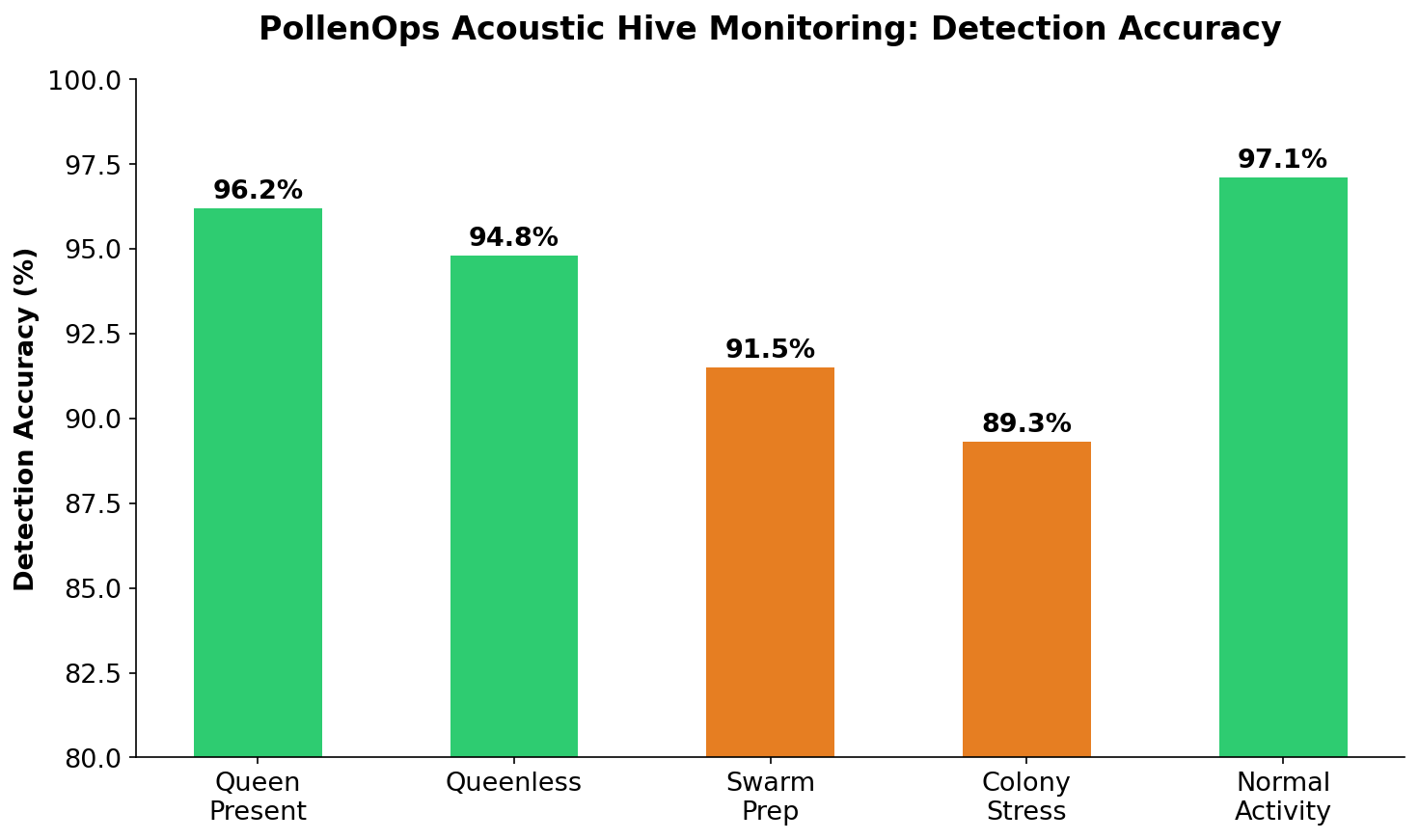
The acoustic monitoring system is the platform’s most technically distinctive component. Using machine learning models built with TensorFlow and trained on large datasets of hive audio recordings, the system analyses the sounds colonies produce and identifies behavioural signals indicating changes in colony status. Each hive generates a characteristic acoustic profile. A colony with an active queen sounds different from a queenless one. One building toward a swarm produces different patterns again. Sensors placed near hive entrances capture these patterns continuously, and the system alerts beekeepers when the audio suggests something worth investigating inside.
That matters at scale. Traditional hive inspection requires opening the box — a process that disturbs the bees and consumes significant time. At scale, managing hundreds or thousands of colonies across multiple sites, that time cost becomes prohibitive. Acoustic monitoring adds a continuous observation layer without requiring physical inspection of every hive. Beekeepers can then prioritise which colonies need hands-on attention.
Beyond monitoring, PollenOps addresses the commercial relationship between beekeepers and the agricultural producers who need them. Almonds, blueberries, apples and cranberries all depend heavily on managed bee colonies during bloom periods. Historically, pollination agreements have moved through brokers, cooperatives and long-standing industry relationships — an informal market with limited transparency on either side. The platform’s grower marketplace connects beekeepers and agricultural producers directly. Both sides negotiate pollination terms and manage contracts through a single system rather than relying on intermediaries.
Honey yield forecasting adds another layer of operational planning. The system analyses hive data, weather conditions, nectar flow patterns and bloom calendars to estimate production volumes and harvest timing. For commercial honey producers, those forecasts inform equipment allocation, processing capacity and sales agreements made months in advance. Getting those projections wrong is costly; getting them right is a competitive advantage.
Varroa mite and disease tracking rounds out the health management tools. Treatment histories, mite counts and colony health data sit alongside hive locations, pollination contracts and movement schedules. Everything lives within the same system. For operations managing thousands of colonies across multiple states, that consolidation matters. A beekeeper can view a colony’s health history in the same place they track its location and upcoming contractual obligations.
PollenOps serves migratory pollination companies, large-scale honey producers, queen breeding operations and multi-state apiary management businesses. A bee breeds database covers honey bee strains used in commercial operations, including temperament characteristics, productivity traits and disease resistance considerations. Free standalone tools sit alongside the platform for operators not yet on the full system. They include pollination rate calculators, hive strength estimators, honey yield forecasting tools and migration route planners.
The vertical AI pattern familiar from tree services, septic operations and farriery applies here — with one difference. Beekeeping adds a biological layer absent from most trades. The colonies are living systems that communicate their own status acoustically. PollenOps built a platform that listens. Whether commercial beekeepers adopt it at scale depends on one thing: the acoustic monitoring must prove reliable enough in field conditions to justify the operational change. The listening part is the bet.
