

Twenty-one million American households rely on septic systems rather than municipal sewer connections. Most hear nothing from their service company until something fails. Mike Rowan built SepticMind in Los Angeles to change both of those things.
The reactive cycle runs predictably across the industry. A homeowner installs a system and receives a recommendation to pump it every three to five years. The reminder fades. A service company sends a postcard that lands under a pile of other post and stays there. Eventually the tank backs up — frequently on a Sunday night, frequently at the worst possible moment — triggering an urgent call for emergency service. The truck rolls. The homeowner pays premium rates. The company loses a planned route.
That dynamic contains an economic paradox worth understanding. Emergency jobs command higher prices than scheduled maintenance calls. On paper, they look profitable. In practice, they pull trucks off optimised routes, force dispatchers to rebuild daily schedules mid-morning, and represent demand the company could have captured weeks earlier on its own terms. One in five American homes runs on a septic system. Multiply the reactive model across hundreds or thousands of customers and the operational cost of waiting becomes substantial.
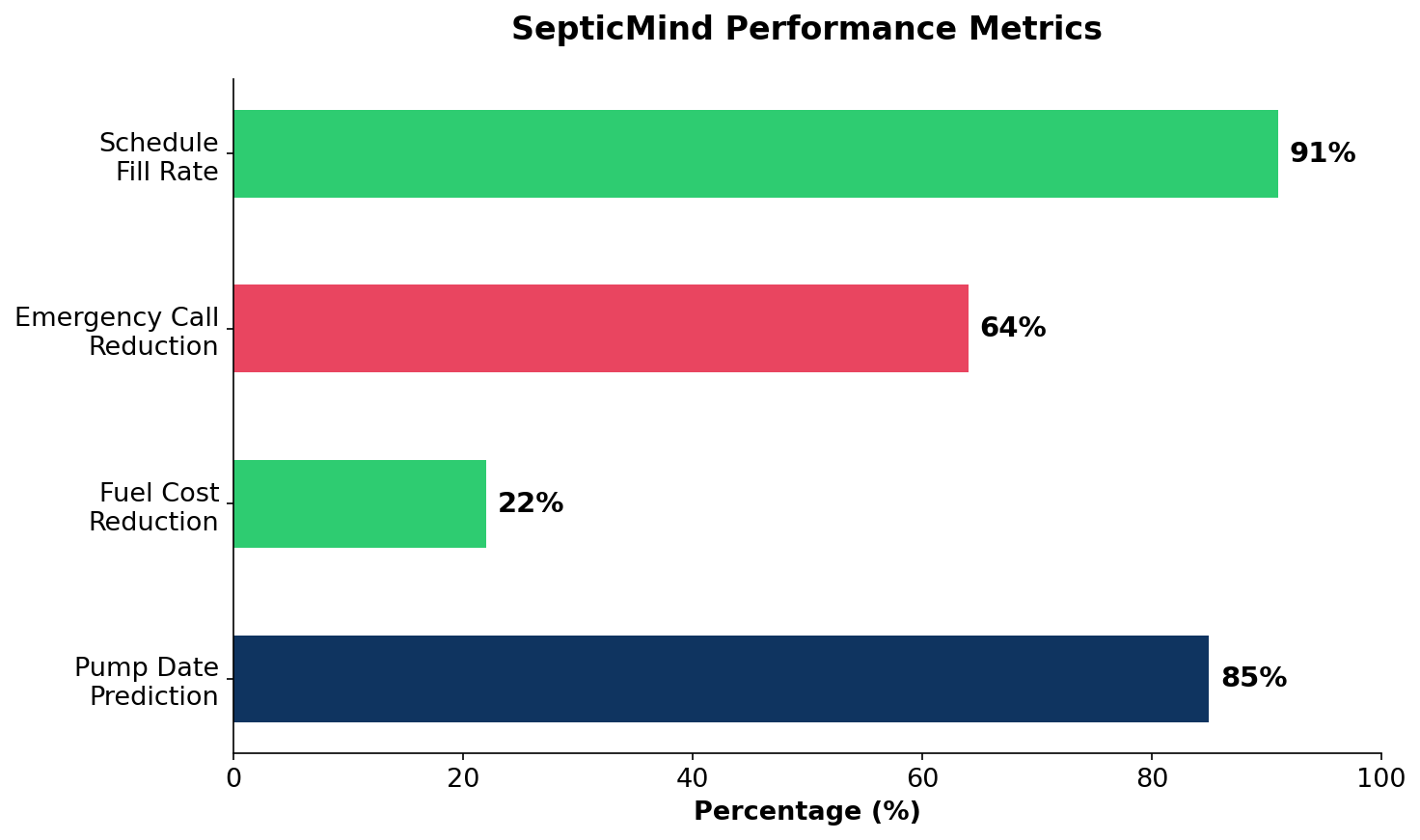
SepticMind’s predictive engine attacks that cost directly. The platform analyses tank capacity, household size, water usage patterns, soil percolation characteristics, system age, historical service frequency and seasonal demand trends for each customer in a company’s database. From that analysis, it forecasts when individual tanks will likely need pumping. The company reports accuracy rates exceeding 85 per cent. Rather than waiting for failure calls, service companies send proactive maintenance notices timed to actual system data — notices that arrive as useful reminders rather than generic marketing.
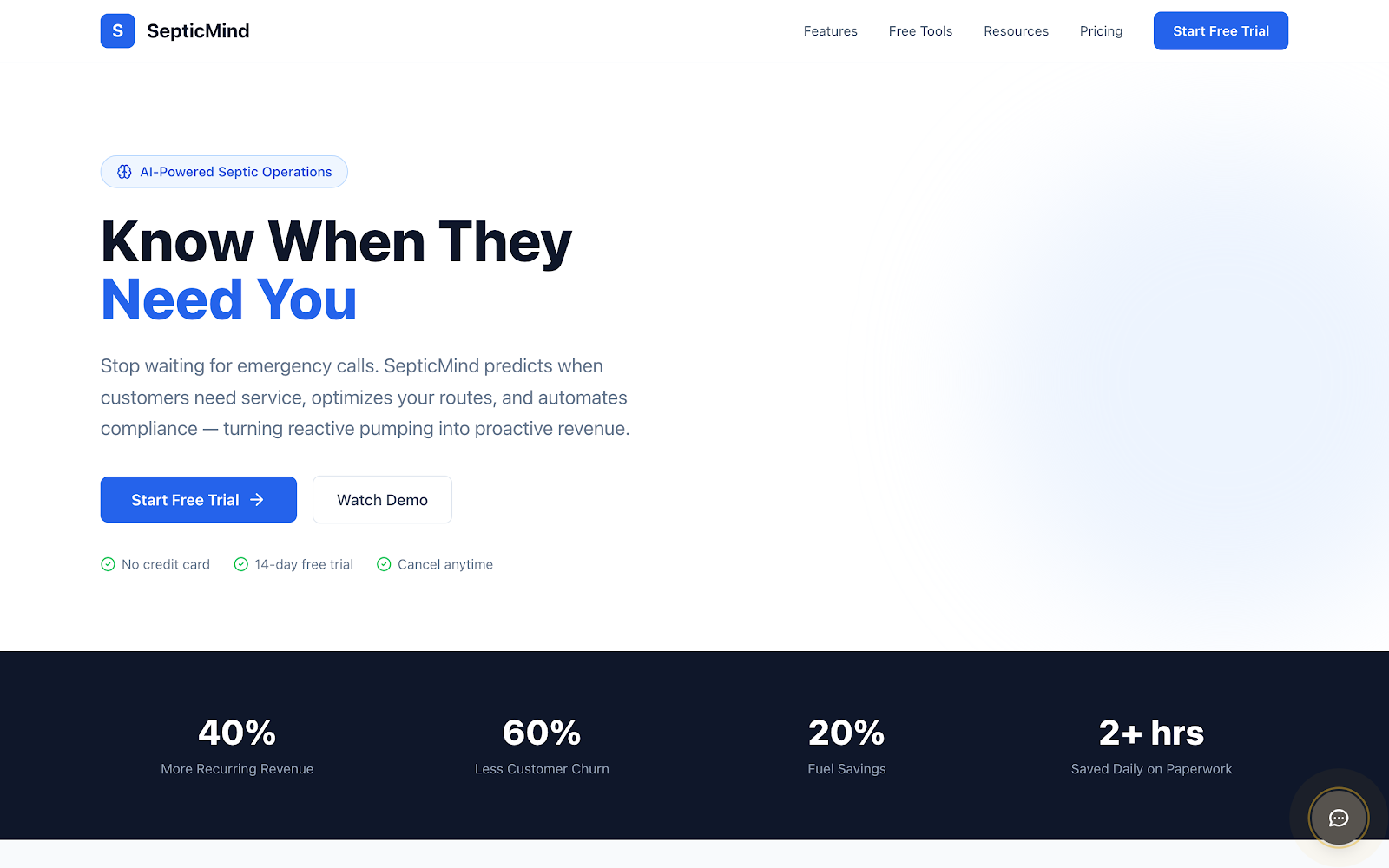
Route optimisation compounds those gains. Traditional routing relies on dispatchers manually arranging daily job orders, often working from experience and habit. SepticMind’s routing engine evaluates drive time, traffic patterns, truck capacity, tank levels and job duration to build the most efficient daily schedule automatically. Companies using the system report fuel savings exceeding 20 per cent alongside increases in jobs completed per day. Operators self-report both figures rather than submitting to independent audit, though the underlying logic — fewer empty miles, fuller routes — holds up.
Fleet tracking adds real-time visibility into pump truck tank levels. Dispatchers see at a glance which trucks can take additional jobs and which need to offload first. The platform also automates regulatory documentation. Inspection reports, service records, disposal documentation and regulatory filings all generate from operational data captured during jobs. When a health department requests records, the company retrieves them immediately rather than searching through filing cabinets.
Rowan framed the competitive advantage in blunt terms. “The best septic companies aren’t the ones with the most trucks,” he said. “They’re the ones who know which houses need service next week and can fill their routes with that work before the emergency calls start. SepticMind gives every company that intelligence, whether they operate two trucks or two hundred.”
An analytics dashboard surfaces the metrics that most septic operators currently track manually or not at all. These include revenue per route, cost per job, customer lifetime value, seasonal demand patterns and technician productivity. For small operators running two or three trucks, that visibility represents infrastructure that previously existed only at large regional players.
SepticMind serves septic pumping companies, portable restroom service providers, grease trap maintenance operators and septic inspection firms. Wastewater service businesses across the United States round out the target market. The platform sits within a broader pattern of vertical AI tools entering fragmented trade industries. The same shift is playing out in tree services, farriery and event management. In each, generic software handles scheduling but misses the operational intelligence that separates reactive operators from proactive ones.
A free tank reference library covers specifications for concrete, fiberglass and polyethylene systems. Standalone tools sit alongside the platform for operators not yet on the full system. They include pump interval calculators, route efficiency estimators and tank sizing guides.
Twenty-one million households. One in five homes. An industry that largely still waits for the Sunday night call. Rowan’s bet is that the companies which stop waiting first capture the most customers — because a homeowner who receives a timely, data-driven maintenance notice rarely phones a competitor instead.
