

Two hours. That’s how long a barn manager in Virginia spent every morning calling staff before she could begin her actual work. She adopted BarnBeacon, and the same check now takes 30 seconds.
Her experience repeats itself across the more than 200 barns that Sarah Kincaid’s platform currently serves. Every morning, barn managers arrive early to find whiteboards covered in abbreviations and dry-erase shorthand. They attempt to reconstruct the overnight shift from whatever notes remain. Questions about medications, feeding completion or unusual horse behaviour require multiple calls before anyone gets a definitive answer. Meanwhile, the horses wait.
BarnBeacon replaces that reconstruction with a structured digital shift record. Staff log in at the start of each shift and receive a prioritised task list. That list covers feeding, medications, supplements, turnout schedules and blanketing adjustments. The system orders each item by role, shift and the specific horses in a staff member’s care. As staff work through the list, they check off each task with a timestamp. By the time the next shift begins, a complete record already exists. No reconstruction required.
At the centre of the platform sits the Care Recipes system. Each horse carries a detailed protocol specifying the exact feed type and quantity, supplement brands and dosages, and medication timing. Turnout schedules with weather exceptions and blanketing rules by temperature range attach to the same profile. Special handling instructions attach too. The barn manager defines each protocol once. After that, every staff member on every shift receives identical instructions — new hire and veteran alike. As a result, care quality no longer varies with who shows up to work.
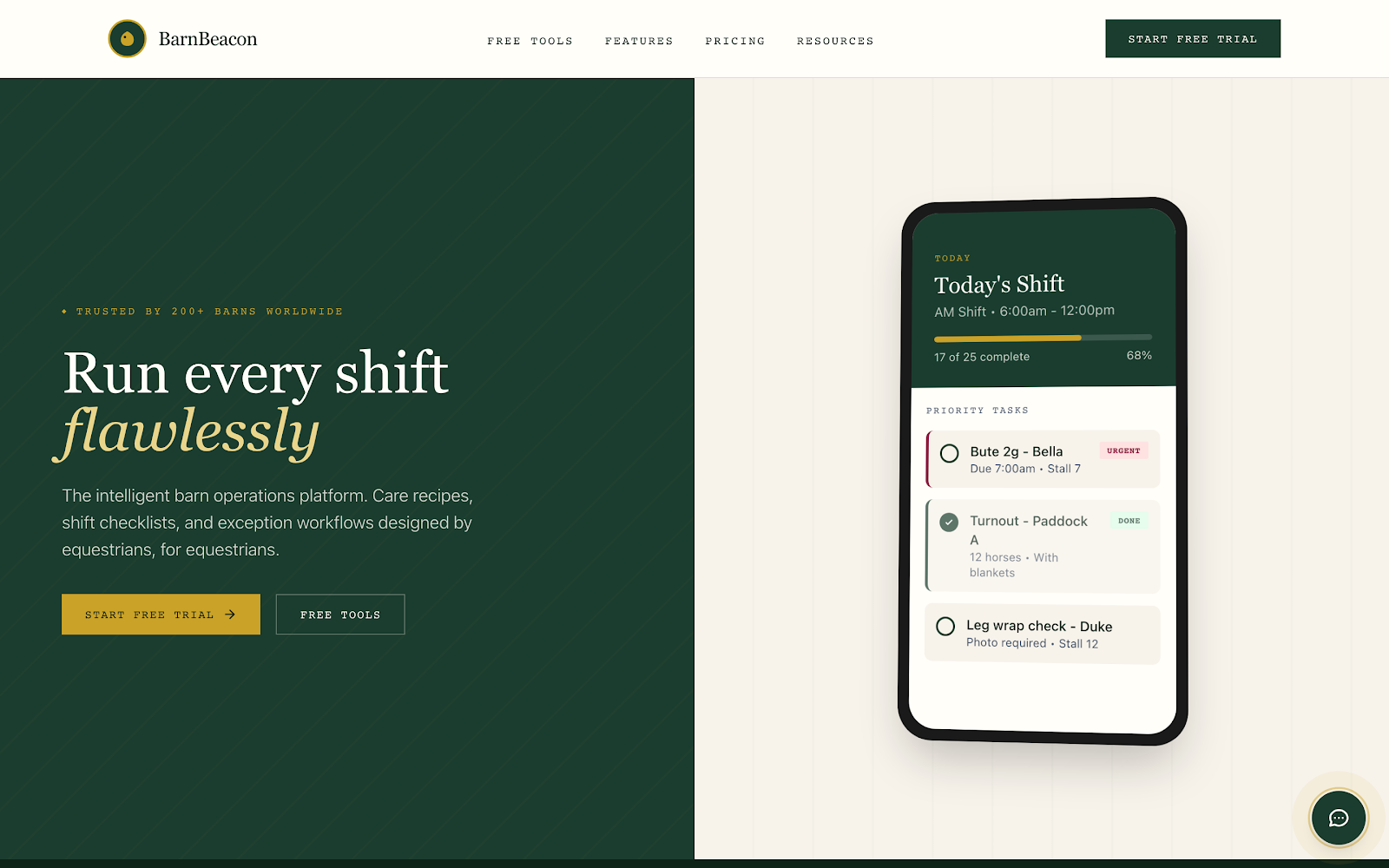
The Virginia manager who saved two hours daily was blunt about what changed. “I used to spend my first two hours every day calling staff and checking on things,” she said. “Now I open the app for 30 seconds, see that everything was completed on the overnight shift, and I can start my actual work. That’s two hours of my life I got back every single day.”
Accountability runs in both directions. When a staff member completes a task, the timestamp records it. A missed task triggers an immediate notification to the barn manager. It arrives while enough time remains to correct the gap rather than discover it the following morning. That shift from reactive to proactive matters when the task in question involves a medication window or an injury check.
Beyond internal operations, the platform also addresses a persistent gap between barns and the owners who board horses there. In most facilities, owner updates depend entirely on staff remembering to send messages. That works until the barn gets busy, which is most days. BarnBeacon generates automated daily or weekly owner digests summarising each horse’s care activities, staff notes and relevant observations. In turn, owners stay informed without barn employees carrying an additional communication burden.
Voice and photo logging add a further layer of documentation. Staff record observations directly from the barn aisle. Those might include a horse showing early signs of discomfort, a minor injury or an unusual behavioural change. Each entry timestamps automatically and links to the horse’s record. By the time a veterinarian needs the history, it already exists in structured form rather than scattered across message threads.
Kincaid framed the stakes plainly. “Barns are high-stakes operations running on low-tech systems,” she said. “We’re talking about the health and safety of thousand-pound animals being managed with whiteboards and text messages. BarnBeacon brings the reliability and accountability that these animals deserve and that barn owners have been asking for.”
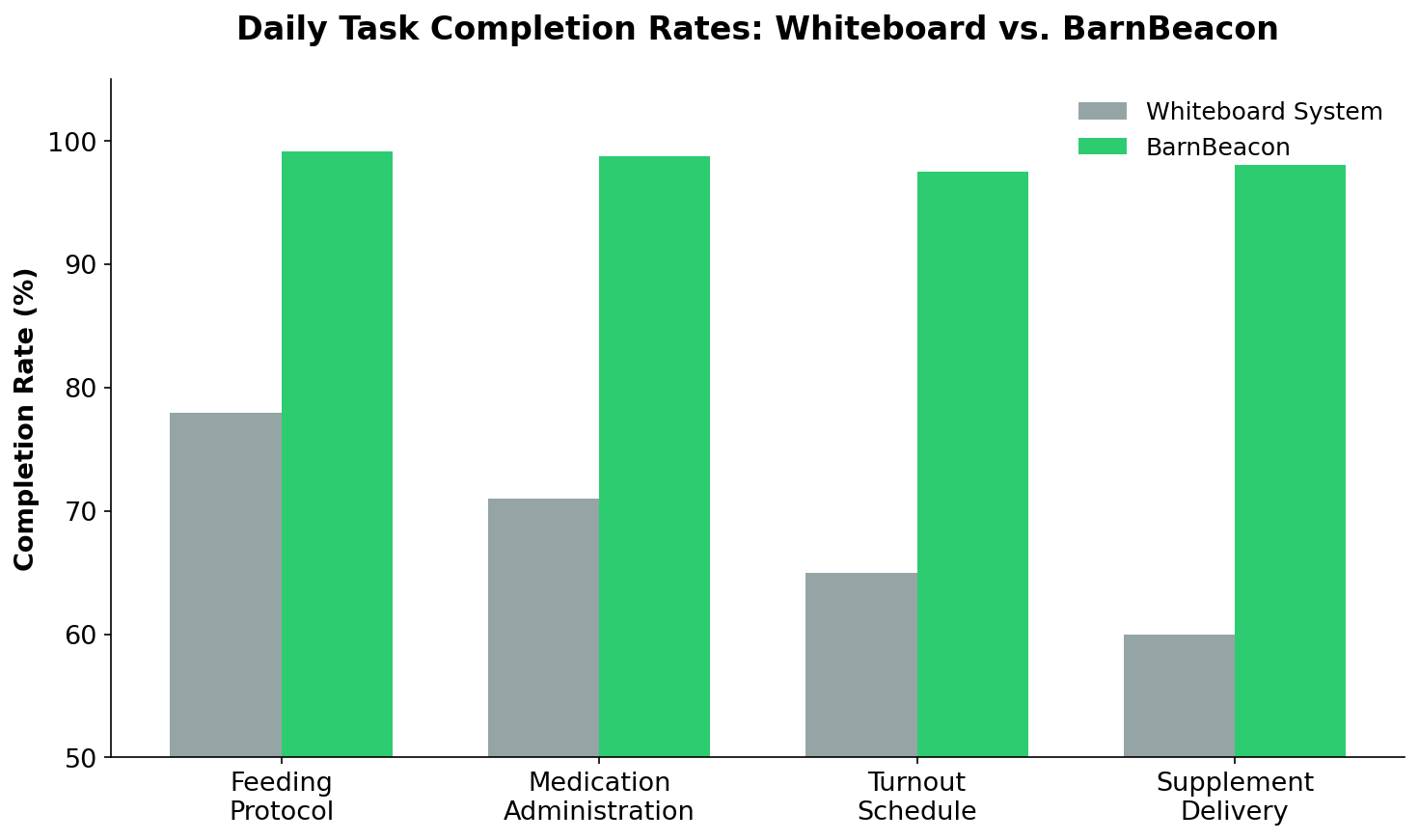
BarnBeacon serves boarding barns, training operations, breeding farms, lesson programmes, polo operations, therapy horse programmes and equestrian centres. The platform joins a growing category of vertical trade software. Farriery, tree services and septic operations face the same gap — skilled work, inadequate software. In each case, the same pattern holds: high-stakes work, low-tech systems and a founder who experienced the gap firsthand.
Free tools sit alongside the platform without requiring an account. They include feed calculators, turnout schedule builders, medication tracking templates and barn staffing planners. A feed reference library covers nutritional profiles, feeding recommendations and supplement compatibility information for major equine feed brands.
The whiteboard is still there in most barns. Still covered in abbreviations. Yet waiting for the morning shift to make sense of it. For 200 operations, though, that particular morning ritual is already over.
