

Micron Technology’s fiscal 2026 earnings report contains numbers that will stop you in your tracks. For the entire year, net income increased from $8.5 billion to $85 billion. In a year, revenue increased from $37.4 billion to $133.2 billion. These are neither the result of financial engineering nor incremental improvements. They represent a deeper change in the memory chip industry, and the main concern for anyone considering Micron as an investment at this time is whether or not that change will last.
In summary, artificial intelligence workloads are using memory at a rate that the industry wasn’t designed to manage. The specialized chip architecture known as high-bandwidth memory, which enables large-scale AI computation, is in direct competition with traditional DRAM for production capacity. According to Samsung, HBM may account for almost 30% of the world’s DRAM wafer capacity by 2027, up from about 20% at the moment. According to TrendForce data, the DRAM industry’s revenue increased by almost 60% sequentially in a single quarter as a result of the pressure on conventional supply and the rising demand for AI. Micron is positioned in the middle of both markets.
The degree to which demand seems locked in is what distinguishes the current cycle from earlier memory booms, of which Micron has experienced multiple violent ones. By 2030, the company’s 26 strategic customer agreements are expected to account for 35% of its total revenue. Long-term contracts have already set aside more than 75% of its fiscal 2027 output. That modifies the nature of cyclical risk but does not completely eliminate it. The management of Micron has stated that they do not see a practical way to achieve supply-demand equilibrium before 2028. For a business that has traditionally operated in a feast-or-famine cycle, that is an exceptionally long runway of forward visibility.
It’s worth taking a moment to consider the intriguing valuation math. Micron’s market capitalization was approximately $1.24 trillion at the closing price of $1,097 on October 1. That is roughly 14.5 times higher than fiscal 2026 earnings. However, that multiple drops to about 8.2 times when the most recent quarterly profit of $37.7 billion is annualized. With fiscal Q1 2027 guidance of $61.5 billion in revenue and non-GAAP EPS of about $38.15, the annualized forward multiple approaches 7.2 times. Most analysts didn’t anticipate that number for a business expanding at this rate in such a limited market. With an average 12-month price target of $1,521 and a high estimate of $2,200, the consensus among 46 analysts is currently at a Strong Buy.
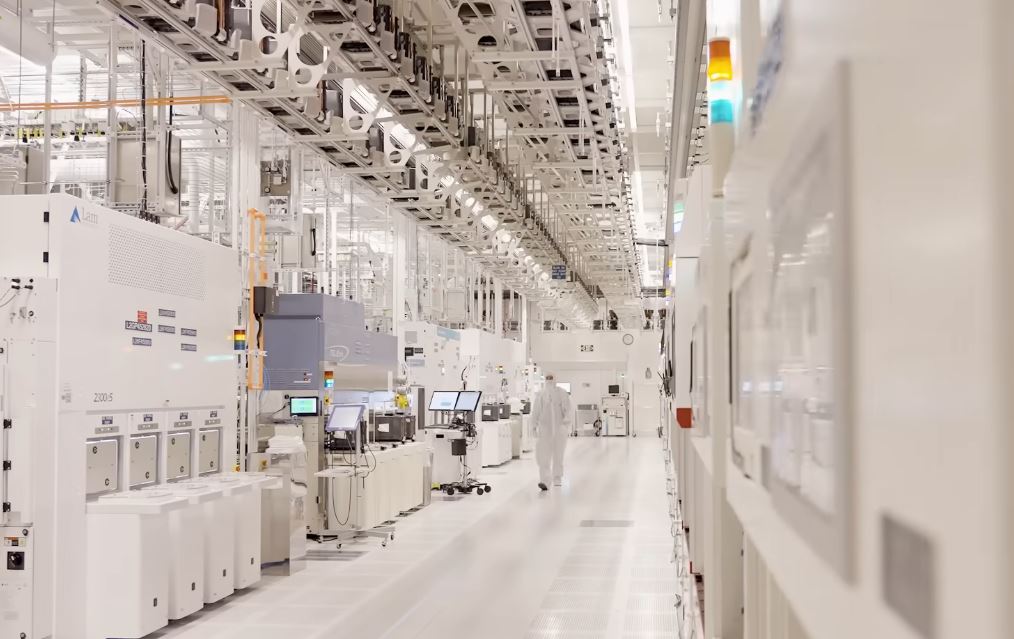
Nevertheless, Micron is making significant investments to maintain its position. In fiscal 2026, capital expenditures totaled $27 billion; as new fabrication capacity comes online in 2027, management anticipates even greater spending. During these stages of construction, free cash flow suffers because new plants don’t start making money the day the concrete dries. The wager is that when the capacity is delivered in late 2028, demand will still be high. Given current trends, that is a reasonable assumption, but it necessitates the belief that spending on AI infrastructure will remain at current levels for an additional two years. There is a good chance it does. Additionally, it’s possible that some of the HBM demand moves to competitors or that hyperscaler CapEx contracts.
According to reports, Michael Burry, who was well-known for his forecasts during the 2008 financial crisis, has taken short positions in Micron, Nvidia, and other companies, warning against what he believes to be exorbitant AI infrastructure valuations. That view is worth mentioning. Burry has always been prompt and accurate. He has also made mistakes and been early. Every sincere Micron bull must address the particular worry that extreme pricing power in memory is transient rather than structural. These outdated customer agreements support management’s claim that the structural case is genuine.
As this develops, it seems like Micron is in a truly unique position, not just riding a wave but also influencing its speed. To be honest, nobody can say with certainty whether the wave is still building or nearing its peak. However, the contracts are real, the earnings are real, and there is no indication that the supply constraints will be resolved anytime soon.
