Sereact, Nvidia (NASDAQ: NVDA), Nebius Group (NASDAQ: NBIS), CEVA Logistics and Zalando announced a closed training loop for Cortex, Sereact’s robot brain, on 21 October 2026. The system went live first on Zalando returns handling at CEVA Logistics fulfilment centres, according to the companies’ joint announcement.
The pitch is speed: a policy fix for a robot error spotted on a Monday can now return as a tested update within days, rather than the weeks the previous pipeline took, the companies said. The release was also syndicated by Benzinga on the same day.
How the closed training loop works
Nvidia supplies the simulation layer: Isaac Sim, Isaac Lab, Cosmos world models and its Physical AI Data Factory skills. Nebius runs that stack through its EU data centres on the Physical AI Workbench, an open-source framework for physical AI that the company describes as bundling Cosmos, Isaac Sim and Isaac GR00T into a single agent-driven pipeline, according to Nebius’s own technical documentation.
Sereact contributes Cortex and the episodes its robots record while sorting returns. The result, the companies say, is a closed loop: real-world failures on the warehouse floor feed straight back into simulation, retraining and redeployment, without the manual re-engineering cycle that typically separates a robot’s mistakes from its fixes.
The architecture is pitched as a reference design rather than a one-off: Nebius says the pipeline is available today on Nebius AI Cloud for any robotics team, not just the Sereact-Zalando-CEVA grouping.
Returns handling was already live before this upgrade
The underlying deployment predates Tuesday’s announcement. Sereact’s dual-arm robots were already sorting Zalando returns at CEVA Logistics sites in Greven, Germany, and Świebodzin, Poland, as first reported by TheNextWeb. What changes now is the training infrastructure behind those robots, not the physical rollout itself.
Zalando’s involvement goes beyond being a customer. The retailer joined Sereact’s Series B round as a strategic investor in July 2026, a raise that totalled $116m, PYMNTS reported at the time. That round, led by Headline, had already raised $110m to scale Cortex 2.0 and push into the US market before Zalando’s participation, according to The Robot Report, which put the eventual total raised above $145m.
No stock reaction, no SEC filing
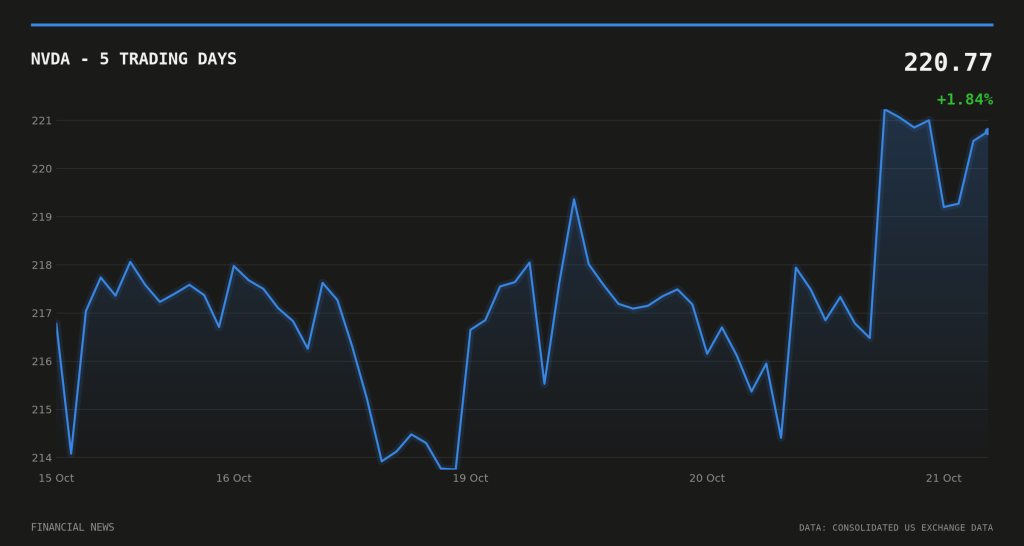
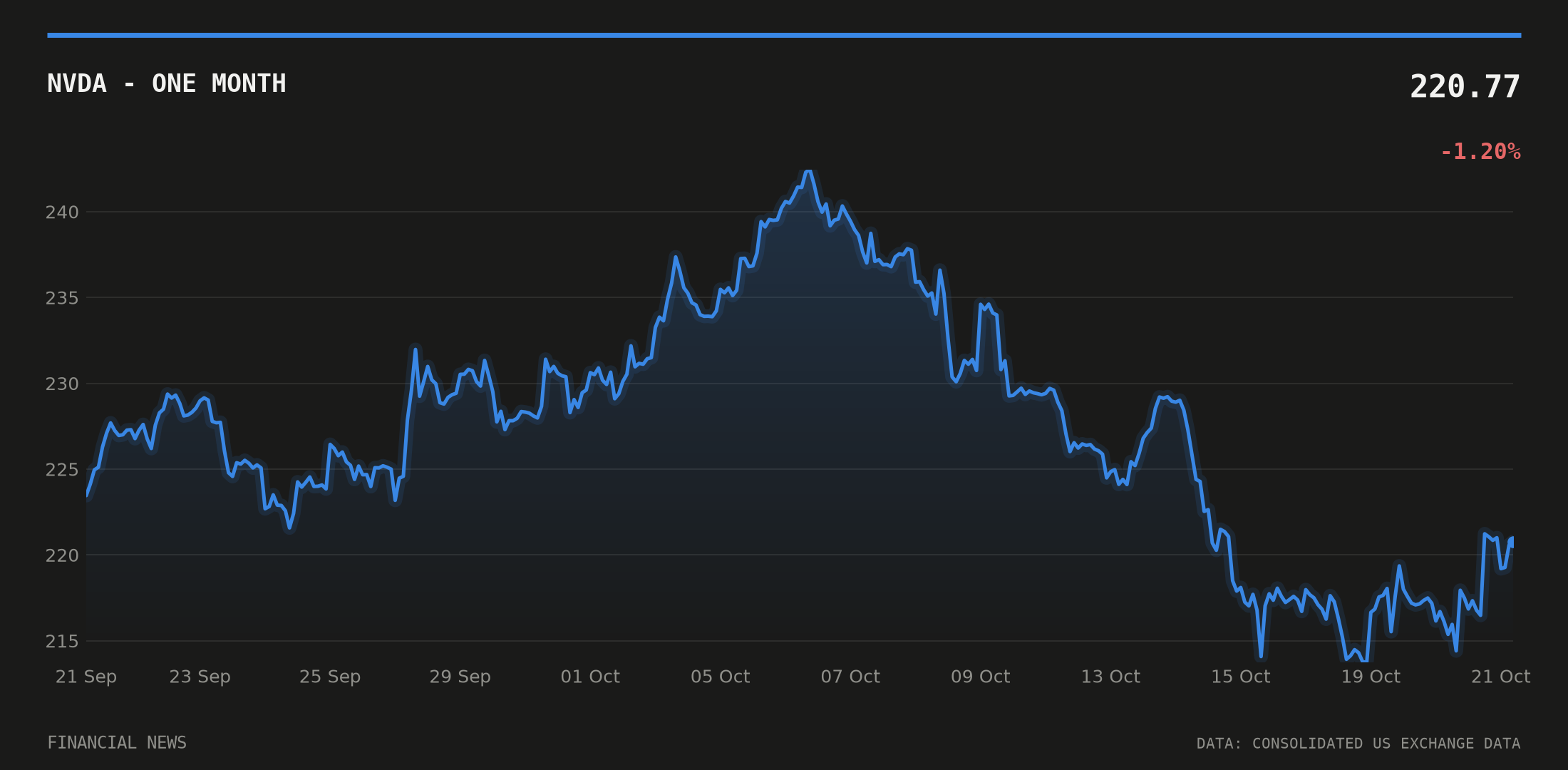
Nvidia’s share price barely moved on the news. The stock closed down 0.1% over 24 hours at $220.9985, trading on just 33% of its 20-day average volume as of 11:00 UTC on 21 October, according to consolidated exchange data. Over the prior 20 sessions the stock has moved in a $213.75-$242.46 range.
Neither Nvidia nor Nebius filed an 8-K or other material-event disclosure tied to the announcement. The only filings in the period are routine Form 4 insider transactions at Nebius Group, dated 19 and 20 October, unconnected to the robotics tie-up, SEC EDGAR records show. That pattern fits the companies’ own framing: this is a product and infrastructure milestone, not a financial one.
Nebius has had market-moving robotics news before. Its Physical AI Workbench was first unveiled on 1 June 2026, the same day Nvidia chief executive Jensen Huang publicly named Nebius as a key infrastructure partner – a combination that coincided with a jump in Nebius shares at the time, ad-hoc-news.de reported. Tuesday’s announcement builds on that same toolkit rather than introducing a new one.
The broader market backdrop was unremarkable for the sector. The 10-year US Treasury yield stood at 5.15% on 19 October, up from 5.09% the prior reading, while the 10-year/2-year spread narrowed to 0.33 percentage points from 0.38, Federal Reserve data show – part of a general rate drift rather than anything specific to robotics or physical AI spending.
What the deployment tests next
Returns handling is one of the more unpredictable tasks in e-commerce logistics, with items arriving in inconsistent packaging, condition and volume. That variability is precisely why the companies chose it as the proving ground for a faster retrain cycle. Whether the closed loop can cut iteration time across other fulfilment tasks, and whether other logistics operators adopt the open Workbench reference design now available on Nebius AI Cloud, will be the next markers to watch.
This article is for information only and is not investment advice or a recommendation to buy or sell any asset. Markets move quickly; figures are correct as sourced at the time of writing. Always do your own research before making financial decisions.