

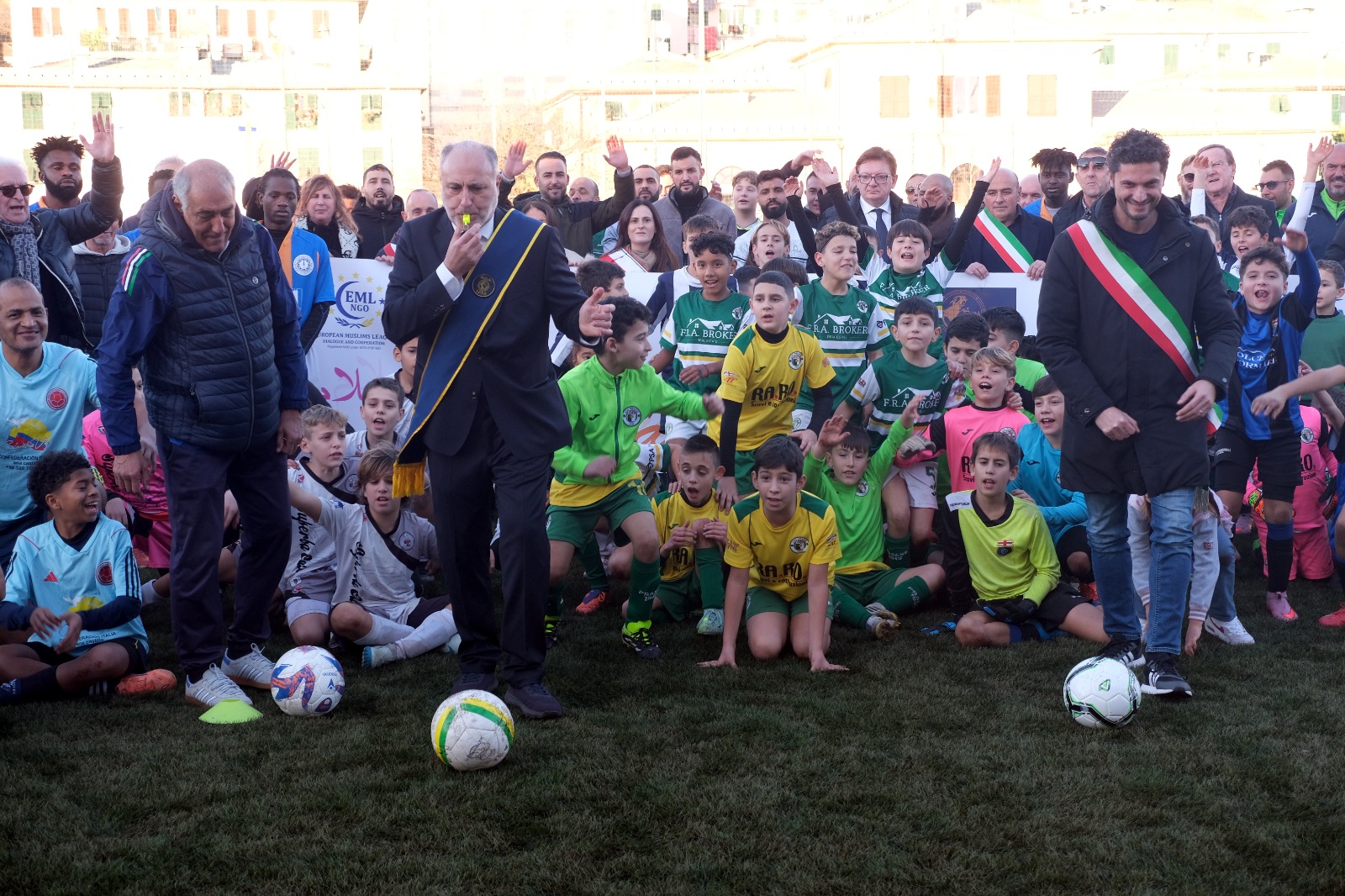
On 28 December 2025, a group of children, young people, and adults gathered at a sports field in Genoa and raised a banner together. The word on it — “peace” — appeared in multiple languages. Then someone kicked a football.
That moment sat at the centre of a community initiative led by Alfredo Maiolese, which brought together participants of different ages and backgrounds across two separate programme segments on the same day. The event used sport and cultural performance as the practical tools for what it wanted to say: that dialogue, mutual respect, and shared participation remain possible across differences of background, generation, and experience.
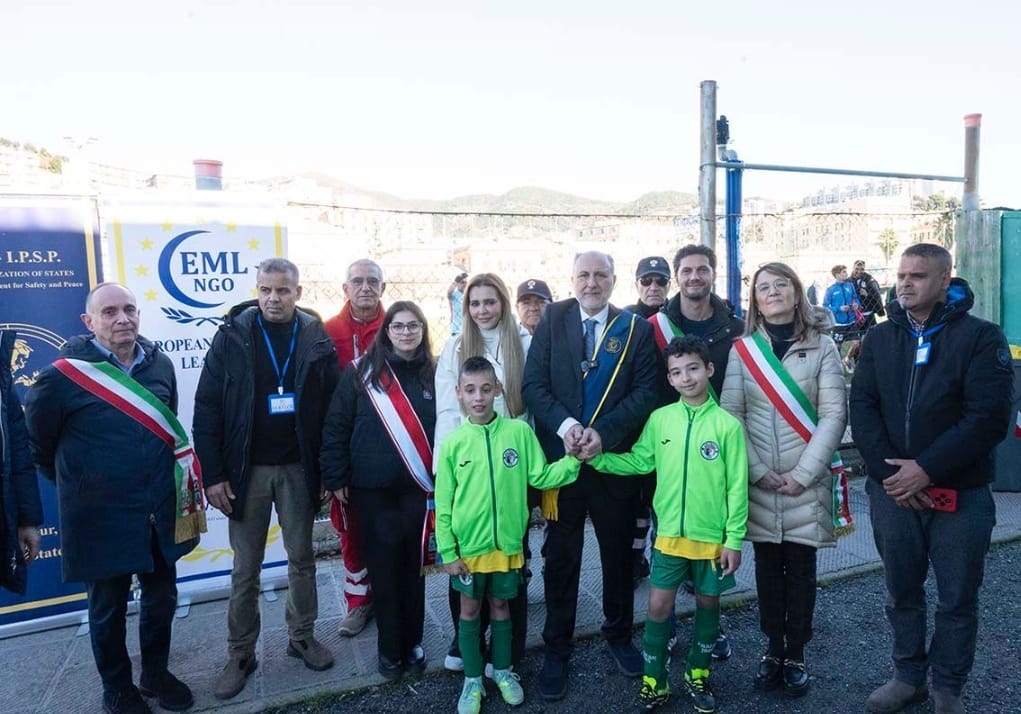
The sporting segment came first. Organised activities at the local sports field focused on teamwork and collective engagement rather than competition. The banner raising and symbolic kick functioned as the day’s defining gesture — a collective rejection of violence and a public commitment to positive engagement through sport. Simple, but the simplicity was the point.
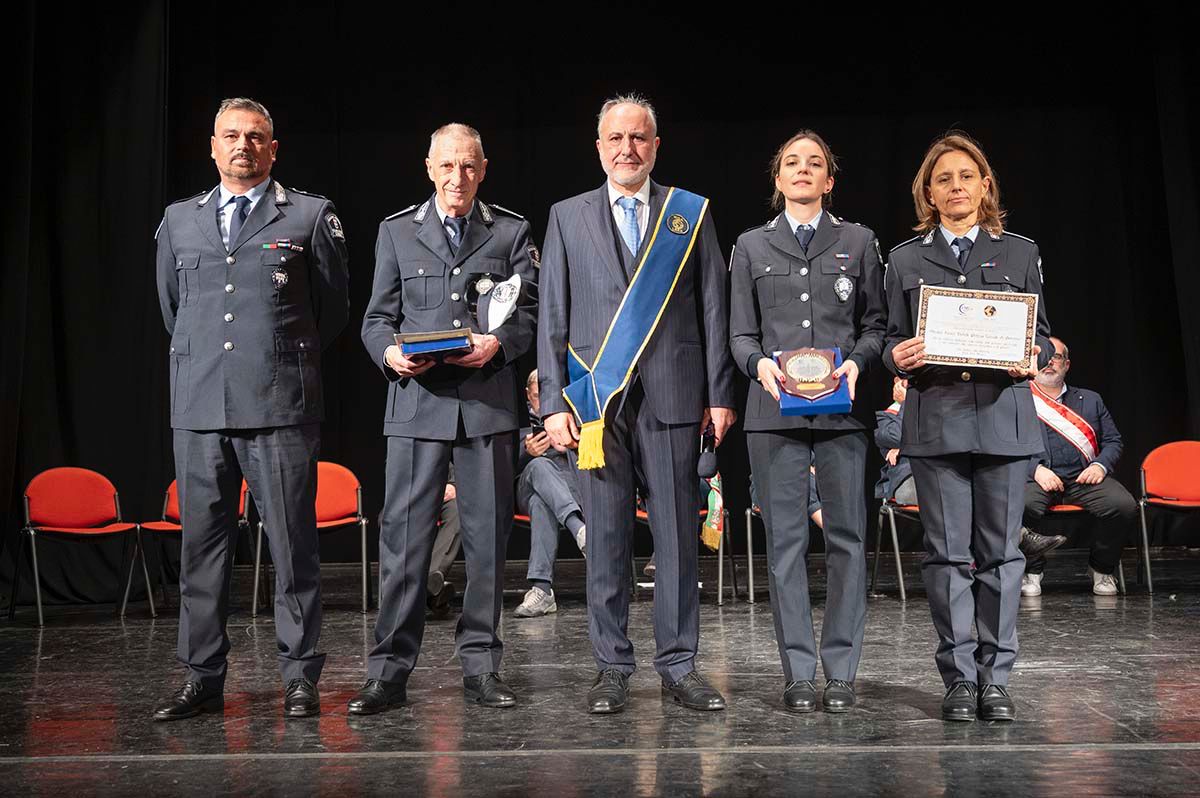
By evening the initiative moved indoors to a public cultural venue, where contributors from sport, music, and community life gathered for a programme of guided remarks and live performances. Music carried particular weight in the second segment. Performances demonstrated how artistic expression builds shared emotional space among audiences who might otherwise have little in common. The combination of the two segments — physical activity in the afternoon, cultural reflection in the evening — gave the day a deliberate arc.
Support came from community-oriented partner groups, though none were named in the event’s public materials. The format throughout emphasised active participation over passive observation, giving attendees ownership of what the day produced rather than positioning them as an audience.
Genoa provided a fitting backdrop. The city’s long history as a port and trading centre shaped it into a place where different cultures have met and sometimes clashed for centuries. The initiative framed that history not as something to examine but as a living context — a city that still practices coexistence through everyday civic activity, including events like this one.
Whether this represents a one-off occasion or the latest in an ongoing series of community events under Maiolese’s direction, the materials do not specify. What they document is a single afternoon and evening in December when a multilingual peace banner, a football, and a stage full of musicians made the same argument.
