


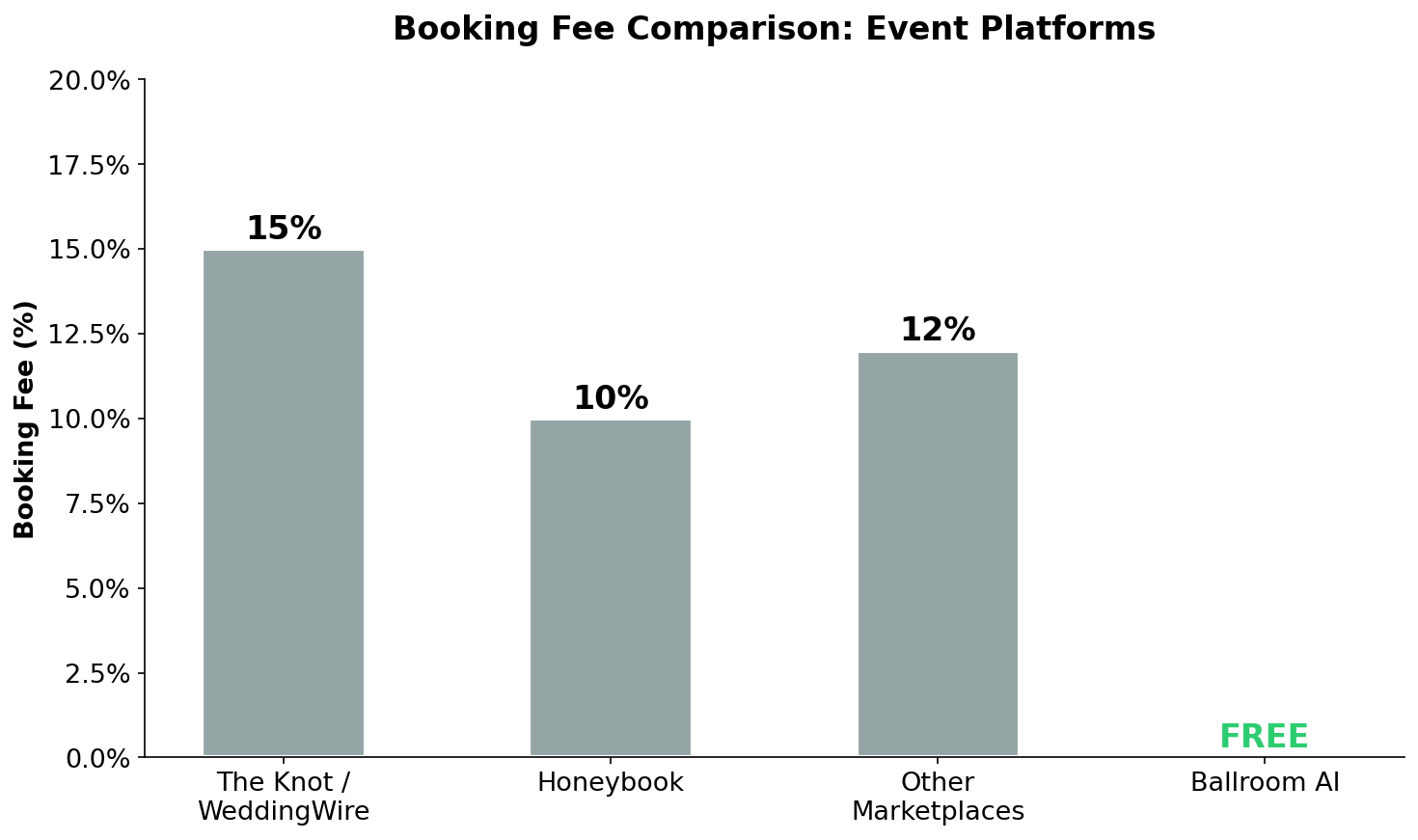
A photographer who books $100,000 in weddings through a commission-based marketplace sends between $10,000 and $15,000 back to the platform — for introductions that happened months earlier. Olivia Chen built Ballroom AI in Los Angeles to end that arrangement.
The US event industry generates over $100 billion annually. Weddings alone account for nearly $80 billion of that. Behind those numbers sit hundreds of thousands of small vendors — photographers, caterers, florists, DJs, videographers, planners, rental companies, cake bakers, hair and makeup artists, officiants and venues. Most are specialists at their craft. Many spend thousands of dollars each year in commissions to platforms that, in Chen’s framing, do very little to earn them.
“The event industry has been paying a tax to platforms that do almost nothing after the introduction,” Chen said. “They connect a vendor with a lead, take their cut, and disappear. They don’t help close the deal. They don’t help manage the client. They don’t help grow the business. We built the platform that actually does those things—and we did it without taking a percentage of anyone’s hard-earned revenue.”
Ballroom AI charges vendors a flat monthly subscription in place of per-booking commissions. A vendor turning over $100,000 in events keeps every dollar. Event planners access the platform at no cost — no subscription, no per-event fees, no premium tiers. The model sits in direct contrast to the percentage-based structure that Chen argues extracts value from vendors without providing proportionate support in return.
The AI proposal writer addresses one of the most time-consuming problems in event vendor work. A photographer or florist handling 10 to 20 enquiries each week faces a genuine tension: every hour spent writing personalised proposals competes with the work they actually do. Ballroom AI generates polished proposals in minutes, drawing from the vendor’s pricing structure, portfolio and service descriptions, and tailoring the language to each specific event. Speed matters here — potential clients often book the first vendor who responds with a coherent offer.
The CRM tracks every lead from first contact through to confirmed booking, with follow-up reminders, status tracking and pipeline visualisation. Budget tracking gives planners live visibility of spending across all vendor categories. It updates in real time as vendors confirm bookings and process deposits. This replaces the spreadsheets that most planners still use because nothing built for their workflow existed before. Analytics dashboards surface conversion rates, average deal sizes, best-performing months and the lead sources that generate the highest-quality enquiries. Taken together, the tools address the administrative gap that Chen identified: the space between introduction and signed contract where most platforms offer nothing.
Ballroom AI enters a market where established players including The Knot and WeddingWire have long dominated vendor discovery. Both operate on subscription listing models that critics argue prioritise visibility for paying advertisers over genuine matching quality. Newer entrants like Zola have moved toward zero-commission structures for certain services. The competitive shift toward lower-fee models reflects pressure from vendors who increasingly calculate exactly what percentage-based platforms cost them across a full year’s bookings.
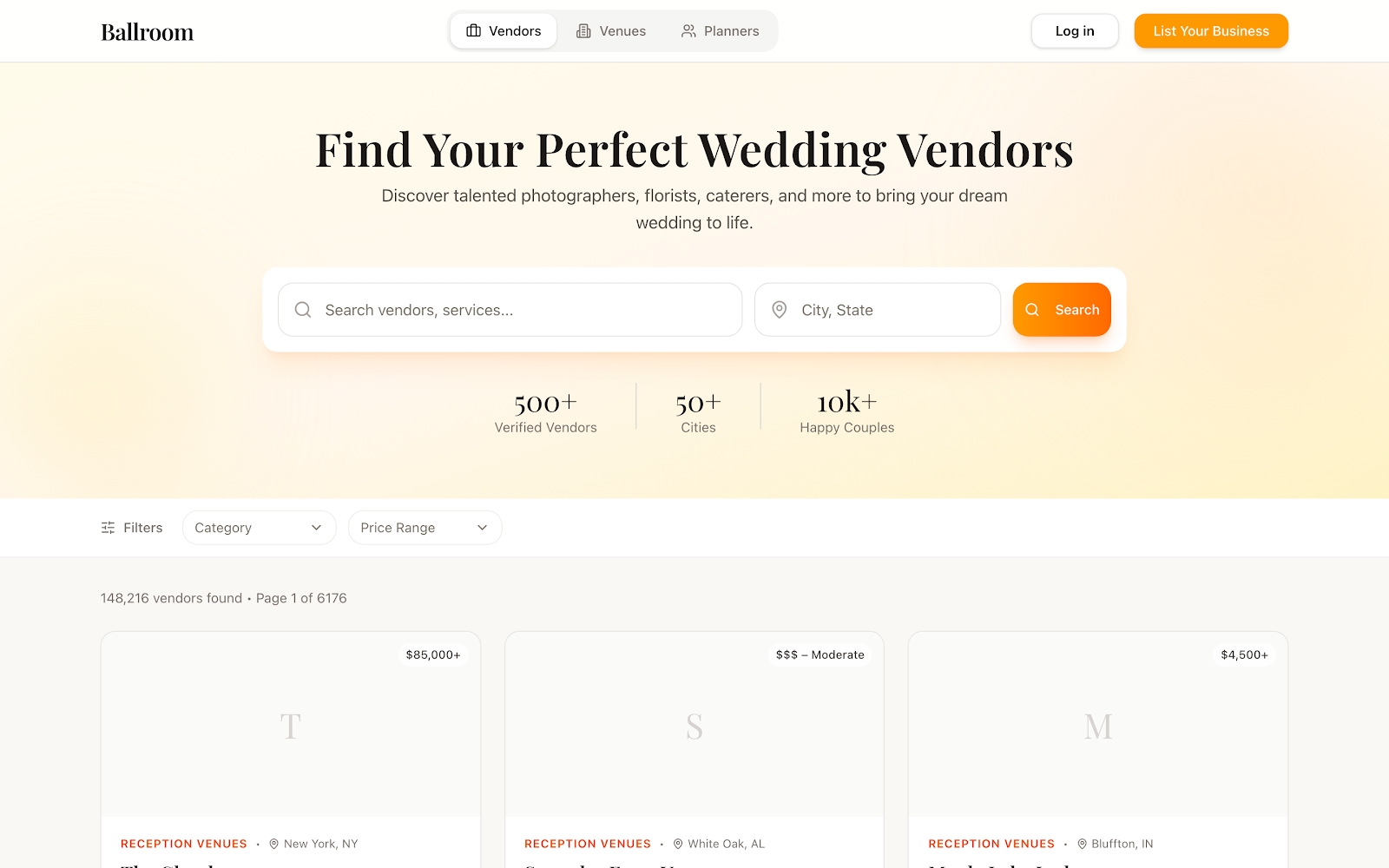
The platform’s vendor directory covers photographers, caterers, florists, DJs and more, searchable by location and specialty. A venues section offers detailed profiles, pricing ranges and availability calendars. Planning guides cover budgeting for weddings through to managing corporate events. Both sides of the market — vendors seeking bookings and planners managing events — operate within the same platform. That dynamic makes the zero-planner-fee model financially coherent. Subscription revenue from vendors funds the infrastructure that planners use at no charge.
Ballroom AI targets wedding planners, corporate event coordinators, catering companies, photographers, videographers, florists, DJs, venues and rental companies. The addressable market is large. Whether a flat monthly subscription justifies the switch away from established platforms — particularly for vendors who already carry profiles and review histories on The Knot or WeddingWire — is the conversion question the first year of trading will answer.
Chen’s argument is simple. Vendors who book $100,000 in events pay the same flat fee whether they close two deals or twenty. The platform earns nothing extra when vendors earn more. That alignment, she contends, is what the old model never had.
