

At 2am, millions of Americans Google “am I going bald” and receive advertisements. Daniel Reeves built Hairline AI in Los Angeles to give them something more useful — a free, private, clinically graded assessment that takes under a minute and requires nothing beyond a photograph.
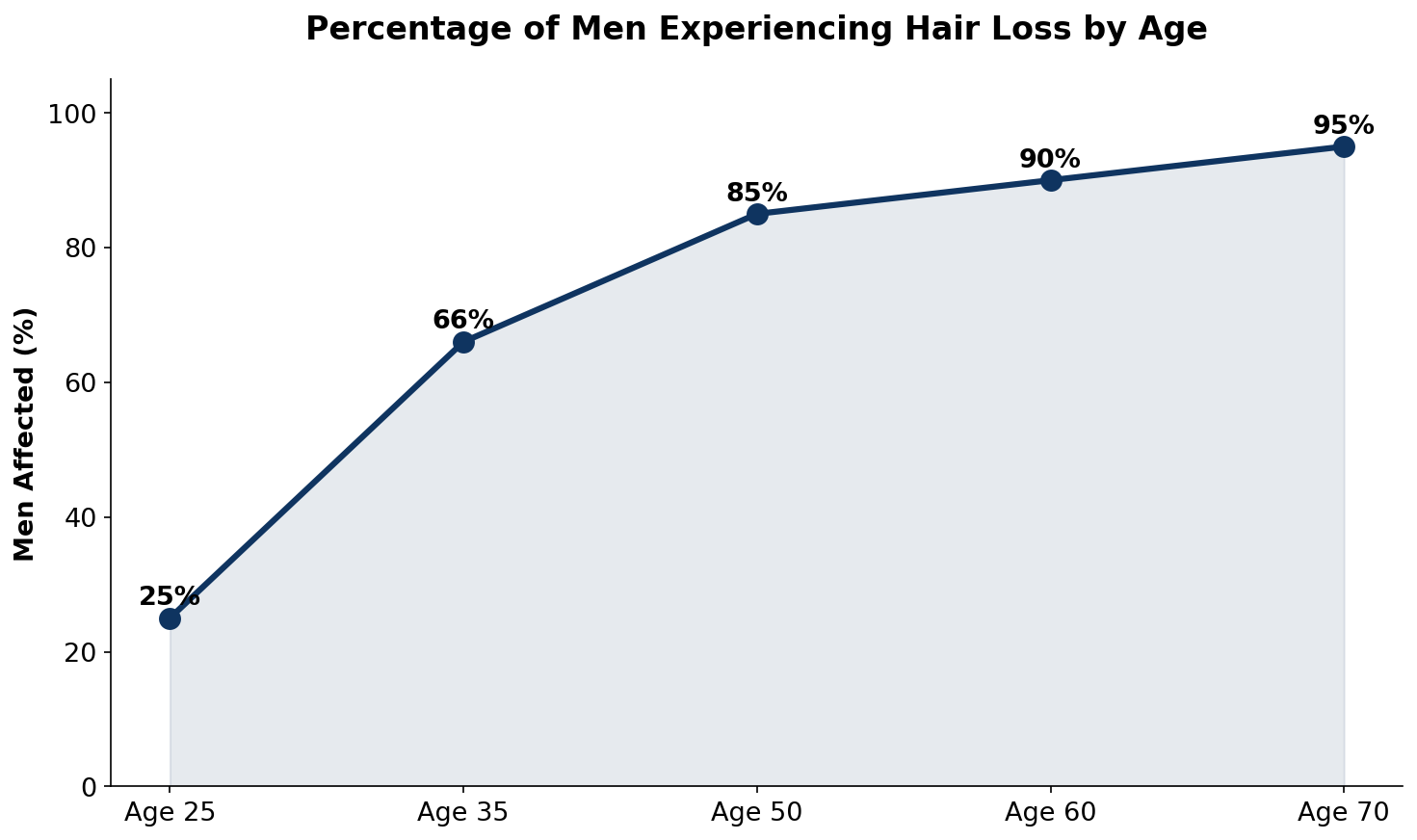
Hair loss affects more than 80 million Americans. Roughly two-thirds of men experience visible thinning by age 35. By age 50, that proportion reaches 85%. Women account for approximately 40% of those affected. The scale of the problem is not the issue. The issue is what most people do — or more accurately, do not do — about it. Despite the prevalence, most individuals never consult a professional. Three barriers explain why: uncertainty about whether the situation warrants a consultation, the cost of clinical assessment, and embarrassment about raising the subject at all. Hairline AI targets all three simultaneously.
The process takes under 60 seconds. A user uploads a photo. The platform maps 468 facial landmarks using MediaPipe Face Mesh technology, constructing a precise geometric model of the hairline. It measures temple recession, frontal density, vertex thinning and overall coverage. Results include a Norwood scale classification — stages I through VII, including intermediate patterns. Each stage comes with a plain-language explanation of what it means. The company describes these assessments as clinically accurate and comparable to in-office evaluations, though no independent clinical validation study appears in the launch materials.
From that classification, the platform estimates follicular unit graft requirements for potential hair restoration based on assessed severity, donor quality and patient goals. The platform customises cost calculations by region, reflecting significant market variation in transplant pricing across the United States. Connections to qualified clinics appear alongside the results. The entire output — classification, explanation, graft estimate, cost range, clinic connections — arrives in under a minute without logging in, providing payment details or creating a profile.
Reeves described the gap his platform addresses with characteristic directness. “People are Googling ‘am I going bald’ at 2 AM and getting ads instead of answers,” he said. “They need a tool that is honest, private, clinically accurate, and free. That’s what Hairline AI delivers.”
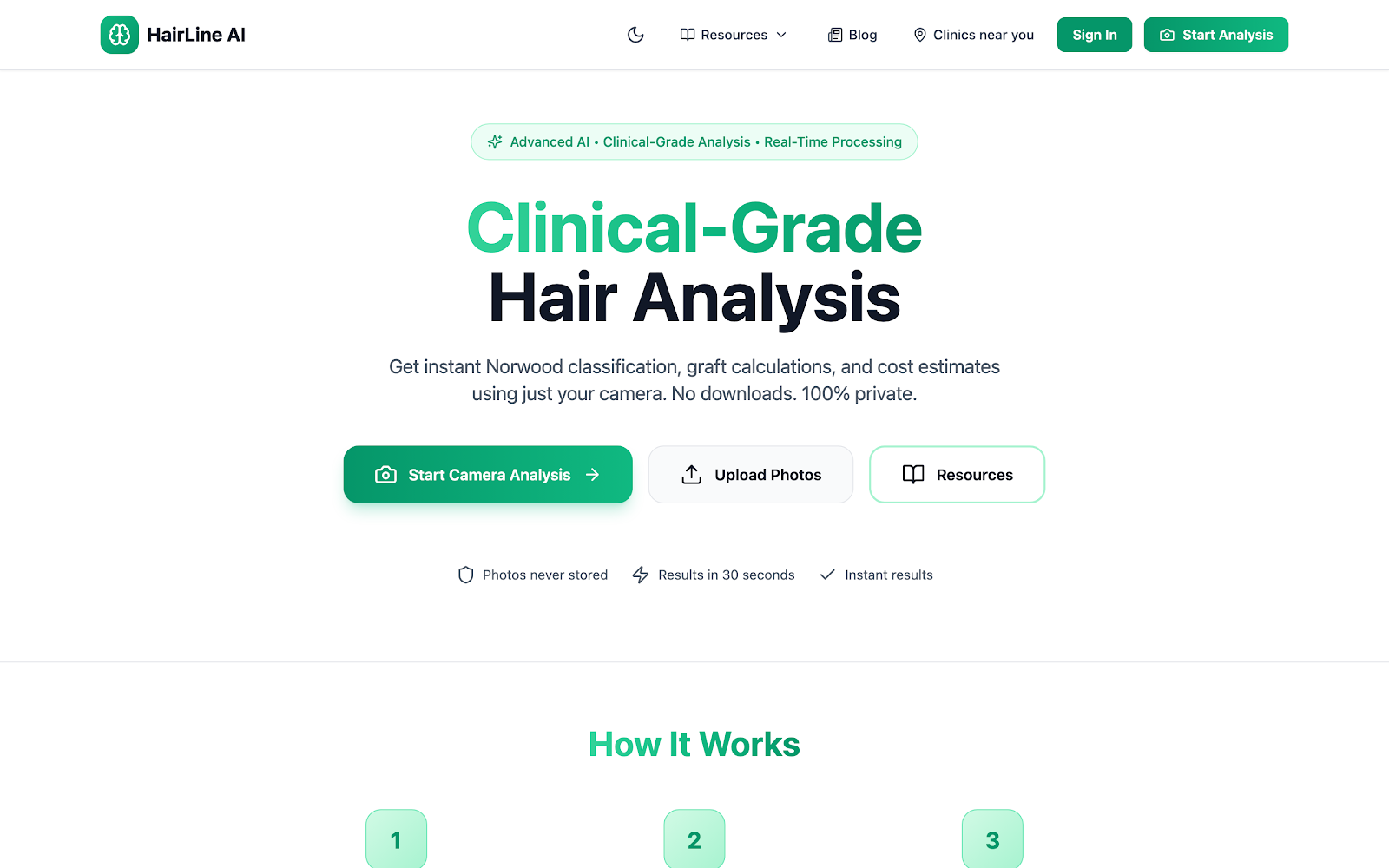
Privacy architecture underpins the design in ways that speak directly to the embarrassment barrier. The platform stores no photographs after assessment. The assessment requires no account at any stage. Hairline AI sells no personal data. The platform’s function begins and ends with the assessment — there is no registration funnel, no email capture, and no data that persists beyond the session. For a health concern that carries social stigma and that many people research only in private, that architecture is itself a feature rather than a technical footnote.
Hairline AI also provides information on treatment options — FUE and FUT transplants, finasteride, minoxidil, PRP therapy and low-level laser therapy — framed as unbiased educational content rather than product promotion. An evidence-based blog covers hair loss science, treatment advances and patient experiences. Both resources extend the platform’s utility beyond a single-use assessment tool. Together they build something closer to a standing reference for people at any stage of the hair loss process.
The platform targets individual users, but Reeves has also identified a secondary market. Hair restoration clinics can use Hairline AI as a patient education tool, giving prospective patients a calibrated understanding of their situation before a consultation. Dermatology practices gain a screening resource. Trichologists — hair and scalp specialists — have another assessment instrument available without clinical overhead. All three benefit from a patient arriving with a Norwood classification already in hand.
Over 80 million Americans need a way to move past the 2am search result. Most of them never will, until something removes the cost, the embarrassment and the uncertainty in the same step. Hairline AI removes all three at once. Whether the assessment proves as clinically reliable as the company claims, and whether clinics adopt the platform as a referral pathway, will determine how far the tool extends beyond a compelling consumer application into genuine clinical utility.
