

Arm Holdings (NASDAQ: ARM) chief executive Rene Haas said on 16 September 2026 that demand for the company’s chip designs is “off the charts”, telling CNBC’s Jim Cramer that the industry’s real problem is a shortage of manufacturing capacity, not customers. The comments came during an appearance on Cramer’s programme, as first reported by NewsBreak.
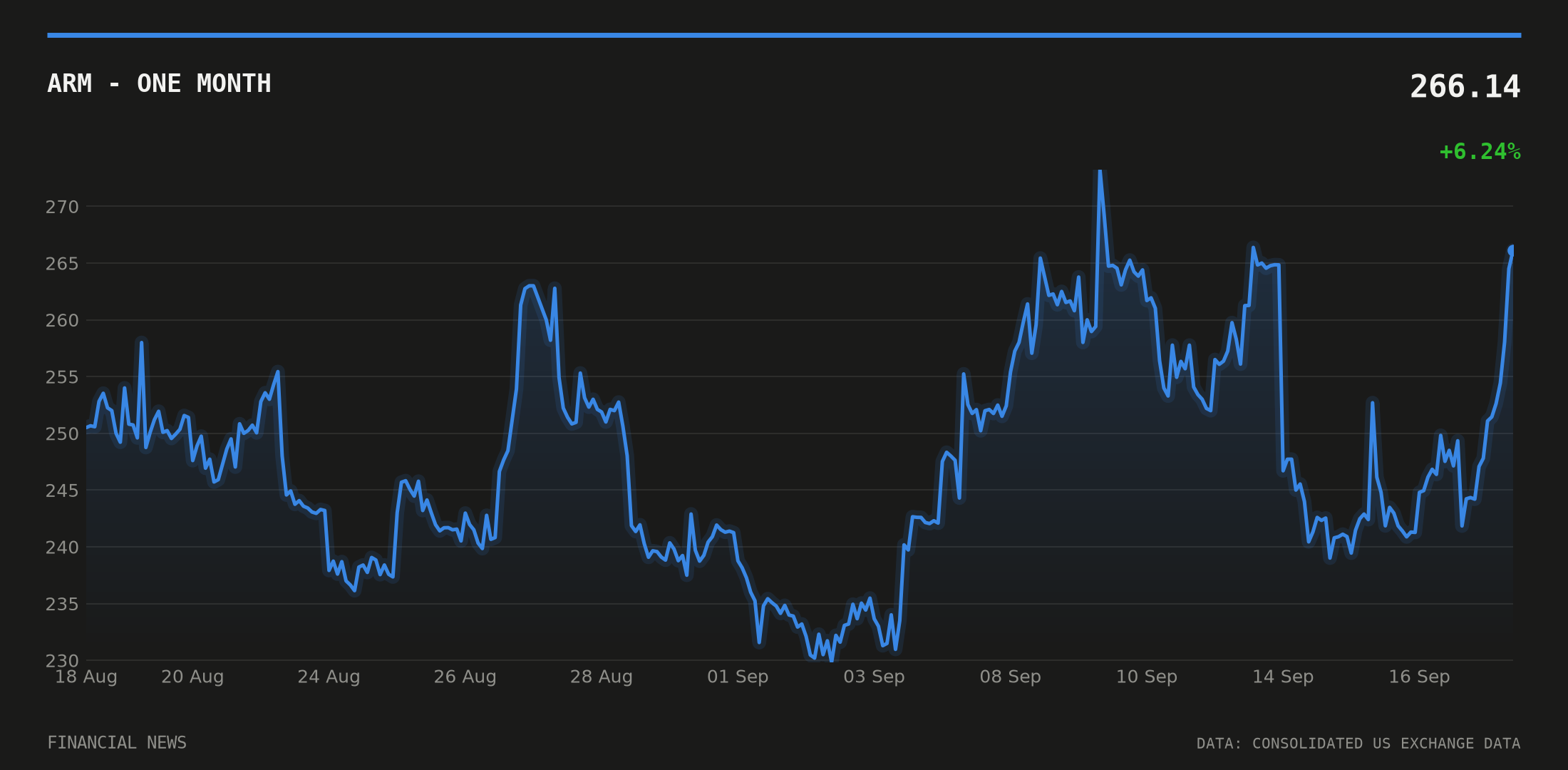
Haas told CNBC his confidence in hitting Arm’s $2bn target for AGI CPU revenue has grown since the company’s July earnings call, according to CNBC. Arm’s US-listed shares rose 3.3% in pre-market trading the same day, a move Investing.com tied directly to his remarks.
The $2bn target keeps moving
The figure has climbed all year. Arm unveiled its AGI CPU push in March with a $1bn revenue guide, then said in May that customer demand had already exceeded $2bn, according to Futu News. By July, Haas was framing the bottleneck differently: in a CNBC interview that month, he said the AI industry could stay supply-constrained for the next two to three years, citing shortages in chips, data centres, energy and skilled workers, per CNBC.
The Sept 16 appearance repeats that argument almost word for word, which is itself notable: Haas isn’t disclosing a new problem so much as restating one he’s made since the spring, with growing conviction each time.
A design house complaining about factories it doesn’t own
The framing carries an irony worth noting. Arm licenses chip architecture; it does not fabricate silicon itself. The “nobody can build chips fast enough” complaint refers to capacity constraints at the contract foundries that manufacture chips using Arm’s designs, not a bottleneck inside Arm’s own operations, according to Startup Fortune. Arm’s royalty and licensing revenue only converts into cash once those chips actually ship, so a foundry-side shortage caps Arm’s own growth even though its order book is, in Haas’s telling, filled.
The filings behind the rhetoric
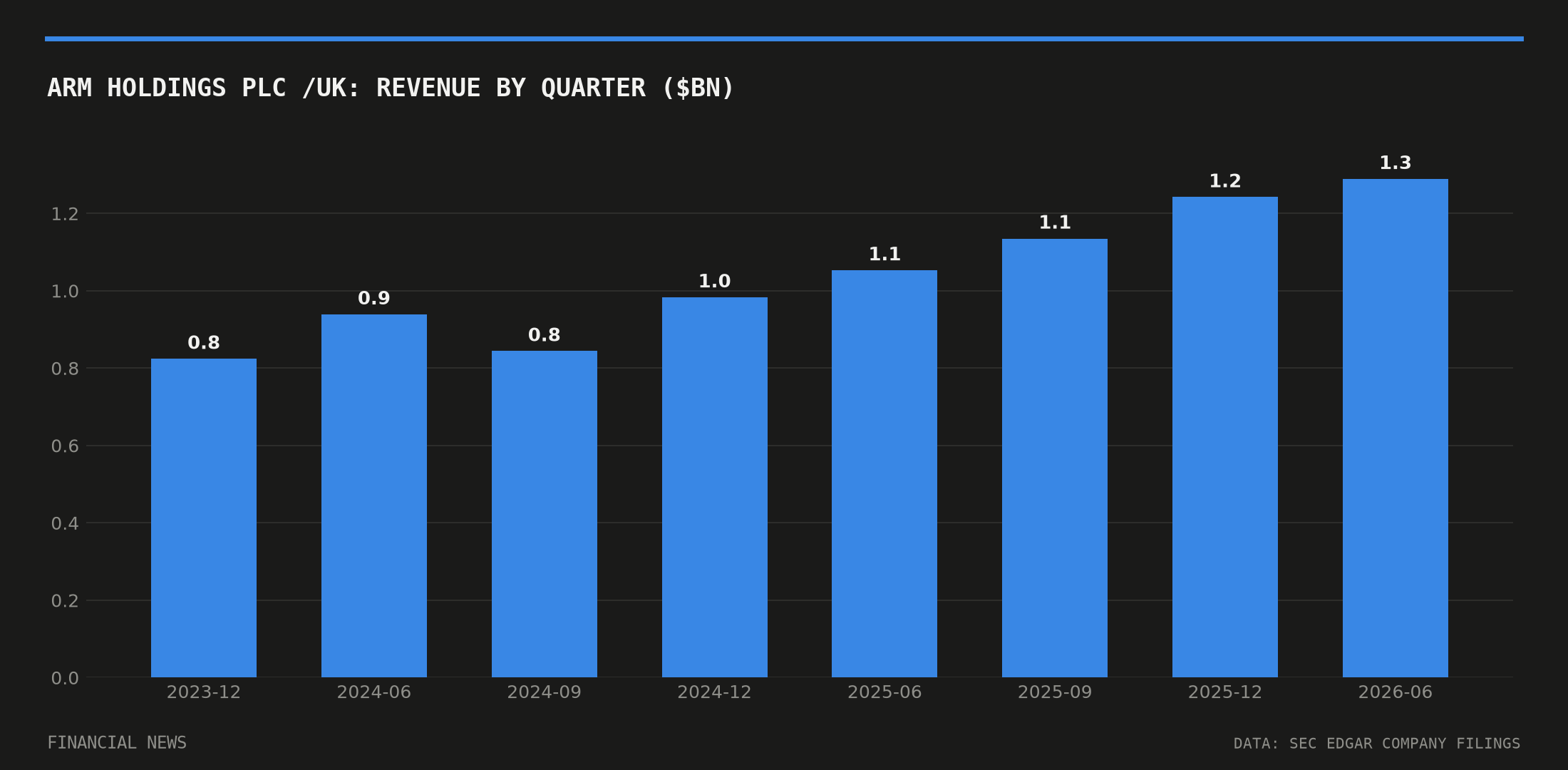
Arm’s underlying numbers back up the demand story, even if they can’t confirm the supply-side complaint. Quarterly revenue for the three months to 30 June 2026 reached $1,289m, up from $1,053m a year earlier, filings with the US Securities and Exchange Commission show. Net income for the same quarter more than doubled, to $270m from $130m a year earlier.
That growth has tracked a steady climb in revenue every quarter since late 2024, from $824m in the quarter to December 2023 to the current $1,289m run rate, based on Arm’s own 6-K filings. Diluted earnings per share rose from $0.08 to $0.25 across the same stretch.
No sign of a bet against the story
Positioning data gives no indication traders are betting against Haas’s narrative. FINRA’s daily short-sale volume ratio for Arm stayed in a moderate 0.37 to 0.604 range through the first half of September, showing no spike in bearish conviction around the CEO’s comments, according to FINRA data. An Arm insider also filed a Form 4 with the SEC on 16 September, the same day as the television appearance, though the filing discloses no share or value figures.
The broader backdrop remains supportive of risk assets tied to the AI trade. The 10-year US Treasury yield stood at 5.0% on 15 September, barely changed from 4.97% a fortnight earlier, according to Federal Reserve data, suggesting rate pressure isn’t the main driver of swings in Arm’s valuation.
Arm shares have run hard through 2026 on the AI and data-centre CPU story, part of a broader rally that has primed the stock for outsized moves on CEO commentary of this kind, according to a note from TIKR. Whether the foundry capacity Haas describes as the binding constraint loosens will likely determine how much of that $2bn AGI CPU target Arm can convert into reported revenue over the coming quarters.
This article is for information only and is not investment advice or a recommendation to buy or sell any asset. Markets move quickly; figures are correct as sourced at the time of writing. Always do your own research before making financial decisions.
